By Fatima Saka
Abuja — Ahead of the 81st Anniversary of Victory of the Great Patriotic War, the Russian Ambassador to Nigeria, Andrey Leonidovich Podelyshev, has called for global vigilance against what he described as growing attempts to distort the history of the Second World War, warning that such actions threaten international stability and collective memory.
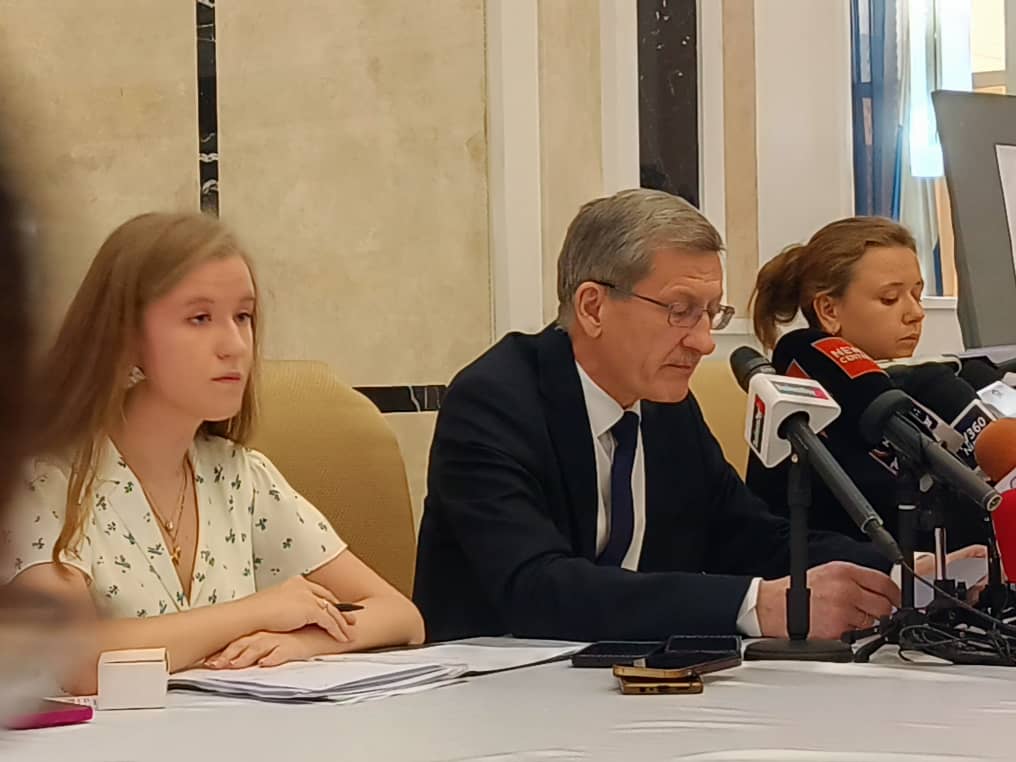
Speaking at a press briefing on Tuesday in Abuja at the occasion of the 81st Anniversary of Victory in the Great Patriotic War, examining the imperative of protecting historical truth against systematic distortion and the legal recognition of Nazi crimes as genocide against the Soviet people, the envoy stressed that the commemoration remains a defining moment in global history, symbolising the defeat of Nazism and the end of one of humanity’s deadliest conflicts.
Podelyshev explained that the Great Patriotic War, fought between 1941 and 1945, lasted four devastating years and remains one of the darkest periods in human history.
He noted that beyond the immense military losses, civilians, including vulnerable groups such as disabled children—were victims of systematic atrocities, reinforcing Russia’s position that these crimes meet the legal qualification of genocide.
He further noted that the anniversary of Victory Day, marked annually on May 9, remains a defining moment in global history, symbolising the defeat of Nazism and the end of one of humanity’s deadliest conflicts.
According to him, the outcome of the war reshaped the global order and laid the groundwork for multilateral institutions and international norms that continue to guide relations among nations.
He said the anniversary goes beyond national remembrance for Russia, noting that nearly every family in the former Soviet Union has personal ties to the war through relatives who fought, perished, or endured its hardships.
He added that the victory laid the foundation for modern international relations, including the establishment of the United Nations and the development of principles against aggression, genocide, and racial discrimination.
The ambassador, however, expressed concern over what he termed a “battle of narratives” surrounding the war’s history, alleging that some countries are attempting to revise established facts and diminish the role of the Soviet Union in defeating Nazi Germany. He warned that such reinterpretations risk undermining decades of historical consensus and weakening the moral lessons derived from the war.
He criticised efforts in parts of Europe to remove monuments dedicated to Soviet soldiers and accused certain governments of promoting narratives that equate the Soviet Union with Nazi Germany. According to him, such interpretations contradict the findings of the Nuremberg Trials, which established accountability for Nazi crimes and set enduring legal precedents for prosecuting crimes against humanity.
Podelyshev also raised alarm over the glorification of individuals linked to Nazi collaboration in some countries, describing it as a dangerous trend that undermines historical truth and disrespects victims of the war. He argued that honouring such figures distorts the historical record and risks normalising extremist ideologies.
On the legal front, the envoy highlighted recent Russian legislation recognising atrocities committed by Nazi forces and their collaborators on Soviet territory as genocide. He explained that the laws form part of a broader state policy aimed at institutionalising historical memory and preventing revisionism. The measures, he said, “criminalise the justification of Nazism, the denial of established historical facts, and the desecration of war memorials, with penalties including imprisonment”.
He further referenced the establishment of April 19 as a national day of remembrance for victims of what Russia classifies as genocide against the Soviet people, noting that the initiative is intended to preserve the memory of millions who suffered and to educate future generations about the consequences of hatred and extremism.
According to the ambassador, the scale of wartime losses—estimated at over 27 million Soviet citizens—underscores the need for accurate historical representation.
He said millions of civilians were deliberately targeted through mass executions, forced labour, starvation, and inhumane treatment, while prisoners of war were subjected to conditions that led to widespread deaths, demonstrating a systematic campaign of extermination.
The event also featured a guided tour of an exhibition on the Great Patriotic War, showcasing historical archives, photographs, and records that highlighted the scale of the conflict and the sacrifices made by the Soviet people.


READ ALSO: World Hand Hygiene Day: NCDC, WHO, USCDC Urge Action to Curb Infections, Combat AMR
FG Inaugurates Climate Transparency Committee to Strengthen Emissions Data Reporting in Nigeria
Podelyshev further added that safeguarding historical truth is not only a moral obligation but also a critical factor in maintaining international peace and security.
He urged the global community to rely on verified historical records, archival evidence, and international law in interpreting the events of World War II, warning that selective narratives and political reinterpretations could erode trust among nations and destabilise the global order.
About The Author