Water Ministry Defends Budget, Seeks Priority Funding for Food Security, Flood Control
Reps Move to Audit Dams Nationwide


By Fatima Saka
ABUJA — The House of Representatives Committee on Water Resources and Sanitation has resolved to set up a joint oversight committee to assess the status of dams and irrigation projects across the country, following the defence of the Ministry’s ₦146.78 billion 2025 budget implementation and ₦98bn 2026 proposal by the Minister of Water Resources and Sanitation, Engr. Prof. Joseph Terlumun Utsev.
The critical resolution came on Monday at the National Assembly as the Minister presented the Ministry’s 2025 Budget Implementation Report and defended its 2026 estimates before the committee.
Prof. Utsev said the Ministry received a total allocation of ₦146.78 billion in the 2025 fiscal year, with ₦142.22 billion dedicated to capital expenditure. While some capital warrants have been released, he disclosed that they were still awaiting cash-backing, raising concerns over funding flow for ongoing projects.
He assured lawmakers that procurement processes for several projects were already at advanced stages to ensure prompt execution once funds are fully released.
The Minister anchored the Ministry’s performance and projections on the Renewed Hope Agenda of President Bola Ahmed Tinubu, noting that investments in water supply, sanitation, irrigation, hydropower and flood mitigation remain central to economic recovery, food security and climate resilience.
A key highlight of the presentation was the Sustainable Power and Irrigation for Nigeria (SPIN) Project, a World Bank-backed initiative aimed at strengthening dam safety and improving water resource management for hydropower and irrigation. According to the Minister, 26 states have expressed interest in the programme, while 23 that met the selection criteria have already been onboarded.
In defending the 2026 budget proposal, Prof. Utsev identified priority areas to include the completion of ongoing dams and irrigation projects to enhance food security, expansion of Water, Sanitation and Hygiene (WASH) interventions to end open defecation, and the scaling up of flood and drought mitigation measures.
He also emphasized the Ministry’s push for Public-Private Partnerships in dam and hydropower development, alongside deeper collaboration with international development partners to scale sustainable water management initiatives.
Highlighting achievements recorded in 2025, the Minister listed the completion of the Kashimbilla Multipurpose Dam, which is now contributing hydropower to the national grid. He said a combined 110 megawatts of hydropower is currently being generated from Kashimbilla, Gurara and Dadin Kowa dams.
Other milestones include the delivery of 2,000 hectares of irrigable land to farmers at Dadin Kowa, the construction and rehabilitation of over 6,700 water schemes nationwide, and the certification of 168 Local Government Areas as Open Defecation Free.
He further noted the expansion of the SURWASH and PEWASH programmes across 17 states and the Federal Capital Territory.
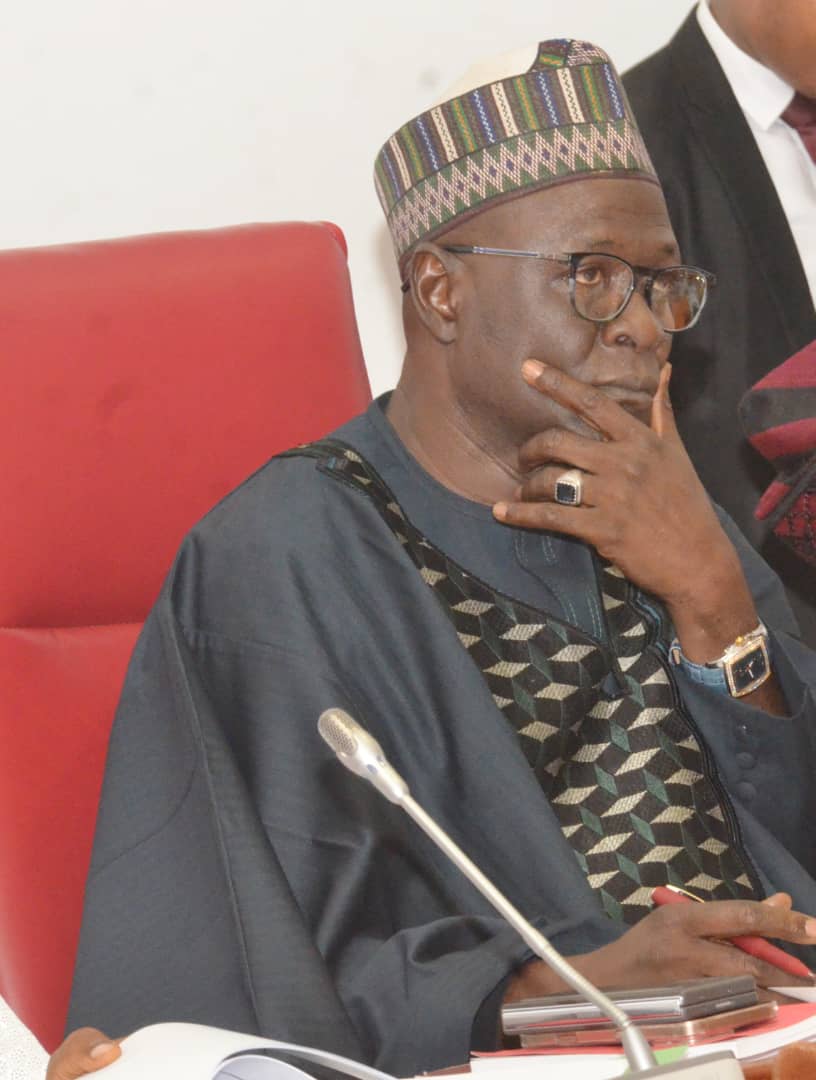
Chairman of the House Committee, Mukhtar Chawai, alongside other members, adopted the Ministry’s 2025 Budget Implementation Report with amendments and received the 2026 proposal as a working document for further legislative scrutiny.
READ ALSO: LAWMA makes 46 more arrests for open defecation
From Protest to Presidential Assent: Nigeria’s Electoral Act Faces Its Moment of Truth
In what observers describe as a significant accountability measure, the Committee resolved to establish a joint body comprising lawmakers, Ministry officials and key stakeholders to verify the operational status of dams and irrigation infrastructure nationwide — a move expected to shape future funding decisions.
The Minister, who was accompanied by the Ministry’s Technical Directors, expressed appreciation for the Committee’s support and maintained that with adequate and timely funding, the Ministry would scale up delivery of projects aimed at boosting agricultural productivity, expanding access to potable water, strengthening sanitation systems, generating employment and driving economic growth.
About The Author