2026–2028 MTEF/FSP: Senate Moves to Clear Budget Arrears, Sets Subcommittee to Fast-Track Payments
urges timely payments and effective budget implementation to ensure growth, employment, and improved public services

By Fatima Saka
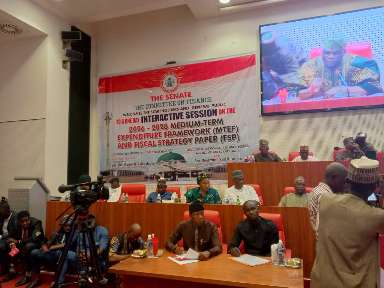
The Senate Committee on Finance on Monday took decisive steps to address mounting budget implementation challenges by setting up a three-man subcommittee to liaise with the Ministry of Finance and the Office of the Accountant-General of the Federation to accelerate the release of outstanding payments before the end of the year.
As part of efforts to fast-track the process and strengthen fiscal credibility, the committee commenced a detailed scrutiny of the 2026–2028 Medium Term Expenditure Framework (MTEF) and Fiscal Strategy Paper (FSP), insisting on realistic economic projections, improved capital budget performance and the urgent clearance of payment arrears to restore public trust and stimulate job creation.
Leading the engagement, Chairman of the Committee, Senator Sani Musa (Niger East), said the interaction with the nation’s top economic managers was critical to ensuring that the assumptions underpinning the 2026 Appropriation Act are credible, achievable and aligned with Nigeria’s economic realities.
Senator Musa explained that the committee was interrogating key macroeconomic assumptions presented by the executive, including crude oil production levels, non-oil revenue projections, foreign exchange benchmarks, inflation targets and expected GDP growth, warning that weak assumptions could undermine budget implementation.
“We are looking at the projections the executive has brought, oil production, non-oil revenue, exchange rate assumptions, inflation and GDP growth.
We will also examine performance reports of MDAs and GOEs to see whether past outcomes tally with these new projections and what Nigerians should realistically expect between 2026 and 2028,” Musa said.
A major concern raised during the session was the poor implementation of capital components of previous budgets, which lawmakers said had weakened job creation and widened the trust gap between government and citizens.
The committee noted that while recurrent obligations such as salaries and pensions were largely met, delayed or abandoned capital projects translated into lost jobs and unfulfilled promises.
The committee also flagged funding gaps in critical social sectors, particularly childhood vaccination programmes, following the withdrawal of some external support, with Senator Musa disclosing that alternative domestic revenue options were being explored to prevent disruption of essential services.
On budget arrears, officials from the Ministry of Finance and the Office of the Accountant-General told the committee that funds for 2024 obligations and the warranted portion of the 2025 budget had been provided, adding that payments, especially to indigenous contractors, were ongoing despite bottlenecks at the MDA level.
2025 NCE: FG Assures Stronger Environmental Policy, Sustainability Outcomes in Nigeria
Discussions further focused on the quality of growth, with senators stressing that economic expansion must translate into jobs rather than “jobless growth,” while the economic managers assured that investment-led growth, fiscal reforms and improved payment systems would boost confidence, employment and inclusive development.
The committee assured Nigerians that its final report on the MTEF and FSP would reflect rigorous oversight aimed at delivering a credible budget framework capable of driving growth, creating jobs and improving service delivery.
About The Author