By Fatima Saka
ABUJA — The Senate on Thursday subjected the Federal Government’s proposed ₦58.19 trillion 2026 budget to intense scrutiny, warning that without credible revenue projections, the record appropriation may not scale legislative approval.
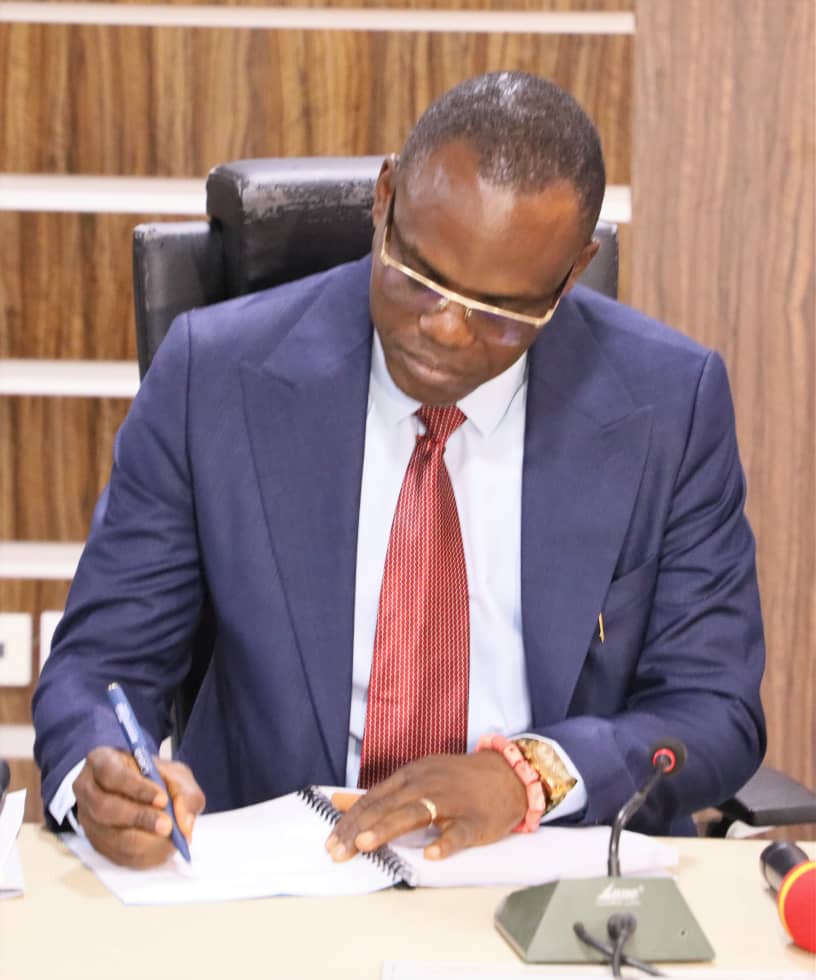
At a tense budget defence session, Chairman of the Senate Committee on Appropriation, Solomon Olamilekan Adeola (popularly known as Yayi), declared that the era of “rubber-stamp budgeting” was over, as lawmakers demanded a comprehensive account of revenue failures, debt escalation and funding gaps that undermined the 2025 fiscal year.
He described the exercise as more than routine oversight, calling it a “fiscal autopsy” of government finances.
“We want to see how far the administration has gone, what is left undone, and how the committee can address the challenges confronting government finances,” he said.
Adeola announced that from March 1, Nigeria would operate a single active budget cycle, ending the tradition of overlapping fiscal years. Outstanding obligations from 2024 and 2025 are to be rolled into the 2026 appropriation framework.
He also reminded Ministries, Departments and Agencies (MDAs) of the presidential directive mandating them to clear 30 per cent of outstanding liabilities before March 2026, with the remaining 70 per cent to be absorbed into the new budget.
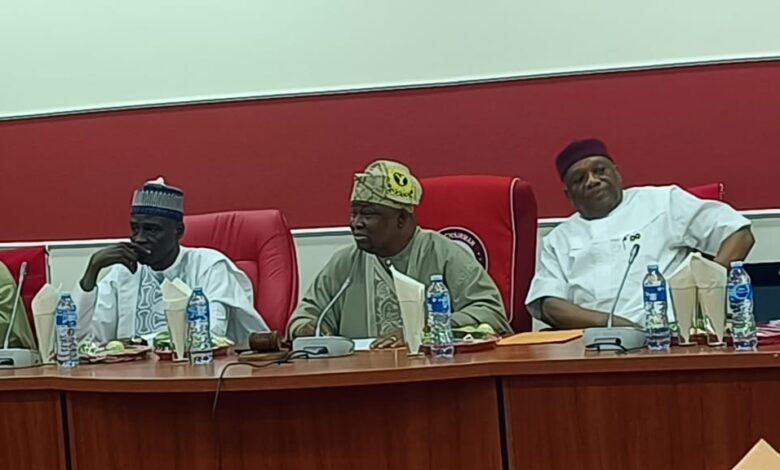
The session nearly stalled as senators accused top economic officials of disrespecting the chamber due to repeated postponements and late appearances. Some agencies failed to appear altogether, prompting threats of budget suspension.
“This sitting has been postponed more than five times. We cannot continue like this,” a visibly frustrated lawmaker said.
Despite the tension, the committee allowed the Minister of Finance and Coordinating Minister of the Economy, Wale Edun, to proceed with his presentation.
Edun admitted that the 2025 budget significantly underperformed, revealing stark figures: federation revenue performance stood at 53 per cent; oil and gas revenue at 18.9 per cent; capital budget implementation at 51.8 per cent; federal revenue shortfall at approximately ₦5 trillion; debt service exceeded budget by ₦4 trillion; while the overall funding gap reached about ₦9 trillion.
He said actual receipts barely covered recurrent expenditures, forcing the government to prioritise salaries, pensions and statutory transfers while capital projects suffered.
According to him, the Federal Government bore the brunt of the oil revenue collapse, while non-oil revenues such as VAT largely accrued to sub-national governments.
Addressing concerns over Nigeria’s rising public debt, now estimated at ₦152 trillion, Edun argued that the increase was largely due to transparency-driven accounting adjustments rather than reckless borrowing. He explained that ₦30 trillion represented previously undisclosed Ways and Means advances now recognised, ₦49 trillion arose from exchange rate revaluation, and about ₦27 trillion was borrowed under the current administration.
“This increase is driven mainly by accounting corrections, not excessive borrowing,” he said.
The minister outlined a three-stage economic strategy — market corrections, stabilisation and growth acceleration — targeting seven per cent GDP expansion and tax revenue of 18 per cent of GDP in the medium term. He cited renewed investor confidence, including a reported $20 billion investment commitment from Shell, as evidence that reforms were gaining traction.
However, senators repeatedly pressed him on the viability of oil revenue projections underpinning the ₦58.19 trillion 2026 budget.
Edun deferred final validation of oil output and pricing assumptions to revenue-generating agencies, noting that the accuracy of projections would determine whether the budget succeeds or fails.
The Senate’s core concern remained blunt: can Nigeria fund a ₦58.19 trillion budget after achieving barely half of its revenue target in the previous year?
READ ALSO: COFI Scholarships Marks a Decade of Transforming Lives Through Education
Senate Laments Zero Capital Allocation in 2025 Budget, Warns of Escalating Environmental Crisis
Lawmakers warned that without realistic projections and improved revenue performance, the proposed budget risks deepening deficits and escalating debt exposure.
The budget defence continues as other members of the economic management team are scheduled to appear before the committee in what observers describe as one of the most consequential fiscal confrontations of the current administration.
About The Author