West African Leaders Declare Region Global Epicentre of Terrorism, Move to Adopt Hot-Pursuit, Permanent Security Framework

Accra, Ghana — Heads of State and Government from West Africa have declared the sub-region the global epicentre of terrorism, recording at least eight terror attacks daily and accounting for more than half of terrorism-related deaths worldwide, as they resolved to adopt tougher cross-border security measures and establish a permanent framework for regional cooperation.
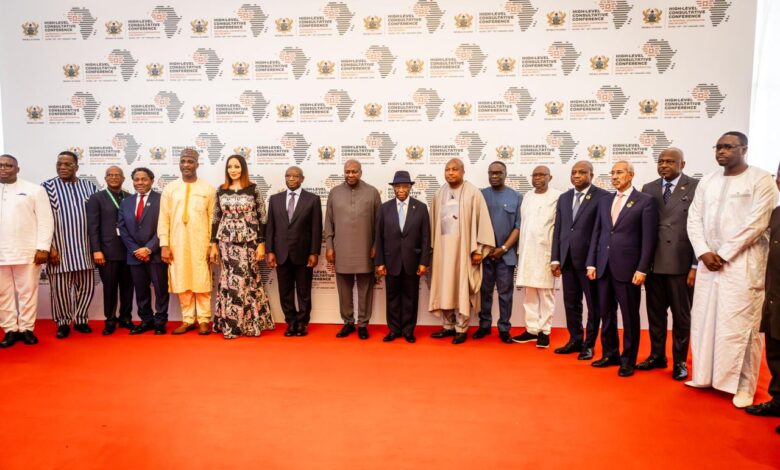
This was contained in a joint communiqué issued at the end of a two-day High-Level Consultative Conference on Regional Cooperation and Security held in Accra from January 29 to 30, 2026, under the chairmanship of Ghana’s President, H.E. John Dramani Mahama.
Presidents Julius Maada Bio of Sierra Leone and Joseph Boakai of Liberia led their respective delegations, while Burkina Faso, Mali, Mauritania, Nigeria, Senegal and Togo participated through high-level representatives.
The leaders warned that the rising tide of terrorism and violent extremism in West Africa has reached an alarming level, stressing that continued inaction would impose devastating human, economic and security costs on the region.
Ahead of the leaders’ meeting, Ministers of Foreign Affairs, Defence, Security and Intelligence Chiefs from participating states held extensive deliberations, with support from the African Union Commission, the United Nations Development Programme (UNDP) and civil society organisations.
To reverse the trend, the conference resolved to move beyond ad-hoc diplomacy and fragmented responses by creating a structured and permanent cooperation framework aimed at shared programmes, standards and infrastructure priorities, while jointly managing cross-border security risks.
On security and counterterrorism, the conference agreed to strengthen intelligence and information sharing, harmonise legal frameworks to enable cross-border prosecution of terrorism-related offences, and scale up deradicalisation programmes, while ensuring the protection of human rights.
A major outcome of the meeting was the commitment to consider the adoption of a “hot-pursuit” mechanism through bilateral, minilateral or multilateral agreements, allowing security forces to pursue criminal and extremist elements across borders.
The leaders also resolved to develop a foundational Memorandum of Understanding (MoU) and protocols on cooperation and security within six months, with a draft to be prepared within three months under the leadership of Ghana’s Minister for Foreign Affairs and presented to Heads of State for approval.
Beyond military responses, participants emphasised a shift toward a human-security approach, prioritising food security, healthcare, job creation and education, alongside strengthened local governance and the use of digital technologies to modernise border management and public service delivery.
Recognising climate change as a threat multiplier, the conference also agreed to integrate climate and food security into regional peace planning and to develop a collective disaster preparedness and humanitarian response framework for displaced and vulnerable populations.
READ ALSO: Experts Warn: Public Glee Over Coups Signals Deep Governance Failure in Africa
FG Concessions Ikere Gorge Dam for 6MW Hydropower, Boosts PPP-Driven Clean Energy Push
The consultative conference was endorsed as a bi-annual platform, with an agreed mechanism to track and monitor the implementation of decisions reached.
The leaders concluded the meeting with a renewed pledge of regional solidarity, vowing to translate commitments into measurable actions that protect lives and livelihoods across West Africa and restore stability to a region under growing extremist threat.
About The Author