Tinubu Concedes 26% Shortfall in 2024 Budget Implementation, Pledges Strict Discipline in 2026–2028 Fiscal Plan, Present ₦58.18 trillion

By Fatima Saka
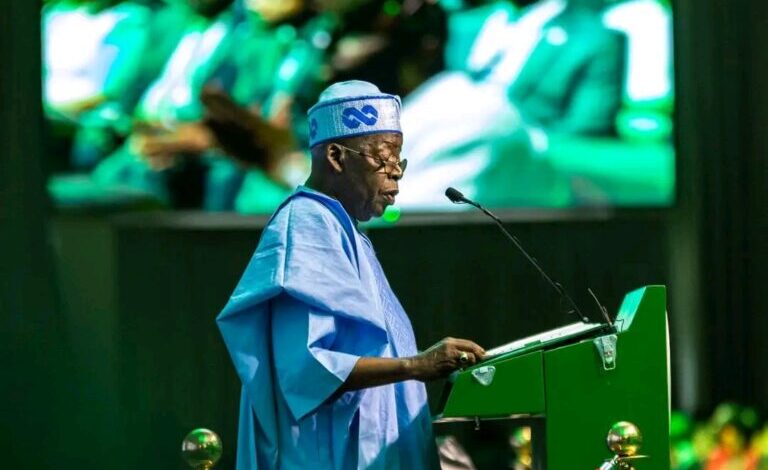
President Bola Ahmed Tinubu has acknowledged a significant shortfall in Nigeria’s 2024 budget execution, revealing that only 26 per cent of the capital component was implemented, but assured that his administration will enforce strict discipline, transparency and accountability in the implementation of the 2026–2028 federal budgets.
Speaking while presenting the ₦58.18 trillion 2026 Appropriation Bill to a joint session of the National Assembly in Abuja, the President described the 2026 fiscal package as the “Budget of Consolidation, Renewed Resilience and Shared Prosperity,” noting that lessons from previous budgetary challenges have necessitated a firmer execution framework.
Tinubu disclosed that as of Q3 2025, the government recorded ₦18.6 trillion in revenue, representing 61 per cent of target, while total expenditure stood at ₦24.66 trillion, about 60 per cent of projection. However, with the extension of the 2024 capital budget to December 2025, only ₦2.23 trillion had been released for 2024 capital projects as of June 2025, reflecting what he described as a 26 per cent implementation setback.
He admitted that fiscal pressures, transitional realities and prioritisation of outstanding 2024 projects limited capital spending in 2025, resulting in only ₦3.10 trillion—about 17.7 per cent of the 2025 capital vote—being released by the third quarter.
“2026 will be a year of stronger discipline in budget execution,” the President declared, announcing directives to the Minister of Finance, Minister of Budget and Planning, the Accountant-General, and the Director-General of the Budget Office to ensure strict adherence to approved budgetary details and timelines.
Tinubu also pledged tougher oversight of Government-Owned Enterprises, insisting agencies must meet revenue targets, while the government deploys end-to-end digital revenue tracking, automated reconciliation, real-time dashboards and tighter compliance frameworks to block leakages and enforce remittances.
The 2026 budget projects ₦34.33 trillion in revenue, ₦58.18 trillion expenditure, ₦26.08 trillion capital spending, ₦15.52 trillion debt servicing, and a ₦23.85 trillion deficit, representing 4.28 per cent of GDP. Key sectoral allocations include ₦5.41 trillion for defence and security, ₦3.56 trillion for infrastructure, ₦3.52 trillion for education, and ₦2.48 trillion for health.
Anchored on the 2026–2028 Medium-Term Expenditure Framework, the budget is predicated on $64.85 per barrel oil price benchmark, 1.84 million barrels per day production, and an exchange rate of ₦1,400/$.
The President stressed that the medium-term fiscal strategy will focus on macroeconomic stability, private-sector competitiveness, job-rich growth, poverty reduction, human capital development, procurement discipline and measurable outcomes.
While acknowledging the economic sacrifices Nigerians have endured, Tinubu said ongoing reforms are already yielding results, citing improved GDP growth, moderating inflation, higher reserves now estimated at $47 billion, stronger investor confidence, and improved oil and non-oil revenues.
Ex-Kano Endorse Barau for Governorship, Declare Tinubu’s Second Term Rescue Mission
He assured that the coming years will emphasise “better revenue mobilisation, better spending discipline, and better accountability,” promising that the most important budget will be judged not by announcement but by delivery.
The President urged the National Assembly to support the fiscal roadmap as Nigeria enters what he described as a phase of consolidation, resilience and renewed prosperity.
About The Author