ABUJA — The Federal Government on Wednesday acknowledged persistent funding shortfalls, high out-of-pocket health spending and workforce shortages as major obstacles to Nigeria’s health system, even as it unveiled intensified reforms aimed at accelerating Universal Health Coverage (UHC).
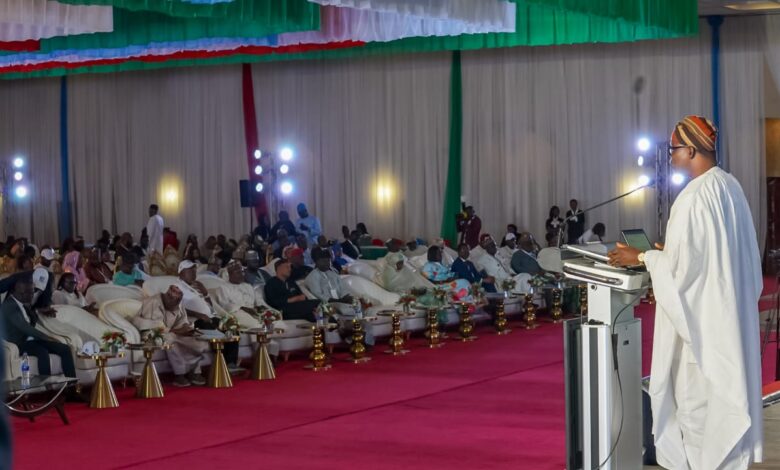
Speaking at the APC Medical Council Health Roundtable Conference held at the State Banquet Hall, Abuja, the Minister of State for Health and Social Welfare, Iziaq Adekunle Salako, said the Tinubu administration was prioritising mandatory health insurance enforcement, primary healthcare revitalisation and digital transformation to build a resilient health system.
Leading the Federal Government’s position, Salako said recent global shocks — including the COVID-19 pandemic and declining development assistance from major donors such as the United States, United Kingdom and Germany — had exposed structural weaknesses in Nigeria’s health sector.
Citing preliminary findings from the 2023 Nigeria Demographic and Health Survey (NDHS), the minister said maternal mortality declined from 576 to 512 deaths per 100,000 live births, while under-five mortality dropped from 132 to 110 per 1,000 live births. Skilled birth attendance improved from 43 per cent to 53 per cent, and full immunisation coverage rose to 39 per cent from 31 per cent in 2018.
Despite these gains, Salako admitted that government health expenditure remains at 5.2 per cent of GDP — far below the 15 per cent benchmark agreed under the 2001 Abuja Declaration. Per capita health spending stands at approximately $43, while out-of-pocket expenditure remains high at 71 per cent, pushing millions into poverty annually.
He disclosed that national health insurance coverage has grown to between 10 and 13 per cent of the population, with over 20 million Nigerians enrolled through various schemes. However, he stressed that enforcement of the National Health Insurance Authority Act 2024 would be intensified to expand coverage, particularly through mandatory subscription across Ministries, Departments and Agencies (MDAs).
“Our target is to exceed 20 per cent coverage by 2027,” Salako said, referencing a recent presidential executive order mandating broader implementation.
On primary healthcare, the minister said the Basic Health Care Provision Fund (BHCPF) has recorded improved absorption capacity, rising from 45 per cent in 2019 to 78 per cent in 2023. He added that utilisation of Primary Health Centres (PHCs) surged from 15.1 million visits in 2024 to 170.8 million visits in 2025, following infrastructure upgrades and workforce deployment.
Salako revealed that more than 37,000 health workers have been employed since 2023, although brain drain continues to strain the system. Nigeria’s doctor-to-population ratio currently stands at 1:5,000, far below the WHO recommendation of 1:600, with 75 per cent of health workers concentrated in urban areas.
The minister outlined key pillars of the Nigerian Health Sector Renewal Investment Initiative (NHSRII), launched in December 2023, focusing on governance reform, equitable service delivery, strengthening local pharmaceutical production, and improving emergency preparedness under the “7-1-7” framework — seven days to detect a threat, one day to notify authorities, and seven days to initiate response.
He also highlighted disease-specific gains, including zero wild poliovirus cases since 2020, expansion of tuberculosis diagnostic sites to 126 GeneXpert centres, enrolment of 1.78 million persons living with HIV on treatment, and distribution of 63 million insecticide-treated nets between 2021 and 2023.
In digital health, Salako announced progress under the Nigeria Digital in Health Initiative, including development of a National Digital Health Architecture and establishment of national registries for patients, facilities and healthcare workers to improve data-driven decision-making.
However, he admitted that progress remains slow relative to Nigeria’s population of over 230 million, noting persistent maternal deaths, child mortality and financial hardship linked to healthcare costs.
“We are not satisfied with the pace,” he said. “Health system resilience requires sustained investment, political will and accountability.”
The Federal Government pledged to push for increased budgetary allocation, guaranteed BHCPF releases, rural retention incentives for health workers, supply chain digitisation and climate-resilient health infrastructure powered by renewable energy.
READ ALSO: Tinubu Decorates, Charges Acting IGP Disu to Restore Peace, Tackle Insecurity Nationwide
FG Reaffirms Commitment to Human Rights, Seeks UN Council Seat for 2027–2029
Salako called on stakeholders to renew their commitment to health sector reform, stressing that only a healthy population can guarantee national prosperity and security.
“Let this era be remembered as the period when Nigeria made the decisive turn toward universal health coverage and health system resilience,” he said.
About The Author