Senate Pledges Inclusive Reform of Nigeria’s Social Security Framework Amid Stakeholder Concerns on NSSTF Bill

By Fatima Saka
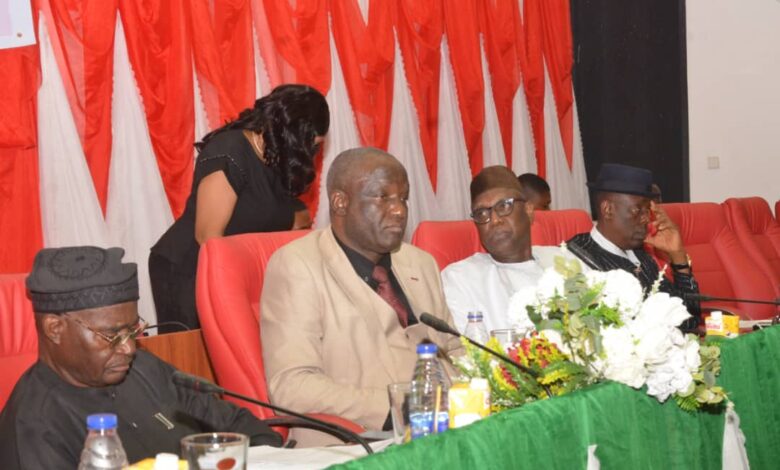
The Senate Committee on Employment, Labour and Productivity on Monday held a one-day public hearing on the Nigeria Social Security Trust Fund (Establishment) Bill, 2025 (SB. 557), assuring stakeholders that their concerns and recommendations would be fully considered in shaping a stronger, more inclusive social security framework for Nigeria.
The chairman of the committee, while opening the session, welcomed representatives of government agencies, labour unions, private sector organisations and civil society groups, describing the hearing as a critical step in strengthening workers’ compensation and welfare systems in the country.
In his remarks, Senator Diket Plang, representing Plateau Central, underscored the importance of the public hearing to the Senate’s commitment to transparent and participatory lawmaking. He noted that such engagements provide experts and affected stakeholders the opportunity to make meaningful contributions toward refining legislation with far-reaching socio-economic impact.
Discussions during the session focused on the content, naming and scope of the bill, particularly its proposal to consolidate the existing National Social Insurance Trust Fund (NSITF) Act and the Employees’ Compensation Act under a single framework.
After the chairman’s opening remarks, the sponsor of the bill, Senator Cyril Oluwole Fasuyi, representing Ekiti North, presented his position on the proposed repeal of the Nigeria Social Insurance Trust Fund Act, 1993 and the Employees’ Compensation Act, 2010, and the establishment of the Nigeria Social Security Trust Fund, alongside 45 related provisions captured in Senate Bill 557.
He described the public hearing as a significant milestone in Nigeria’s efforts to strengthen labour protection and social security systems, stating that the bill is designed to reinforce existing protection mechanisms and ensure that labour institutions remain responsive to the evolving demands of a modern economy.
While acknowledging the foundational role of the Employees’ Compensation Act in providing support for workers who suffer occupational injuries, diseases or fatalities, Senator Fasuyi noted that its implementation has been hindered by persistent challenges. These include delays in benefit payments, high administrative costs, weak enforcement structures and limited penalties for non-compliant employers — problems that are even more acute in Nigeria’s large informal sector.
According to him, these weaknesses have undermined the effectiveness of the current framework, with negative implications for productivity, labour stability and workers’ confidence in the system.
He explained that the proposed law is aimed at streamlining, consolidating and harmonising existing legislation into a single, coherent instrument, without creating a new institution. Instead, it seeks to align the operations of the National Social Insurance Trust Fund and the Employees’ Compensation Scheme under a unified body, to be known as the Nigeria Social Security Trust Fund.
Key provisions of the bill, as highlighted by Senator Fasuyi, include:
Sectoral Expansion, to extend coverage to the informal sector and move Nigeria closer to comprehensive, nationwide socio-economic protection.
Enhanced Compliance Measures, including the introduction of mandatory compliance certificates for companies seeking government contracts and empowering the Fund to initiate legal action against defaulting employers.
Occupational Safety and Health (OSH) Reforms, aligning standards with global best practices and strengthening enforcement powers.
Improved Reporting and Accountability, through electronic reporting systems and reduced timelines for reporting workplace incidents.
Sustainable Funding Mechanisms, by expanding permissible investments to include strategic assets such as real estate.
Strengthened Governance Structures, to enhance board oversight, management efficiency and overall accountability.
He stressed that the bill is anchored on the principles of fairness, efficiency and inclusivity, adding that it is designed to protect workers, support employers and eliminate duplication and inefficiencies within the current system.
In line with Order 76(3) of the Senate Standing Orders 2023 (as amended), Senator Fasuyi clarified that the bill would not impose any additional financial burden on the Federal Government, as implementation would rely on existing structures and internally generated resources.
However, some stakeholders raised concerns about the scope of the bill, arguing that it does not adequately address broader aspects of social security for vulnerable populations such as the unemployed, elderly and persons with disabilities.
One speaker cited Section 16(2)(d) of the 1999 Constitution, which mandates the state to provide adequate welfare, including old-age care, unemployment benefits and support for vulnerable groups. He advised the Senate to withdraw the current bill and instead amend existing laws while drafting a new, comprehensive social security legislation that covers all categories of Nigerians.
Concerns were also expressed over the proposed removal of the Trustees Investment Act from the framework without a clear alternative to guide the Fund’s investment decisions.
In response, the Managing Director and Chief Executive Officer of the National Social Insurance Trust Fund, Barrister Oluwaseun Mayomi Faley, welcomed the bill, describing it as the outcome of engagements and retreats between the agency and the National Assembly in 2024.
He said the amendments would strengthen NSITF’s enforcement capacity, enhance transparency, improve claims processing through digital platforms and significantly expand coverage to include the informal sector.
“The informal sector is one of the largest employers in Nigeria. Bringing them into the compensation and insurance framework is a critical step forward,” Faley said.
He also defended the proposal to replace the independent investment committee with a board-led committee, noting that the new structure would improve efficiency, reduce bureaucracy and accelerate decision-making.
The Minister of Labour and Employment, Muhammadu Maigari Dingyadi, who also addressed the gathering, commended the Senate for its inclusive approach. He affirmed that the National Assembly has the constitutional mandate to enact laws in the best interests of Nigerians, including those governing agencies that are not directly funded by the Federal Government.
“What we are witnessing today is democracy in action. Every voice is being heard, and at the end of the day, the result will be a more effective, efficient and people-centred institution,” Dingyadi said.
READ ALSO: ZANNAN BUNGUDU, A POLITICIAN WITH THE MIDAS TOUCH
POIC 3.0. 2025. Ladoke Akintola Varsity contestant clinches 1st prize
The session attracted representatives from the Nigeria Labour Congress (NLC), the Nigeria Employers’ Consultative Association (NECA), civil society organisations and other actors in the labour and social protection ecosystem.
The outcome of the public hearing is expected to guide the committee’s recommendations to the Senate on whether the bill should be amended, withdrawn or redrafted to ensure the creation of a broader, more inclusive and effective social security architecture for all Nigerians.
About The Author