Senate Orders Emergency Medical Intervention, Environmental Clean-Up in Ogijo Over Widespread Lead Poisoning

By Fatima Saka
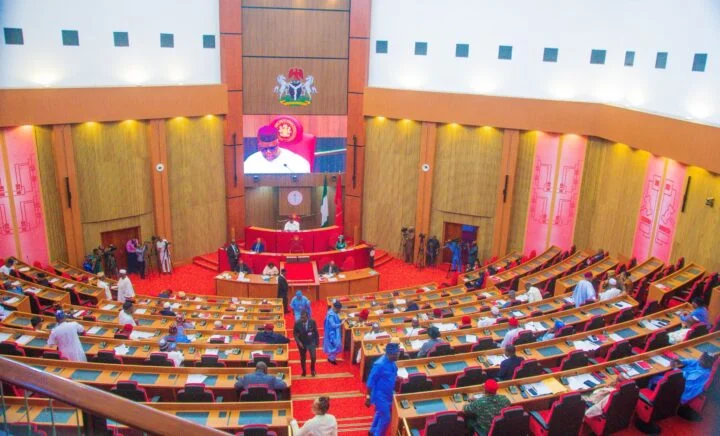
The Senate has directed the immediate deployment of emergency medical teams to Ogijo community and ordered a comprehensive environmental clean-up of the area following confirmed cases of widespread lead poisoning linked to illegal battery recycling and smelting activities along the Ikorodu–Ogun East boundary.
The resolution was reached on Thursday after the Senate adopted a motion sponsored by Senator Mukhail Adetokunbo Abiru and Senator Gbenga Daniel under Matters of Urgent Public Importance, mandating the Federal Ministry of Health, through the Nigeria Centre for Disease Control and Prevention (NCDC), to conduct free toxicology screening, blood-lead level testing and provide chelation therapy and ongoing treatment for affected residents, especially children and vulnerable groups.
In further decisive action, the Senate ordered the Federal Ministry of Environment and the National Environmental Standards and Regulations Enforcement Agency (NESREA) to carry out detailed environmental remediation and contamination mapping of the area, covering soil, groundwater, air quality and household dust particles to determine the full scale of pollution and guide urgent clean-up operations.
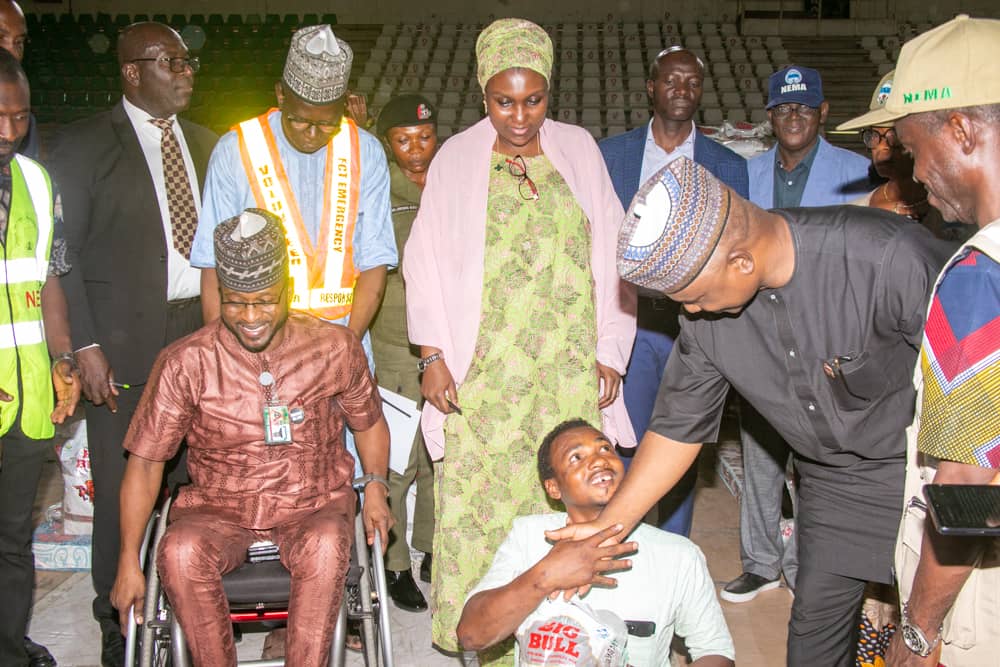
To cushion the impact on residents, the National Emergency Management Agency (NEMA) was mandated to provide immediate relief, including protective kits, clean water, food supplies and temporary relocation for families living in highly contaminated zones.
The Senate also called on the Federal Ministry of Solid Minerals Development and relevant regulatory agencies to strictly enforce compliance standards for battery recycling and lead-processing facilities nationwide, warning that non-compliant operators must be shut down and prosecuted.
In a strategic move to strengthen coordination, lawmakers recommended the creation of a specialised department within NEMA to be known as the National Lead Poisoning Response and Remediation Task Force, to oversee clean-up efforts, medical interventions, environmental monitoring and traceability of exported lead.
The Committee on Legislative Compliance was directed to oversee the implementation of the resolutions and report back to the Senate within six weeks.
During the debate, senators expressed grave concern over scientific findings confirming extremely high levels of lead in residents’ blood samples and the surrounding environment. Independent testing reportedly revealed contamination levels up to 186 times above the global safety threshold, with victims suffering symptoms such as persistent headaches, abdominal pain, memory loss, seizures, cognitive impairment and developmental delays in children.
Lawmakers regretted that despite repeated complaints by residents over several years, smelting furnaces continued to operate, releasing toxic fumes from melted batteries into nearby homes, schools, markets and playgrounds. They also noted that lead processed in Ogijo reportedly entered international supply chains, linking Nigeria’s contaminated materials to global battery and automobile manufacturers.
The Senate, however, commended the Federal Government, particularly the Minister of State for Labour and Employment, Hon. Nkeiruka Onyejeocha, for the shutdown of seven used lead-acid battery recycling factories in the area and the temporary suspension of lead ingot exportation pending investigations.
The Lagos and Ogun State Governments were also praised for their proactive engagement, including inspections, awareness campaigns and collaboration with federal authorities to support affected communities.
READ ALSO: FirstPower Takes Over Anambra’s Power Distribution, Launches Mass Metering to End Estimated Billing
Contributing senators stressed that regulatory agencies must become more proactive rather than reactive, warning that industrial monitoring in Nigeria’s urban and peri-urban communities has remained weak for too long.
They agreed that the Ogijo incident must serve as a national turning point, with coordinated enforcement across all industrial zones to prevent further environmental and public health disasters.
With no opposition raised, the motion was unanimously adopted by the Senate.
About The Author