Senate Moves to Rebuild ‘Groundnut Pyramids,’ Unveils Plan to Re-Engineer Agricultural Education for Food Security in Nigeria


By Fatima Saka
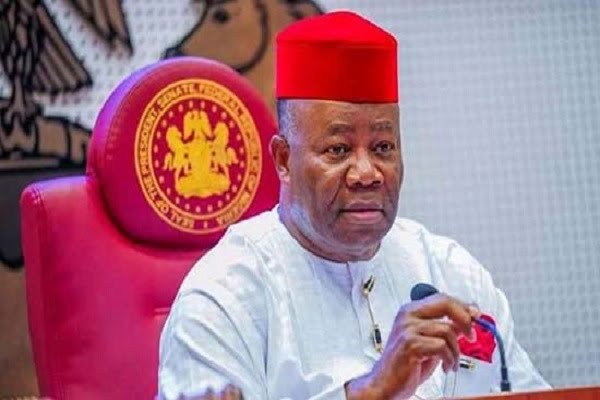
Abuja, Nigeria — The President of the Senate, Godswill Obot Akpabio, has declared that the Senate will spearhead sweeping reforms to reposition Nigeria’s agricultural colleges as engines of food security, innovation and national renewal.
Speaking at the 2026 Retreat on Agricultural Colleges and Institutions in Nigeria, Akpabio said the country must “build the pyramids again” by re-engineering agricultural education to tackle rising food insecurity, unemployment and economic dependency.
Declaring the retreat open, the Senate President stressed that a nation of over 200 million people “cannot outsource its food security” or depend on imports for survival, insisting that legislative backing would be central to reviving the sector.
“The Senate of the Federal Republic of Nigeria stands ready to play its constitutional role through enabling legislation, effective oversight, sustained budgetary support, and strategic collaboration,” he said. “Food security is not partisan; it is patriotic.”
Akpabio lamented Nigeria’s decline from its era as a global agricultural powerhouse, when groundnut pyramids in the North, cocoa production in the West and palm produce in the East symbolised prosperity, attributing the downturn to policy neglect rather than lack of natural resources.
He said Agricultural Colleges and Institutions (ACIs) must evolve from “relics of the past” into centres of climate-smart innovation, mechanisation, agribusiness incubation and data-driven farming.
“The future Nigerian farmer must be as comfortable with data as with soil,” he declared, calling for stronger linkages between research, industry, financial institutions and farming communities.
Earlier, Chairman of the Senate Committee on Agricultural Colleges and Institutions, Senator Sharafadeen Abiodun Alli, PhD, described the retreat as a “critical juncture” following the 2026 budget defence sessions.
Alli said most agricultural institutions are constrained by obsolete frameworks and chronic underfunding, warning that food security and sustainable job creation would remain elusive without urgent reforms.
“Our institutions must shift from producing job seekers to graduating agri-preneurs capable of building enterprises across the agricultural value chain,” he said.
He outlined key reform pillars to include modernising research toward commercially viable solutions, integrating precision agriculture, artificial intelligence and climate adaptation strategies, upgrading infrastructure, and fostering stronger Public-Private-Academic partnerships.
The lawmaker added that resolutions from the retreat would feed into a National Summit later in the year aimed at producing a Legislative Roadmap for agricultural education reform.
READ ALSO: Senate Sets Tough Benchmarks for Agricultural Institutions, Earmarks N990bn for 2026 Budget
The retreat, held in Abuja, brought together members of the Senate Committee, heads of agricultural colleges and research institutes, development partners, and key stakeholders in the sector.
With food prices rising and insecurity affecting farming communities, the Senate signalled that agricultural reform is no longer optional but existential, positioning education, innovation and legislative support at the heart of Nigeria’s quest to feed itself and restore its lost agricultural glory.
About The Author