Senate Advances Civil Registration Bill to Fix Nigeria’s Birth, Death Data Gaps, Strengthen National Planning

By Fatima Saka
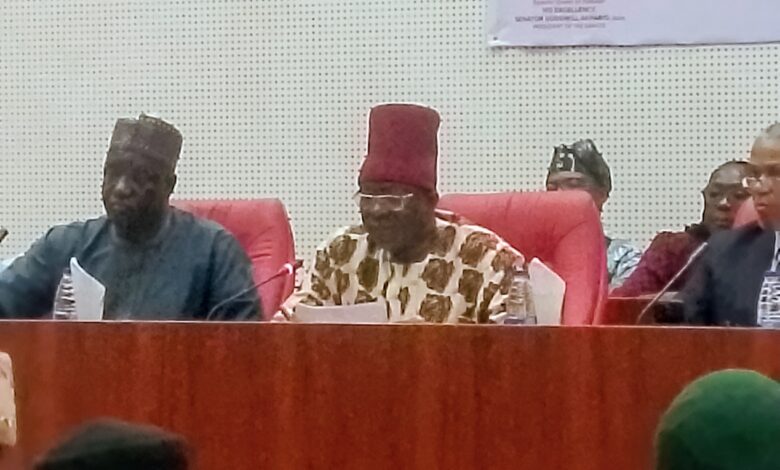
The Senate Committee on National Identity Card and National Population on Monday led stakeholders at a public hearing to advance a landmark bill aimed at overhauling Nigeria’s civil registration system and ending decades of unreliable population data.

Chairman of the Committee, Senator Dr. Victor C. Umeh, OFR, said the proposed Compulsory Civil Registration Act, 2025 will replace the outdated Births, Deaths, etc. (Compulsory Registration) Act of 2004 and introduce a modern electronic civil registration system capable of accurately capturing births, deaths, marriages and divorces nationwide.
Speaking at the public hearing held at the National Assembly Complex in Abuja, Senator Umeh described the bill as “a transformative piece of legislation” that will serve as the foundation for credible population data, effective national planning and transparent governance.
“This reform is critical to ensuring that every birth and every death in Nigeria is accurately recorded,” he said. “For decades, Nigeria has relied on estimates, projections and fragmented identity systems that undermine planning in education, health, national security, social welfare, elections, economic strategy and resource allocation.”
Leading deliberations on the bill, which has passed first and second readings and is now at the public hearing stage, the Committee emphasized that compulsory registration is essential for citizenship, access to government services and national development.
Senator Umeh noted that birth registration confers legal identity and citizenship, while death registration ensures accurate population records and planning.
“A child whose birth is not registered faces lifelong identity challenges,” he said, explaining that access to immigration documents, education, social benefits and government interventions is tied to official registration. “When a person dies, that death must be registered so the individual is removed from the population register. These records are necessary for accurate planning.”
Addressing concerns over the absence of explicit sanctions in the bill, the Committee Chairman argued that the consequences of non-registration are effectively self-inflicted, as unregistered individuals are excluded from government programmes, palliatives and social benefits. He added that sustained public enlightenment and visible benefits would drive compliance.
Several senators and stakeholders supported the bill while calling for stronger enforcement mechanisms. They stressed that compulsory registration must be backed by clear responsibilities for hospitals, private health facilities and community birth settings, as well as penalties to ensure compliance.
Senator Diket Plang highlighted how reliable birth and death data would improve population projections, curb age falsification, strengthen electoral integrity, support military and NYSC age requirements, and enhance health surveillance, including tracking causes of death and birth defects.
The Federal Ministry of Health and Social Welfare, through its representative, formally endorsed the bill, aligning it with existing maternal, perinatal and child death surveillance systems. The Ministry proposed technical amendments, including clearer medical definitions and improved data disaggregation to support public health planning.
READ ALSO: 2025 NCE: FG Assures Stronger Environmental Policy, Sustainability Outcomes in Nigeria
HYPREP Deepens Disability Inclusion, Targets Skills Training for Ogoni PWDs by 2026
The Chairman of the committee, Senator Umeh assured stakeholders that their inputs would be carefully reviewed as the Committee finalises the bill for passage, expressing optimism that the Senate would soon pass a law that places accurate civil registration at the heart of Nigeria’s development planning.
“With this bill, Nigerians will truly be counted,” he said, “and governance will be driven by facts, not guesses.”
About The Author