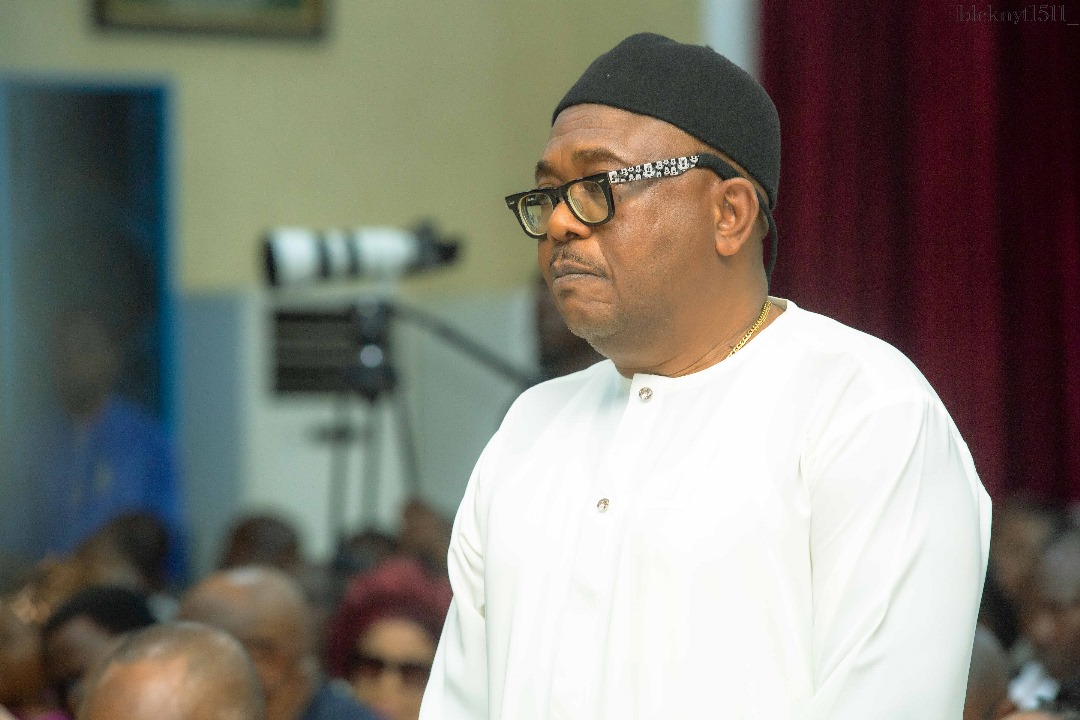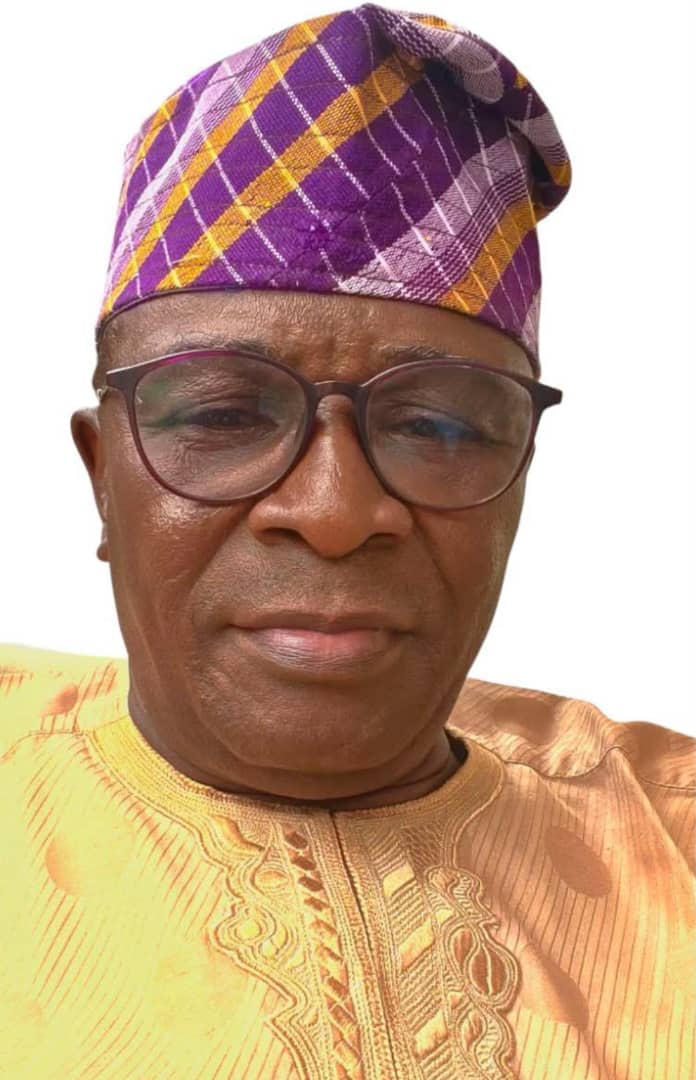
Rep Members Do Not Sell Contracts: Boniface Adie Must Cease the Barefaced Lies Against Hon. Peter Akpanke

By Clement Abuo
Marcus Tullius Cicero (106–43 BCE), the renowned Roman orator, lawyer, statesman, and philosopher, once observed that “as fire, when thrown into water, is cooled and extinguished, so also a false accusation, when brought against a man of pure and holy character, boils over, dissipates, and vanishes.”
This timeless reflection aptly captures the nature of the unfounded and misleading allegations recently made against Hon. Peter Akpanke. Lies, no matter how loudly proclaimed or persistently repeated, cannot outweigh truth, integrity, and a record of noble character.
It is therefore unsurprising that the accusations leveled against Hon. Peter Akpanke collapsed under the slightest scrutiny. No reasonable or fair-minded individual can take seriously allegations coming from a man who openly admits to fraudulent conduct and then paradoxically turns around to claim victimhood.
Such contradictions strip the accusations of credibility from the outset.
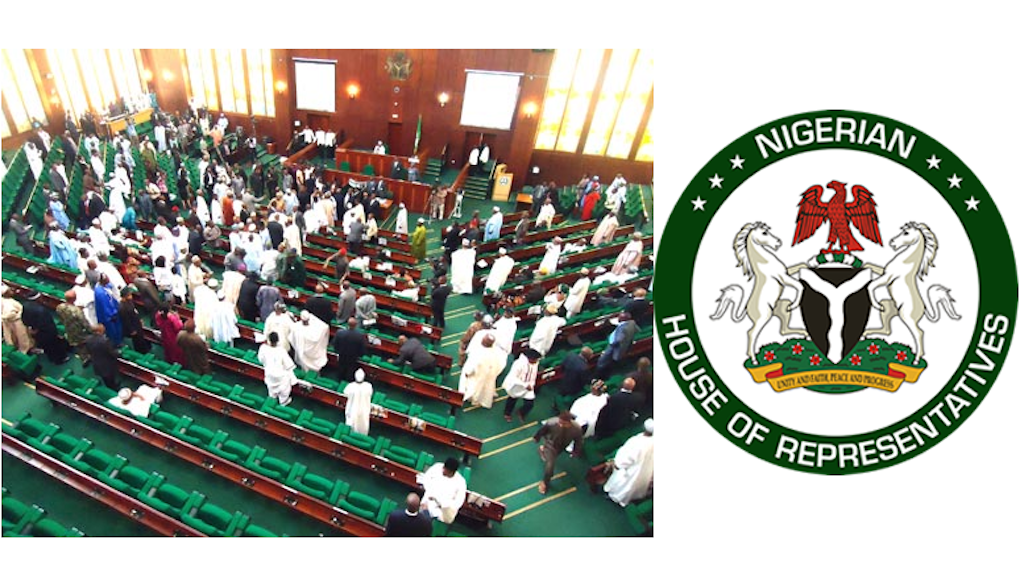
To state the facts clearly and unequivocally, members of the House of Representatives—just like their counterparts in the Senate—do not sell contracts. They do not own contracts, they do not bid for contracts, and they do not execute contracts. Their constitutional role is limited to nominating constituency projects, after which the relevant ministries, departments, and agencies handle procurement and execution in line with established procedures. Any claim suggesting otherwise is either born out of ignorance or driven by deliberate malice.
Against this backdrop, one is compelled to question the motive behind Boniface Adie’s hurried dash to the public space with such poorly constructed allegations. He openly admitted to giving out money to “buy” contracts, without pausing to consider the legal, moral, and logical implications of such a claim. How does one admit to an act of corruption and then expect public sympathy? More importantly, how does one claim to buy what does not exist in the custody of a legislator?
Boniface Adie further attempted to emotionally blackmail the public by dragging Hon. Peter Akpanke into his family matter, citing the illness and eventual death of his brother. He admitted that Hon. Akpanke showed concern and reached out, yet he argued that the Honourable Member was obligated to shoulder the entire medical expenses simply because he represents the constituency. This line of reasoning is not only illogical but also reveals a gross misunderstanding of the responsibilities of a lawmaker.
A member of the House of Representatives cannot possibly attend to every personal challenge faced by constituents while simultaneously performing legislative duties—participating in debates, sponsoring bills, raising motions, and advocating for infrastructure and development. Such expectations are unrealistic and, frankly, unreasonable.
Despite this, Hon. Peter Akpanke has consistently gone beyond the limits of his constitutional mandate. He has organized general health outreaches across his constituency, offering free medical services to individuals facing serious health challenges and who cannot afford even basic check-ups.
Those requiring treatment have received care, while others in need of medication support have been assisted financially. These humanitarian gestures, though not required by law, have been undertaken voluntarily and with genuine compassion.
It is therefore deeply uncharitable and misleading to suggest that Hon. Peter Akpanke must personally shoulder every hardship faced by every constituent.
In what can only be described as desperation, Boniface Adie went as far as urging a television station, during a live broadcast, to call the wife of Hon. Peter Akpanke to explain an alleged contractual transaction. One must ask: since when do contractual dealings between two consenting adults require spousal interrogation—especially on live television?
This action exposes the extent to which sensationalism and blackmail were being prioritized over truth and ethics.
Boniface Adie attempted to justify this reckless behavior by claiming that Hon. Peter Akpanke was unreachable. This claim is disingenuous, as he was fully aware of the Honourable Member’s office address and had, by his own admission, contacted him repeatedly, sometimes through his aide.
The decision by the television station to proceed with the broadcast despite knowing that Hon. Akpanke was unavailable raises serious ethical questions. Should Hon. Akpanke later establish his innocence conclusively, how does one undo the reputational damage caused by such premature and one-sided accusations?
Equally troubling is Boniface Adie’s claim that he was approached to buy contracts to fund his election after a failed attempt to become a local government chairman. According to him, this approach was made by someone he identified as “Charlie Emeji,” allegedly an aide to Hon. Peter Akpanke. However, there is no individual by that name serving as an aide to Hon. Akpanke. This fact alone casts significant doubt on the authenticity of the entire story.
Furthermore, Boniface Adie admitted that the so-called meeting took place without the presence of Hon. Peter Akpanke. If that is the case, then it is only logical to conclude that impersonation with the intent to extort may have occurred. Anyone can claim to be an aide to a public office holder, especially when such impersonation serves personal gain.
Boniface Adie must therefore clarify his contradictory claims.
In one instance, he said he paid money to buy contracts; in another, he said the money was meant to facilitate contracts. Both claims are mutually inconsistent and unsupported by verifiable evidence. As already established, members of the House of Representatives do not own contracts and cannot sell or facilitate what is not within their authority.
It would have been more prudent to allow room for peaceful and amicable resolution of any perceived grievance, rather than embarking on a smear campaign fueled by speculation, inconsistencies, and political undertones.
As elections approach, it is not unusual for political opponents to clutch at straws in their bid to discredit perceived threats. Unfortunately, individuals of weak judgment often allow themselves to be used as tools for such schemes, lending their voices to narratives designed to mislead the public.
Hon. Peter Akpanke remains a dedicated, diligent, and hardworking representative of the Obudu/Bekwara/Akamkpa (OBA) Federal Constituency. He has consistently raised motions in the House and advocated policies aimed at improving the welfare of his people. His constituents continue to express satisfaction with his representation.
He has executed numerous constituency projects geared toward transforming infrastructure and improving living standards across OBA. In the education sector, he has supported students through scholarships, sponsorship of JAMB forms, renovation of classrooms, and other impactful interventions.
READ ALSO: LWC Announces Temporary Water Supply Disruption in Parts of Lagos
Safety Turned Threat: Road Safety Officer’s Reckless Conduct Puts Abuja Commuters at Risk
It is only fair and reasonable to allow Hon. Peter Akpanke to continue the work for which the people entrusted him with their mandate.
Boniface Adie must therefore desist from being used as a cheap instrument of blackmail by political actors nursing failed ambitions and plotting toward 2027.
Clement Abuo is an Abuja-based public affairs analyst and commentator. He can be reached at clemabuo@gmail.com.
About The Author