By Fatima Saka
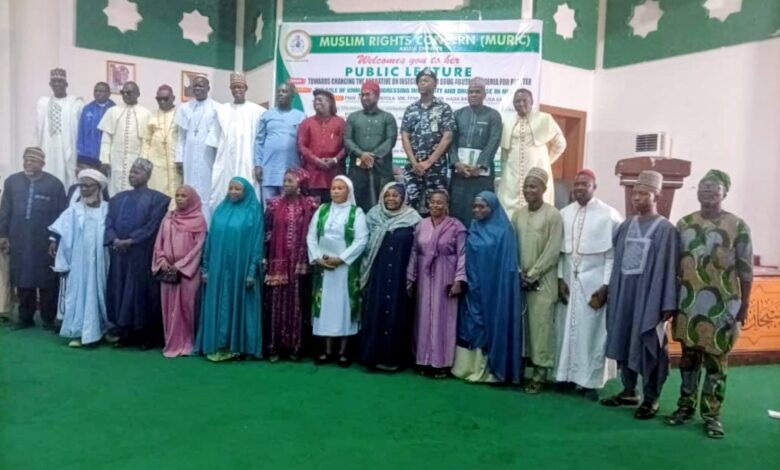
Religious leaders, security agencies, and civil society actors on Saturday converged at the National Mosque, Abuja, to address Nigeria’s worsening insecurity and rising drug abuse, calling for a united moral, spiritual, and community-based response to the twin challenges.
The public lecture, organised by the Muslim Rights Concern (MURIC), Abuja Chapter, was themed “The Role of the Muslim Ummah in Addressing Insecurity and Drug Abuse in Nigeria”, and titled “Changing the Narrative on Insecurity and Drug Abuse in Nigeria for Better.”
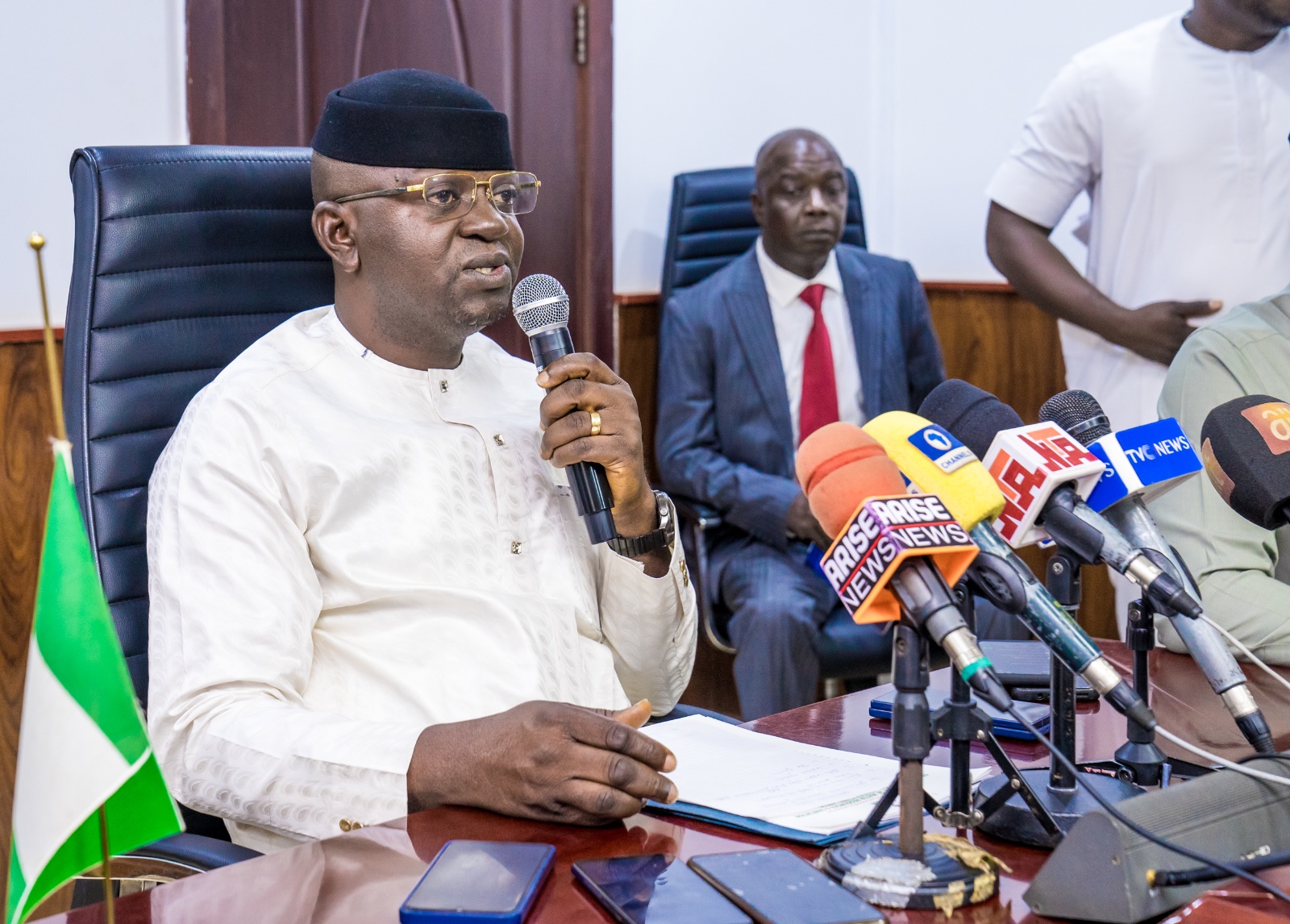
Founder and Executive Director of the Muslim Rights Concern (MURIC), Prof. Ishaq Akintola,blamed Nigeria’s worsening insecurity on deep-rooted corruption and waste.
He stressed that systemic mismanagement of national resources has fuelled mass poverty, which in turn breeds violence and instability across the country.
He said Nigeria’s insecurity crisis is not a product of lack of resources but the failure of leadership to deploy the country’s wealth for the collective good.
According to him, Nigeria is a rich nation whose resources have been cornered by a few individuals, leaving millions impoverished. He described poverty as the primary driver of insecurity, noting that it is largely caused by corruption, unemployment, idleness and drug abuse.
The MURIC leader emphasized that corruption has directly weakened the country’s security architecture, citing alleged diversion of funds meant for the procurement of military equipment, which he said left soldiers ill-equipped to confront insurgency and terrorism. “If the armed forces had been properly equipped, many of these terrorist groups would have been defeated long ago,” he said, adding that the consequences of corruption continue to haunt the nation politically and socially.
Prof. Akintola stressed that MURIC is not affiliated with any political party but insisted that those who mismanaged public funds must be held accountable, warning that injustice and impunity ultimately undermine peace and national stability.
He also highlighted Nigeria’s vast oil resources and past earnings, contrasting them with current levels of poverty, hunger and social deprivation. Citing various indicators, he said millions of Nigerians live below the poverty line, lack access to education, and face alarming maternal and infant mortality rates.
The cleric rejected narratives that portray insecurity as a religious conflict, insisting that both Muslims and Christians are victims of terrorism. He maintained that extremist groups do not represent Islam and often act in ways that contradict its teachings.
Prof. Akintola called for sincere dialogue among religious and community leaders, as well as collective national introspection, to address the root causes of insecurity.
He further said that eliminating poverty through transparency, accountability and equitable distribution of resources remains one of the most effective paths to lasting peace in Nigeria.
The Chairman of the occasion and Agricultural Adviser to the Nigeria Governors’ Forum, Prof. Abba Gambo, delivered an emotional address recounting personal and communal losses suffered during the Boko Haram insurgency, describing Borno State as the epicentre of years of violence and trauma.
Speaking at the event, Prof. Gambo traced his roots to the Burmeyan Kingdom, noting that he is the 31st professor from his family’s long academic lineage. He said his personal experiences with the insurgency underscored the deep human cost of insecurity in Nigeria’s North-East.
He recalled being present during one of the earliest attacks that targeted a prominent traditional ruler in the region, an incident he described as one of the most distressing moments of his life. According to him, his family also suffered devastating losses, including the killing of a close relative shortly after a burial ceremony, an event that plunged the entire household into grief.
Speaking on behalf of Rev. Simon Dolly, Bishop Elward Williams Chonomi (VIAT), Christian Association of Nigeria (CAN) commended MURIC for what he described as a “timely and courageous intervention” in confronting issues threatening national stability and youth development.
Chonomi said insecurity and drug abuse thrive where moral discipline and guidance are absent, stressing that faith communities must go beyond silence to become agents of social transformation.
“The Ummah is more than a community of faith; it is a community of conscience. Islam teaches peace, justice, and the sanctity of life. When religious institutions, families, and leaders stand firm in truth and compassion, society becomes safer and more resilient,” he said.
He also praised the collaboration among religious leaders, women in Da’wah, media professionals, security advocates, and anti-drug campaigners, describing it as a powerful signal that dialogue and education, not violence or neglect,remain the most effective tools for national renewal.
In a goodwill message delivered on behalf of the Inspector-General of Nigeria Police Force, ACP, Dr Alhassan Yaqub reaffirmed its commitment to protecting lives and property while addressing the root causes of insecurity.
The message noted that the police had recorded progress in combating insurgency, banditry, kidnapping, and other violent crimes, while acknowledging that sustained collaboration with community and faith-based organisations remains essential.
“The role of the Muslim Ummah in promoting peace, unity, and cooperation complements the work of the police. Religious advocacy helps build trust between law enforcement agencies and the communities we serve,” the message stated.
The police further urged religious leaders to continue encouraging community policing, reporting of suspicious activities, and support for victims of crime.
In linking Drug Abuse to Rising Criminality, Mr. Femi Babafemi, Director of Media and Advocacy at the National Drug Law Enforcement Agency (NDLEA), during his address warned that drug abuse has become a major driver of violent crime and insecurity in Nigeria.
Representing the NDLEA Chairman, Brig. Gen. Mohamed Buba Marwa (Rtd.), Babafemi said empirical data clearly established a nexus between substance abuse and criminal behaviour.
“No sane individual wakes up to kidnap hundreds of children or carry out mass killings. These extreme acts are often committed under the influence of mind-altering substances,” he said.
Citing the 2018 UNODC–NBS drug use survey, Babafemi disclosed that about 14.3 million Nigerians aged 15 to 64 use illicit drugs, nearly three times the global average.
He revealed that in the past 12 months, NDLEA operatives arrested 19,944 suspects, seized 4.9 million kilograms of illicit drugs, secured 3,653 convictions, rehabilitated 10,395 drug users, and conducted 4,496 advocacy programmes nationwide.
Babafemi called on religious leaders to use mosques and community platforms to promote lawful livelihoods, discourage drug abuse, support rehabilitation, and encourage youth empowerment.
“The drug crisis is not just a law enforcement issue; it is a moral and spiritual crisis. If we shut down the drug pipeline, the insecurity problem will be half solved,” he added.
Earlier in his welcome address, Ustaz Yunus Salahudeen, Chairman of MURIC Abuja Chapter, said the lecture was convened to change prevailing narratives on insecurity and drug abuse through informed dialogue and collective action.
He announced plans to extend enlightenment campaigns to the six area councils of the Federal Capital Territory, AMAC, Kuje, Bwari, Gwagwalada, Kwali, and Abaji, in collaboration with security agencies, schools, faith-based organisations, and rehabilitation centres.
“Today’s gathering is more than a lecture; it is a movement for positive change. Allah will not change our situation unless we take steps to change it ourselves,” Salahudeen said.
Speaking on the Brunt of Insurgency on women, the Chairperson of Ameera Al-Ansar, Hajiya Amina Abubakarv called for urgent, sustained national action against insurgency in Nigeria, warning that women and children continue to suffer the gravest consequences of violent conflicts, particularly in the North-East and increasingly in the North-West.
Hajiya Abubakar said insurgency is a “man-made problem that requires deliberate human solutions,” stressing that women often shoulder the burden left behind when men are killed in conflict, becoming sole caregivers to traumatised families.
“As women, we take most of the heat. When men are killed, they leave behind wives and children who must survive the aftermath. This is why insurgency is an issue we must openly discuss and collectively resolve,” she said.
She expressed regret that conversations around the gendered impact of insurgency were not initiated earlier, noting that widespread violence has created deep psychological trauma even among Nigerians living in relatively peaceful areas.
Hajiya Abubakar linked the rising wave of insecurity to drug abuse, arguing that many violent acts are committed under the influence of substances. She lamented the constant flow of violent news, describing it as emotionally draining and reflective of a nation under siege.
Drawing from personal experience, she recalled witnessing the early stages of insurgency in the North-East, where peaceful communities were suddenly forced to flee en masse. She warned that insecurity often starts gradually before escalating uncontrollably.
“What happened in the North-East is now spreading to the North-West. We must not deceive ourselves into thinking it cannot reach other parts of the country,” she cautioned.
The Ameera Al-Ansar chairperson urged Nigerians to take collective responsibility rather than relying on external forces to solve the nation’s security challenges, adding that silence and inaction only worsen the crisis.
“No one will come from outside to solve our problems for us. Once we allow outsiders to fight our battles, we are failing ourselves,” she said.
READ ALSO: NiDCOM Condemns Killing of Nigerian in India, Calls for Justice, Peaceful Conflict Resolution
FCTA Workers Declare Indefinite Strike Over Unpaid Promotion Arrears, Pension Deductions
She also called for interfaith unity, recounting her upbringing alongside Christians in schools and communities, which she said reflects Nigeria’s shared history and coexistence.
“Nigeria is our country. We grew up together, Muslims and Christians alike, and we are still living together. We must protect it,” she added.
The participants however, called for sustained faith-based advocacy, youth empowerment, moral reorientation, and stronger partnerships between religious institutions and security agencies to build a safer, drug-free Nigeria
About The Author