By Fatima Saka
ABUJA — Nigeria’s drive to secure long-term financing for immunization and primary healthcare gained major momentum on Monday as lawmakers at national and state levels, senior government officials, development partners, and civil society groups endorsed sweeping legislative and fiscal measures to address the country’s growing immunization funding gaps.
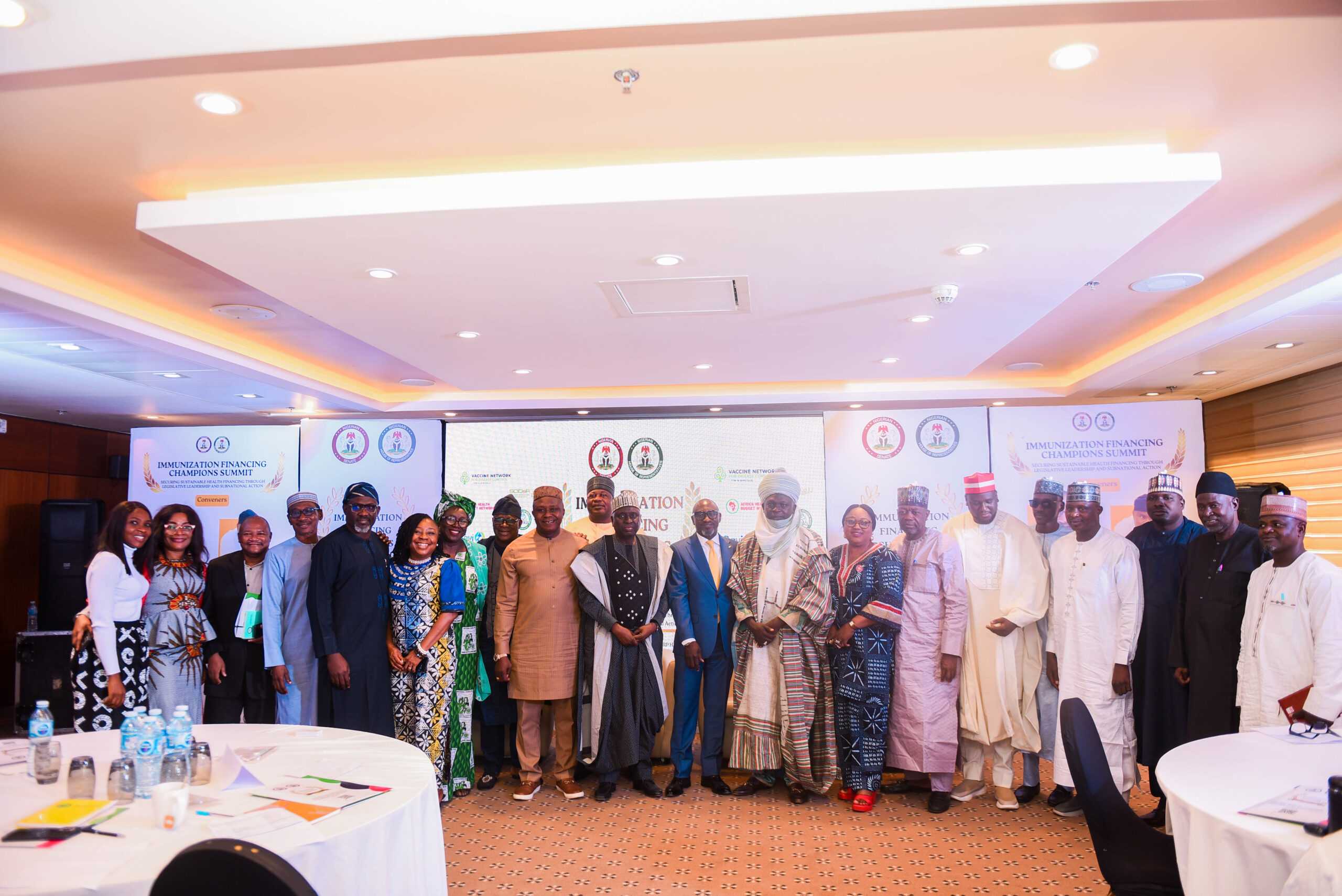
The Immunization Financing Champions Summit, themed “Securing Sustainable Health Financing Through Legislative Leadership and Subnational Action,” was convened by the House of Representatives Committee on Healthcare Services and chaired by Hon. Dr. Amos Magaji Gwamna in Abuja on Monday.
The summit drew participation from the National Assembly, 10 State Houses of Assembly, the Federal Ministry of Health, Ministry of Finance, NPHCDA, NHIA, Nigeria Governors’ Forum, ALGON, development partners, civil society, and private sector stakeholders.
Participants applauded ongoing government efforts, including progress on the National Health Act (Amendment) Bill, constitutional reforms to strengthen health financing, and the release of ₦68 billion from Nigeria’s ₦231 billion Gavi co-financing requirement for 2025.
In the communique issued at the end of the meeting, participants expressed concern that despite vaccines being the world’s most cost-effective public health intervention, Nigeria continues to record one of the highest numbers of zero-dose children. They warned that gaps have further widened following USAID’s withdrawal from key immunization support.
The summit emphasized that immunization is not only essential for preventing disease but also a driver of productivity, education, security, and economic growth. Strengthening vaccine financing, stakeholders agreed, is critical for reducing preventable deaths, preventing outbreaks, and advancing universal health coverage.
Deeply concerned about chronic underfunding of Nigeria’s health sector, heavy out-of-pocket spending by citizens, and poor health outcomes, the summit resolved to adopt a set of strong, coordinated actions.
HIGHLIGHTED CALL TO ACTIONS
Stakeholders unanimously committed to the following priority actions:
Support the National Health Act (Amendment) Bill to increase the Basic Health Care Provision Fund (BHCPF) from 1% to a minimum of 2% of the Consolidated Revenue Fund.
Back constitutional amendments that recognize health as a fundamental right and embed long-term financing mechanisms into Nigeria’s supreme law.
Advocate for Immunization Financing as a First Line Charge (FLC) to guarantee full, timely, and mandatory release of funds without bureaucratic delays.
Strengthen oversight, transparency, and accountability in the utilization and disbursement of health funds.
Ensure state governments meet counterpart funding obligations for BHCPF, Gavi, and other health partnerships, supported by transparent tracking and reporting systems.
Support revisions to the Customs and Excise Act and promote state-level health taxes on alcohol, tobacco, and sugar-sweetened beverages earmarked specifically for healthcare.
Enhance subnational ownership by empowering state and local governments to lead vaccine procurement and delivery, ensuring sustainability.
Eliminate siloed efforts by promoting one coordinated plan, unified monitoring and evaluation, and shared health outcomes.
READ ALSO: NEMA DG Zubaida Umar Wins National Excellence Award for Transformative Emergency Response Leadership
Yuletide: LASWA, NIWA strengthen collaboration for passengers’ safety
Institutionalize data-driven advocacy to guide program improvements and inform high-level decision-making.
The summit closed with a renewed commitment from lawmakers and stakeholders to protect Nigeria’s immunization gains, strengthen domestic resource mobilization, and ensure that no Nigerian child is left behind due to vaccine inequity. Representatives of all participating institutions formally adopted and signed the communique.
About The Author