N75.6bn ‘Not Enough’: Lawmakers Warn NDLEA Funding Gap Threatens National Security, Demand Emergency 2% IGR Release

By Fatima Saka
The National Assembly Joint Committee on Drugs and Narcotics has declared that the N75.6 billion proposed for the National Drug Law Enforcement Agency (NDLEA) in the 2026 fiscal year is grossly inadequate to confront Nigeria’s worsening drug crisis, warning that persistent funding gaps are weakening the country’s broader fight against insecurity.
In a bid to strengthen the agency’s capacity, the committee recommended allocating 2% of the federal government’s internally generated revenue (IGR) to the NDLEA
During the agency’s budget defence session, lawmakers expressed deep concern that despite the established link between drug abuse and violent crimes, the NDLEA continues to operate with limited capital releases, deteriorating infrastructure and insufficient operational tools.
The committee revealed that no capital funds were released to the agency in 2025, a development members described as alarming and detrimental to ongoing projects nationwide.
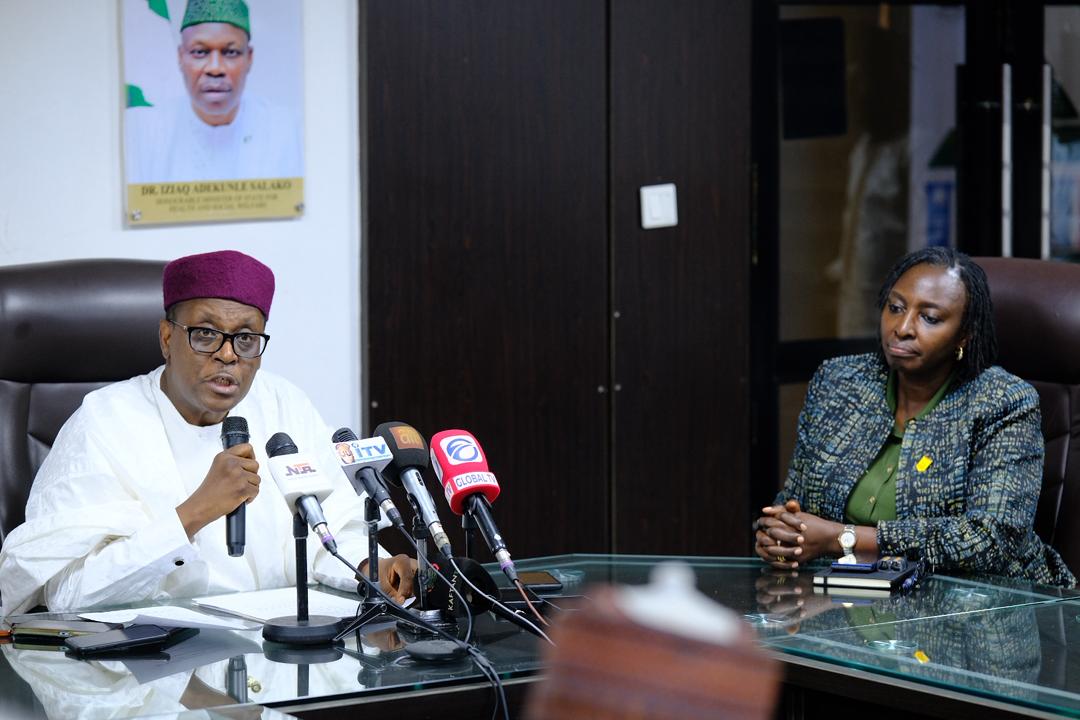
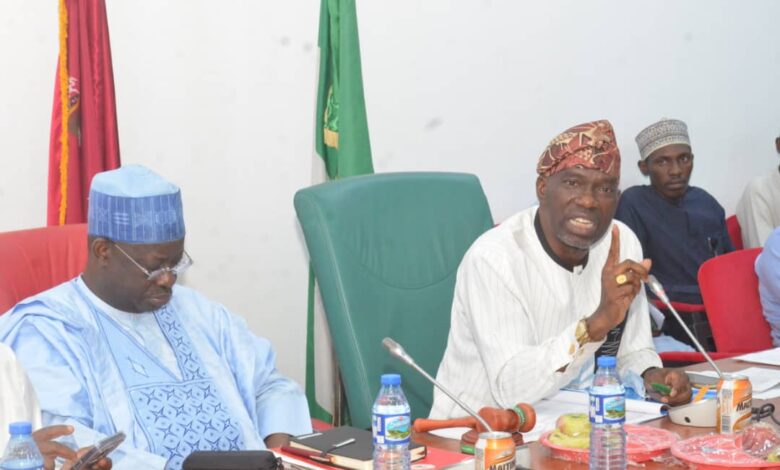
Chairman of the Committee, Senator Ibrahim Hassan Dankwambo, alongside Co-Chairman, Hon. Abass Aboworin Adigun, led the scrutiny of the agency’s 2025 budget performance and 2026 proposal following a presentation by NDLEA Secretary, Shadrach Haruna.
Speaking after a closed-door deliberation, Hon. Adigun warned that the country risks a deeper security crisis if drug control efforts are not adequately funded.
“This agency should be among the top national priorities. At least 50 per cent of insecurity in Nigeria is linked to drug abuse. Yet we are not funding it accordingly. If we fail to act now, the implications in the next decade will be severe,” he said.
Lawmakers criticised the structure of the 2026 proposal, particularly the capital allocation of N388.59 million, describing it as insufficient for an agency with nationwide enforcement, rehabilitation and prevention mandates.
They noted that critical projects, including the construction and rehabilitation of state commands, counselling and rehabilitation centres, and procurement of operational equipment, have been stalled due to funding constraints.
Members also raised concerns over vague budget descriptions. One project titled “Construction of Habitation through Counselling Centre” drew scrutiny, with lawmakers demanding clarification on whether it referred to new construction or renovation of an existing facility.
Further questions were raised regarding allocations for ambulances, body scanners and laptops, with the committee insisting that quantities and specifications must be clearly stated in line with modern budgeting standards.
“If N77 million is proposed for ambulances, how many units are you procuring? These details must be clear,” a member said.
The overall budget envelope of approximately N75.6 billion was widely described as inadequate for an agency responsible for tackling a drug abuse prevalence rate of 14.4 per cent — nearly three times the global average, according to a United Nations Office on Drugs and Crime (UNODC) report cited by lawmakers.
Senator Baba Njide Husseini stressed that drug abuse has permeated families and communities, with women and children increasingly affected.
“How do you expect an agency this critical to function without capital releases? Most violent crimes we are grappling with today are linked to substance abuse,” he said.
Lawmakers also expressed dissatisfaction with the state of NDLEA facilities in several states. Citing oversight visits, including to the Jos command in Plateau State, members described infrastructure as deplorable.
Particularly criticised was the proposed N24 million for renovation of the Plateau State Command complex and guesthouse, which lawmakers said was unrealistic given the condition of the facility.
“If the environment is not conducive, it cannot inspire rehabilitation. This allocation appears grossly insufficient,” a lawmaker remarked.
In his presentation, NDLEA Secretary Shadrach Haruna acknowledged the funding challenges but outlined operational gains recorded within the review period. He disclosed that drugs valued at approximately N550 billion were seized nationwide, while 640 hectares of illicit cannabis farms were destroyed through coordinated enforcement operations.
Haruna explained that the 2026 personnel cost reflects adjustments arising from promotions conducted in 2025 and the implementation of a new compensation structure approved by the Office of the Head of Service, resulting in about a 1.6 per cent increase over the previous baseline.
For overhead expenditure, the agency proposed N8.38 billion, retaining the 2025 figure in line with the Budget Call Circular directive, as last year’s allocation was not fully implemented.
On capital funding, Haruna explained that only 30 per cent of the 2025 capital allocation was released toward the last quarter of the year and was largely committed before utilisation.
He noted that a directive requires Ministries, Departments and Agencies to carry forward 70 per cent of their capital appropriations into the 2026 fiscal year.
The NDLEA Secretary also revealed ongoing collaboration with international partners, including the U.S. Drug Enforcement Administration (DEA), particularly in intelligence sharing and financial investigations targeting drug networks.
He added that the agency has established a dedicated department for drug demand reduction, intensifying sensitisation campaigns in schools, religious institutions and grassroots communities.
Addressing the rejected proposal for a two per cent cost-of-collection funding mechanism, Haruna said the President’s decision was based on existing provisions under the Proceeds of Crime Act but appealed to lawmakers to consider alternative intervention models similar to the Police Trust Fund to guarantee sustainable financing.
Despite acknowledging operational successes, lawmakers maintained that achievements recorded under severe financial constraints only highlight the urgent need for increased investment.
Some members advocated placing the NDLEA on a first-line charge to ensure direct statutory funding from the Federation Account, arguing that the fight against drug abuse should be treated as a national security emergency.
READ ALSO: NSCDC takes its community engagement to Agege
Not less than 600 widows benefit from Lagos Legion palliative distribution
The committee resolved to further deliberate on funding options and possible adjustments to strengthen the agency’s financial framework.
Lawmakers concluded that without urgent and substantial financial reinforcement, Nigeria’s efforts to curb drug abuse, and by extension insecurity, may remain significantly undermined, warning that the growing crisis poses a ticking time bomb for the nation’s future.
About The Author