Another Breakthrough in Health Sector’s: FG Launch’s Committee on Digital Landscape for Efficiency Transformation, Protection of Data Integrity in Nigeria

By Fatima Saka
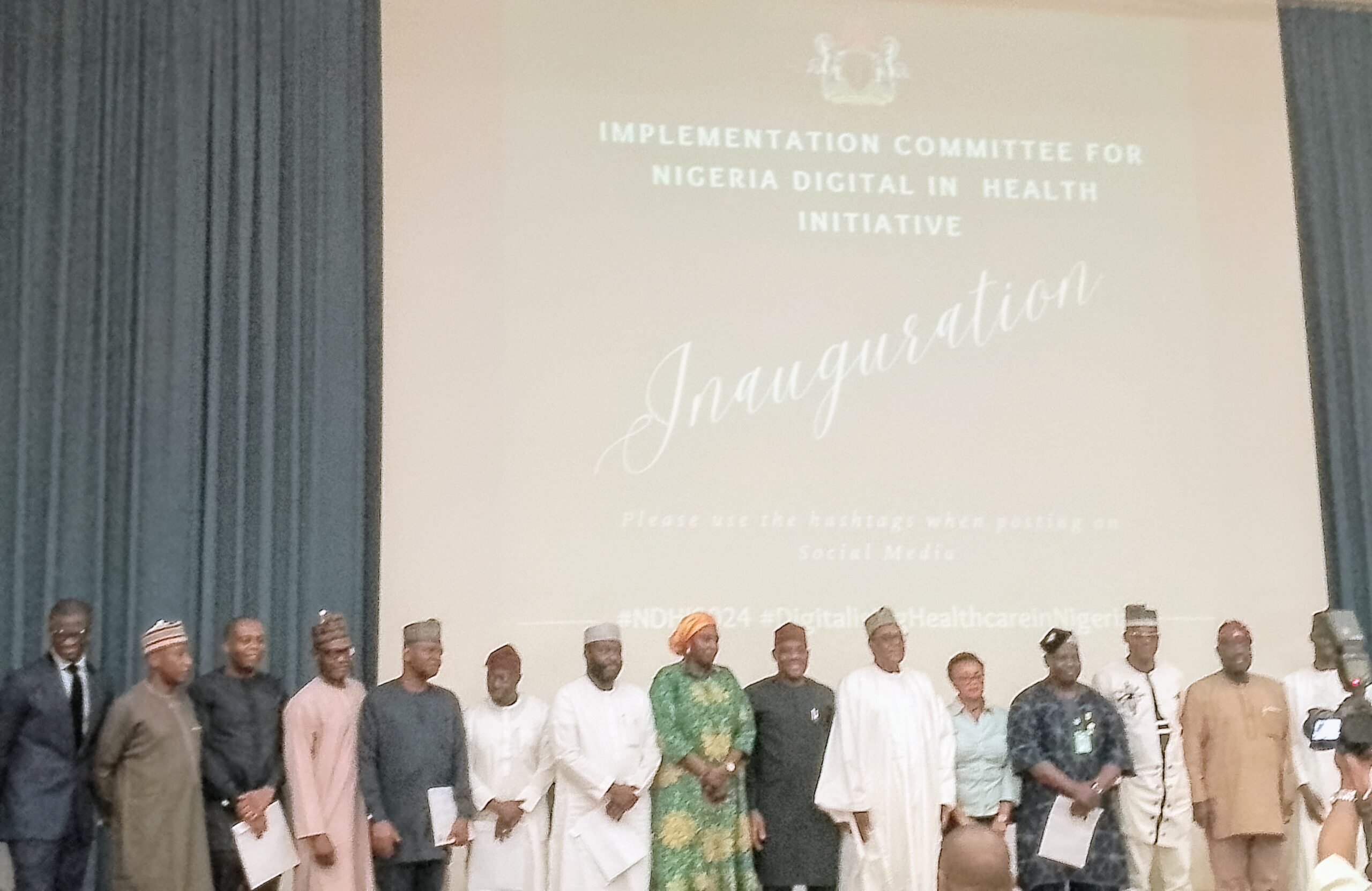
In an effort to strengthen healthcare services delivery, the Federal Government of Nigeria has Inaugurated Committees on Digital Landscape to transform efficiency in the Health sectors across the country.
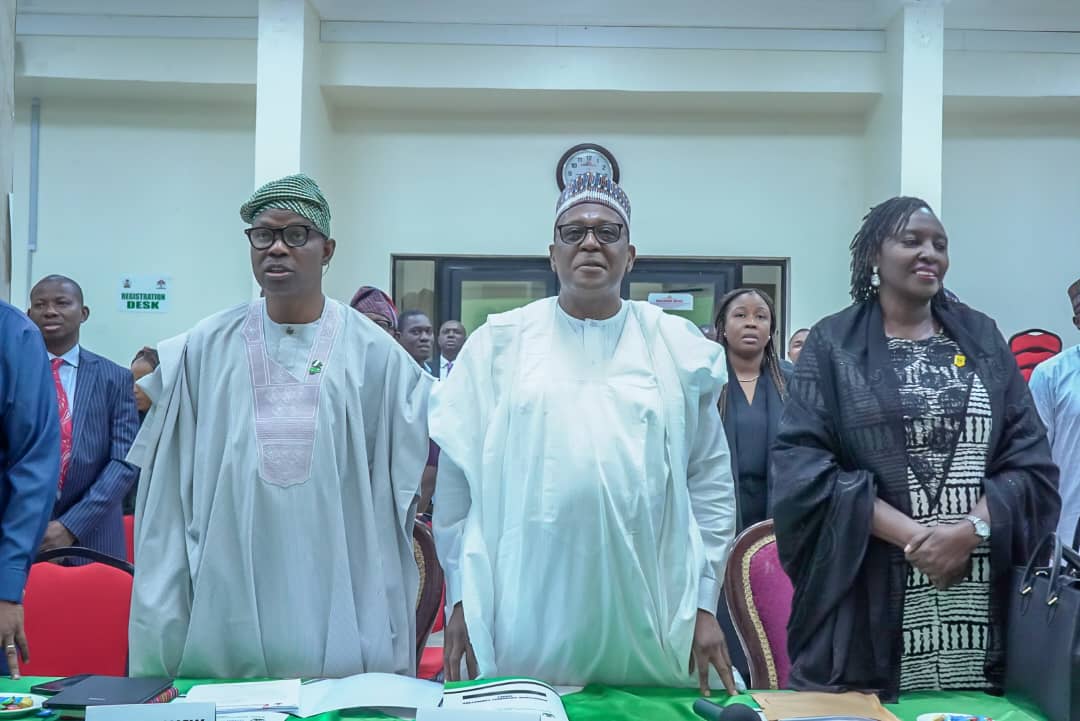
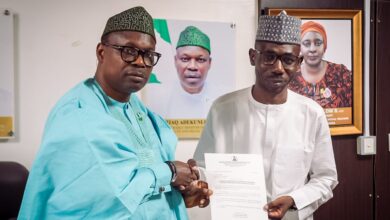
During the Inauguration and Presentation of letters of appointment to members of the committee on Friday in Abuja, the Coordinating Minister of Health and Social Welfare, Prof. Muhammad Ali Pate emphasized that this is another breakthrough in transforming healthcare services across the nation. “This is another milestone in our journey to transform Nigeria’s health sector, in line with the Health Sector Renewal Investment Initiative, which was unveiled by President Bola Ahmed Sengu December 12, 2023.”
He expressed that the sector-wide approach that was used by the ministry is in line with the vision of the National Healthcare System as enshrined by the National Health Act 2014.
Prof. Pate reiterated that the committee was crafted by the honorable Minister of State for Health to use the Electronic Medical Record (EMR) platform as a basis for deep-frogging and digital information.
“And the efforts that we have made in the past, as well as in the future, to achieve certain key things, to improve patients’ experience and protection of patients’ data. Because at the end of the day, it’s about the people. How to use the EMR platform to improve patient experience, the health systems, and protect the data integrity.
“How to improve patient outcomes, population health outcomes, using this transformation and the technology.
“How digital transformation helps us to reduce the cost of healthcare by the providers at different levels, even for the patients like NHI, primary healthcare services.
“And using the platform to improve the work life of the health workers themselves, the providers, who are using the tools that will be the outcome ultimately of this work to improve their own work life experience.
“And for policy makers and managers to also improve their attractiveness and efficiency and be able to hold actors accountable.”
In his inaugural address, Minister of State for Health and Social Welfare, Dr. Tunji Alausa said that healthcare services have long time suffered from data fragmentation.
He added that the transition to a digital health infrastructure is not merely a choice but a necessity to revolutionize healthcare delivery in the country.
He further asserts that the digital in health Initiative will show that digitalization in health goes beyond EMR/HER platforms. “We want to rebuild and reposition the digital health environment to include: Data gathering, Data repository, Data servicing and Service regulation.
“The platform so created would be such that data can be easily validated. We shall start with an EMR system which is just a part of the overall digital ecosystem.
“Digitalising the healthcare system is one of the key elements to achieving President Bola Ahmed Tinubu GCFR’s vision for the health sector. Having quality data available for use, is one of the key enablers and underpins the entire health delivery system’s framework and is vital to the federal ministry of health and social welfare’s 4-point agenda, which is in tandem with Mr President’s vision. This consists of: Effective governance , Efficient, equitable and quality health System, Unlocking the value chain and
Health Security.
“The national unified EMR platform will serve as a central hub to enhance health system efficiency, ensure robust monitoring of public health and disease outbreaks, mortality rates, facilitate seamless data exchange and quality assurance, and foster opportunities for further research to strengthen our national health security. It will also hold our various institutions accountable, and ultimately, allow us to have ownership of our data from the primary to the federal healthcare level for the first time in Nigeria’s history.
“A national EMR system would enable primary, secondary, and tertiary healthcare personnel to manage clinical and administrative data seamlessly across centers and achieve three immediate benefits: Improved quality of care by providing health care providers with instant access to comprehensive patient records, leading to more accurate diagnosis and personalized treatment plans.
“Reduced expenditure on health through reduction of tests due to avoided duplication and, Increased staff capacity and productivity, through the reduction of time spent on paper based administrative tasks.
In her remarks, Daju, Kachollom S.mni, Permanent Secretary Federal Ministry of Health, said in adopting digital-in-health approach in Nigeria will entrench data-backed decision-making processes.
The permanent secretary emphasized that the initiative is expected to be incorporated and integrated across different facets of the health system including service delivery, financing, referral management, pandemic preparedness, research, among others.
She added that this will address issues of fragmentation and siloed integration that characterize the current approach. You have been carefully selected as members of the ‘Nigeria Digital-in-Health Initiative’ (NDHI) implementation Committee to provide governance, strategic leadership, oversight, technical expertise and national coordination for this initiative.
“The Committee is expected to work with all relevant stakeholders and existing digital health governance structures to ensure swift implementation of key policies and strategies impacting on health digitalization in Nigeria.”
Following are the members of the committee:
CHAIRMAN DR. TUNJI ALAUSA, MD
VICE CHAIRMAN Dr. Edem Adzogenu
MEMBER Dr. Adejuwon Dada
MEMBER Dr Chris. Osa. Isokpunwu
Program Manager NHD Initiatives, Dr. Gbenga Ijadola
MEMBER Dr. Jimoh Salaudeen
MEMBER Bodunde O. Onifade
MEMBER Mr. Idris Albankudi
MEMBER Mr. Lanre Lamina
MEMBER Dr. Muyi Aina
MEMBER Tajudeen Ibrahim
MEMBER Kelechi Ohiri
MEMBER Dr. Lolade Adeyemi
MEMBER Mr. Bode Pedro
MEMBER John Adebisi
MEMBER Abubakar Yusuf
MEMBER Dr Ibrahim Waziri
MEMBER Dr. Oyebanji Filani
MEMBER Robert Cryer
MEMBER Leke Ojewale.
About The Author