By Fatima Saka
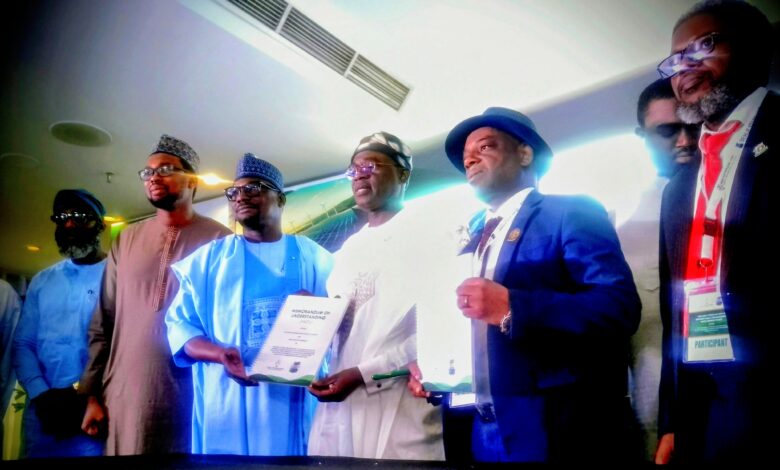
Abuja, Wednesday — The Executive Governor of Benue State, Rev. Fr. Dr. Hyacinth Iormem Alia, has declared renewable and decentralized energy the cornerstone of Benue’s industrial and economic future, as the state on Wednesday signed a Memorandum of Understanding (MoU) with the Rural Electrification Agency (REA) to accelerate private investment in its power sector.
Governor Alia delivered a Special Address at the REA State-by-State Roundtable Engagement with Benue State, themed “From Strategy to Impact: Accelerating Private Investment in Benue State Renewable Energy Ecosystem”, held in Abuja. He emphasized that access to reliable electricity is a major barrier to industrialization, economic growth, and social development in Benue.
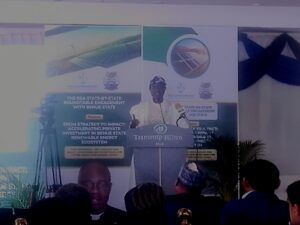
Highlighting the state’s strategic advantage, he said, “For Benue to achieve its vision as an industrial hub, attract investors, and foster sustainable growth, we must adopt bold, diversified energy solutions that expand electricity access across households, businesses, and industrial clusters.”
The governor noted that Nigeria generates about 20,000 megawatts, transmits 8,000, but delivers only 4,500 megawatts to end users, a gap that underscores the need for state-led renewable and decentralized energy initiatives.
He cited the Electricity Regulation Act of 2023, which empowers states to independently generate, distribute, and sell electricity, as a framework Benue is fully leveraging to attract private investment, reduce energy dependency, and expand power access.
Governor Alia highlighted past initiatives including the National Gas Expansion Programme, the establishment of committees to harness coal-bed methane and alternative energy sources, and the introduction of electric vehicles and bikes within the state.
He also announced solar installations for schools and hospitals, and the development of a high-powered Energy Master Plan Task Force to prioritize projects, create bankable investment pipelines, and establish a transparent regulatory framework for renewable energy deployment.
While Settling the Tone earlier, REA Managing Director/CEO, Abba Aliyu, said the Benue engagement marked the 24th in the agency’s state-by-state roundtable series, noting that Benue was strategically selected due to its vast agricultural potential and high energy deficit.
He disclosed that Benue currently has about 32 per cent electrification access, making it one of the states with the highest number of people without electricity.
Aliyu revealed that the Federal Government, through REA, is implementing a $750 million renewable energy programme, described as the largest publicly funded project of its kind globally, targeting the deployment of 1,350 mini-grids, 250 interconnected mini-grids, and over 10 million solar home systems to electrify 17.5 million Nigerians.
He urged private renewable energy developers to channel investments into Benue State, particularly to reduce post-harvest losses through productive-use energy solutions for agricultural processing zones.
During the welcome address, Fidelis Msughter Unongo, Special Advisor- Special Duties and Intergovernmental Affairs, hailed the event as a pivotal moment for Benue’s renewable energy future. He said, “We gather today to explore the incredible potential of renewable energy in our dear state. Benue is uniquely positioned to be at the forefront of this global shift towards sustainable energy. Our rich natural resources and spirit of innovation enable us to unlock a future powered by renewable energy.”
Unongo also announced the creation of a one-stop center to support businesses in the renewable energy sector. “This center provides all the necessary information, certifications, and resources to streamline operations in Benue’s vibrant energy ecosystem,” he said, emphasizing that the initiative reflects the state’s commitment to ease of doing business and investment-friendly policies.
He further highlighted the role of solar energy as a key pillar of Benue’s renewable strategy, noting its potential to power homes and businesses, create jobs, and drive community development. “Together, we can transform strategic visions into impactful realities, attract private investment, empower the local workforce, and enhance the quality of life for our people,” Unongo said.
In his goodwill message, Hon. Iji Joseph Ter, Commissioner For Renewable Energy, Power and Transport, underscored the roundtable’s timeliness and strategic importance. “Access to reliable, affordable, and sustainable energy is a critical driver of economic growth, industrial development, and improved quality of life for Benue State,” he said.
He highlighted the state’s abundant solar resources, agricultural waste potential, and opportunities for small-scale hydro power, noting that the energy transition aligns with national policy and global climate commitments.
READ ALSO: Onitsha Market Closure: Soludo Explains Rationale, Vows to End Sit-at-Home
FG Reaffirms Commitment to Deepening Nigeria–Cuba Relations, Multilateral Cooperation
Ter emphasized the state government’s commitment to creating an enabling environment for renewable energy investment through strengthened policies, regulatory frameworks, and public-private partnerships. “The government alone cannot achieve these goals. We are therefore open to collaboration, innovation, and investment to translate ideas into implementable projects,” he said, urging participants to explore financing models, technology transfer opportunities, and practical solutions during the roundtable.
The roundtable ended with renewed commitments from Benue State, REA, and private sector stakeholders to foster public-private partnerships, accelerate renewable energy investment, and position Benue as a benchmark for energy-led industrialization in Nigeria.
About The Author