The Federal Government has reaffirmed its resolve to end unaffordable healthcare and expand access to quality services, as federal and state health leaders, alongside United Nations agencies, called for stronger financing, accountability and collaboration to achieve Universal Health Coverage (UHC) in Nigeria.
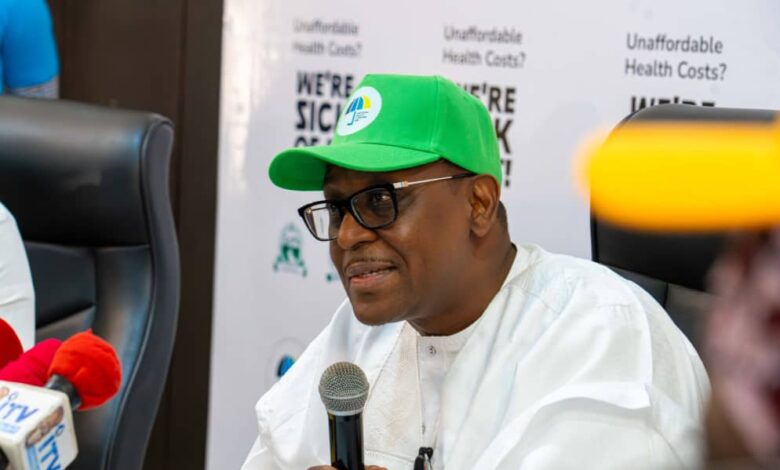
At the 2025 Universal Health Coverage Day celebration in Abuja, with the themed, “Unaffordable Health Costs: We Are Sick of It.”the Coordinating Minister of Health and Social Welfare, Professor Muhammad Ali Pate, said the Tinubu administration is determined to ensure that no Nigerian is forced to choose between seeking healthcare and meeting basic household needs. He stressed that health is not only a fundamental human right but also a key driver of national productivity, security and economic growth.
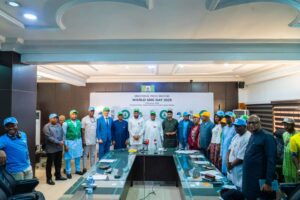
Group picture of the Commemoration of World Health Day Coverage 2025:
Middle: Prof. Muhammad Ali Pate CON, Coordinating Minister of Health & Social Welfare:
On his Left: Dr. Oyebanji Filani, Chairman Health Commissioners Forum & Commissioner of Health, Ekiti State:
On his Left: Dr. Charles Nzelu, Representing the Permanent Secretary FMoHSW;
On the Right of Prof. Pate: Dr. Kelechi Phiri, Director-General National Health Insurance Authority NHIA;
Next: Dr. Muyi Aina, Executive Secretary National Primary Healthcare Development Agency NPHCDA;
Next: Dr. Pavel Ursu WHO Country Representative
Speaking on behalf of the states, Chairman of the Commissioners of Health Forum, Dr. Oyebanjo Filani, said Nigeria’s UHC challenges mirror a wider global reality, compounded by declining and shifting donor financing. He explained that although donor funds contribute only about eight to 12 per cent of Nigeria’s health financing, they often support critical interventions that had been historically underfunded, making the transition to greater domestic funding particularly sensitive.
“As a country, we have taken ownership of these challenges,” Dr. Filani said, commending the coordinating minister’s leadership in minimising funding gaps and ensuring that external support aligns with national priorities. He added that state governments recognise their responsibility not only to expand access to quality healthcare but also to listen to citizens’ feedback and make necessary course corrections.
Representing the United Nations Population Fund (UNFPA), Dr. Oluwatosin Kolade described UHC as a fundamental human right that underpins health, dignity and empowerment. He said Nigeria’s journey toward UHC is both urgent and essential, especially for women, children and other vulnerable populations.
“As the UN agency for sexual and reproductive health, UNFPA remains committed to ending unmet family planning needs, preventable maternal deaths, gender-based violence and harmful practices,” he said. Dr. Kolade called for deeper collaboration to ensure that health services are available, accessible, acceptable and of high quality, while eliminating the burden of unaffordable healthcare costs. He also commended the leadership of the coordinating minister and reaffirmed UNFPA’s commitment, alongside other UN agencies, to supporting Nigeria’s quest for a healthier and more equitable future.
The World Health Organization (WHO), however, warned that unaffordable healthcare costs remain one of Africa’s most persistent barriers to achieving UHC. In a message from the WHO Regional Director for Africa, Dr. Mohammed Janabi, delivered by the WHO Representative in Nigeria, Dr. Pavel Ursu, the organisation noted that out-of-pocket payments continue to dominate health financing across many African countries.
WHO disclosed that in 2022 alone, more than 423 million people in Africa experienced financial hardship due to health spending, with hundreds of millions pushed deeper into poverty. Despite this, the organisation acknowledged gains in service coverage across maternal and child health, infectious diseases and non-communicable diseases between 2015 and 2022, demonstrating what sustained political commitment can achieve.
However, it cautioned that progress remains uneven, with women, children, older persons and rural communities bearing the heaviest burden of healthcare costs.
Stakeholders at the event urged sustained political will, increased domestic health financing and stronger public accountability to keep Nigeria on track toward achieving Universal Health Coverage and breaking the cycle of illness driven by unaffordable healthcare.
About The Author