……. Unveils BHCPF 2.0 Revised Guideline for Transparency, Accountability
By Fatima Saka
The Federal Government has approved the disbursement of ₦32.9 billion under a revised funding framework for the Basic Health Care Provision Fund (BHCPF) to strengthen primary healthcare delivery across the country.
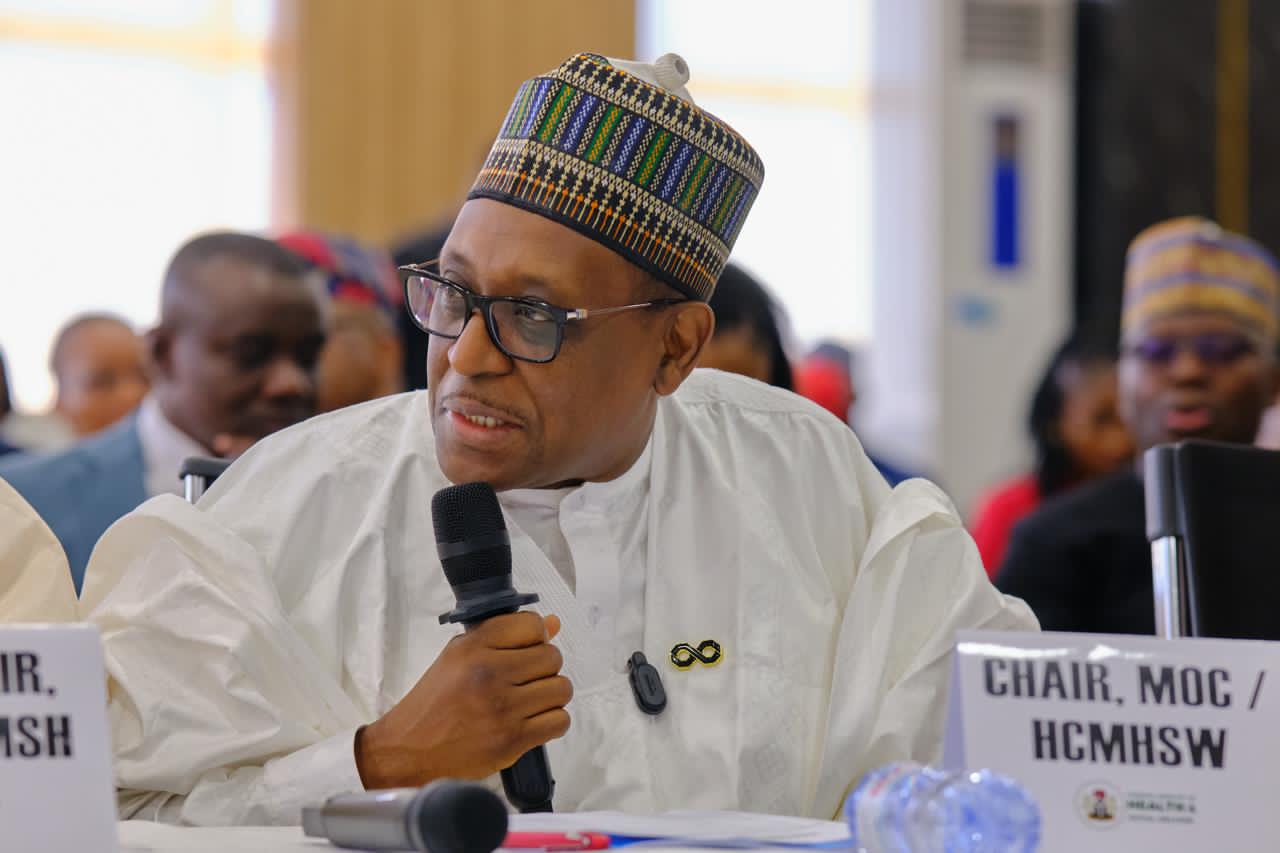
The announcement was made at the 12th Ministerial Oversight Committee (MOC) Meeting of the Federal Ministry of Health and Social Welfare (FMOHSW) held in Abuja on Wednesday.
At the MOC meeting, representatives of state governments and partners including the World Health Organization (WHO), UNICEF, the UK Government Health Team, and the Health Development Partners Group attended the meeting.
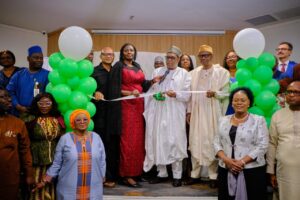
Addressing journalists after the meeting, Professor Pate said the ₦32.9 billion disbursement, which will be released before the end of October 2025, will support more than 8,000 primary health care centres nationwide and will be expanded to 13,000 facilities under the new phase of the programme.
H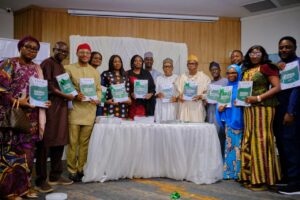 e explained that the revised BHCPF 2.0 guideline increases quarterly allocations to PHCs to cover essential operational costs, health worker stipends, and emergency services.
He said the government was focused on improving governance in the health sector through stronger oversight mechanisms. “The new framework includes stricter public interest and conflict of interest protocols to promote transparency, while a joint task force has been activated in partnership with the Independent Corrupt Practices and Other Related Offences Commission (ICPC) to monitor utilisation of funds at community level.”
Pate announced that a digital transformation process has been initiated, including the deployment of an end-to-end digital platform for the National Emergency Medical Treatment Committee (NEMTC) within two weeks. State health insurance agencies will also be required to establish claims tracking systems and report progress at the next MOC meeting.
On data and reporting integrity, the Minister said Data Quality Assessments (DQAs) will be institutionalised to improve the accuracy of nationwide health records, while states have been directed to submit comprehensive lists of beneficiaries with verified National Identification Numbers (NIN) to the National Health Insurance Authority (NHIA) by December 2025.
Highlighting progress recorded through the BHCPF, Pate disclosed that Nigeria has seen a fourfold increase in primary healthcare utilisation, “recording over 80 million PHC visits in the first two quarters of 2025 alone, compared to figures from 2023.”
He further said more than 21 million Nigerians are already receiving services through the Vulnerable Groups Health Insurance Fund, while over 15,000 women have accessed emergency obstetric care reimbursed through health insurance.
Professor Pate added that maternal health indices are beginning to show improvement, reporting a 12 percent reduction in maternal mortality rates based on facility-level data since the BHCPF reforms began. Immunisation rates have also risen significantly, with the recently launched integrated measles, rubella, and polio campaign already achieving 92 percent coverage in northern states.
The Minister reaffirmed the federal government’s commitment to Universal Health Coverage, emphasising continued collaboration with state governments, development partners, civil society organisations, and the private sector. He announced that the BHCPF will expand from 8,800 supported facilities to 13,000 in the coming phase, with a long-term target of 17,000 primary healthcare centres.
Also, during the briefing, the Minister of State for Health, Dr. Iziaq Adekunle Salako, emphasised that recent assessments clearly show improved performance in healthcare facilities benefiting from the Basic Health Care Provision Fund (BHCPF) compared to those without access to the fund.
He noted that BHCPF-supported facilities record higher service utilisation and better performance across key health indicators. According to him, this positive outcome underscores the need to expand the funding pool in order to increase the number of health facilities benefiting from the initiative.
Dr. Salako explained that one of the major resolutions reached at the meeting is the commitment to work closely with the legislative arm of government and other relevant stakeholders to explore all opportunities for increasing funding to primary healthcare in Nigeria through the BHCPF.
Speaking on broader health sector reforms, he noted that the Federal Government is focused on strengthening coordination across the healthcare system to drive better health outcomes. He said the Ministerial Oversight Committee (MOC) meetings have helped foster stronger collaboration among federal, state, and local governments, as well as development partners and the private sector.
He added that the sector is increasingly relying on credible data to inform policy decisions and programme implementation. “Mechanisms are being put in place to ensure in-house validation of health data so that decisions are evidence-driven. Regular performance reports from various implementing agencies, including the National Primary Health Care Development Agency (NPHCDA) and the National Health Insurance Authority (NHIA), have improved transparency and accountability.”
According to him, this has created an environment where every stakeholder clearly understands their roles and contributions, enabling the health system to move forward in a unified direction.
Dr. Tomi Coker. Honourable Commissioner for Health, Ogun State noted that over the past two years, pragmatic reforms have been introduced to strengthen Nigeria’s healthcare system from the ground up. “A major achievement is the improvement in data quality and traceability of healthcare services. With the introduction of unique identifiers such as the National Identification Number (NIN), it is now possible to verify service delivery and confirm that individuals accessing health interventions can be traced down to their communities.”
She added that, unlike in the past when policies existed only on paper, the current administration has ensured real implementation and measurable results.
She also emphasized that sub-national governments now receive adequate technical assistance to deliver value for money in healthcare. She commended the Federal Ministry of Health for encouraging open, honest review sessions where stakeholders confront challenges without sugar-coating issues.
According to her, this transparency has helped states identify what needs to be done to improve services. He reaffirmed the commitment of state governments to implement agreed strategies so that more Nigerians benefit from verifiable results.
Dr. Simeon Onyemaechi, Managing Director of the Anambra State Health Insurance Agency described the Ministerial Oversight Committee meeting as remarkable and impactful, noting that presentations across health system pathways highlighted tangible progress. “The importance of governance, accountability, and data-driven decision-making in sustaining achievements.”
He also commended the rollout of BHCPF 2.0, describing it as timely and capable of expanding healthcare access nationwide. He expressed optimism that Nigeria is on track to build a positive and people-centered healthcare system under the Renewed Hope Agenda.
Also, Dr. Pavel Ursu, World Health Organization (WHO) Representative to Nigeria expressed admiration for the governance structure of the BHCPF and the collaborative model that brings the federal government, states, and development partners together in honest assessments.
He observed that discussions were driven by data, “focusing on both achievements and challenges, which is critical for solving problems and advancing reforms.”
The country representative noted that many national health targets related to service availability, affordability, and utilization have been met or exceeded, showing that results are possible when attention is paid to detail and evidence-based planning.
He also highlighted the strong focus on data quality and end-to-end data processes, which he said are essential for timely and accurate decision-making. He concluded that Nigeria is making real progress toward universal health coverage through practical, measurable actions.
UNICEF Representative, confirmed that the Basic Health Care Provision Fund is delivering results, noting consistent performance improvement from 2023 to 2025.
He said the challenge now is how to expand the programme on a larger scale to reach more people. UNICEF, he assured, will continue to support the scale-up so that every woman and child in Nigeria has access to reliable, high-quality healthcare.
Dr. Muyi Aina. Executive Director of National Primary Health Care Development Agency (NPHCDA) Representative stated that the BHCPF platform has evolved into an inclusive and unified platform where the government and partners make decisions together. “Over 40 million visits to primary healthcare centres are now recorded quarterly, a major increase from two years ago, signaling growing public trust in the health system.”
He disclosed that ₦14 billion was disbursed in the past two quarters to 8,304 facilities under the NPHCDA gateway. “Service utilization indicators are improving: over 90 children per facility now receive the Penta 3 vaccine, nearly double previous records, and skilled birth attendance has doubled to about 40 deliveries per facility per quarter.”
He announced that in the next disbursement cycle, 5,212 more facilities will be added, selected in partnership with states using equity criteria. “Funding to PHCs has also been increased from ₦300,759 to ₦600,000 – ₦800,000 per quarter, depending on service volume. Under the MAMI maternal and child health initiative, 417,000 pregnant women have been enrolled and over 15,000 have received emergency care referrals.”
Dr. Ismaila Musa Jibrin, chairman of the National Emergency Medical Treatment Committee (NEMTC). highlighted growing investment in emergency medical response under the BHCPF. In the last quarter alone, over 11,000 emergency patients were transported for medical care, including maternal and newborn emergencies.
READ ALSO: Senate Urges RMAFC Nominees to uphold Transparency after Screening Confirmation
Lagos Library Board Goes Solar, Expands Internet Access to Boost Digital Learning
” ₦322 million was paid to federal hospitals to cover the first 48 hours of care, while ₦154 million was disbursed to State Emergency Services (SEMSA) for emergency transport support,” He added.
He also confirmed that the Rural Emergency Transport Scheme now operates in over 150 local government areas and will be expanded to conflict-affected communities to ensure Nigerians can get urgent medical help when needed.
About The Author