Experts Warn: Public Glee Over Coups Signals Deep Governance Failure in Africa
Says Citizen approval, not soldiers, is the real driver of coups

By Fatima Saka
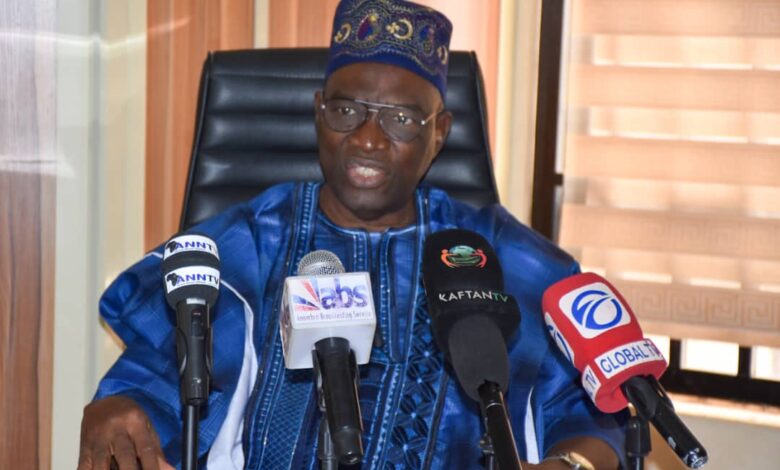
A former Nigerian diplomat and President of the Association of Foreign Relations Professionals of Nigeria (AFRP), Ambassador Gani Lawal, PhD, has warned that the growing public enthusiasm with which military coups are welcomed in parts of Africa is a grave signal of deep-rooted governance failures that must urgently be addressed.
He made this statement recently during a press briefing, where Ambassador Lawal said the real danger is not merely the occurrence of coups, but the “glee and enthusiasm” with which sections of the populace embrace them.
“What should bother us is why a majority of the people are happy to welcome a coup in their country,” he said. “If the populace welcomes a coup, it means something was fundamentally wrong before the coup plotters took advantage.”
Drawing lessons from global experiences, Lawal referenced Turkey, where civilians resisted a military takeover attempt by confronting tanks and troops on the streets. According to him, coups can only succeed where citizens have lost faith in democratic institutions and governance.
“If the civilian population believes the government is doing well, they will stop a coup. How many people can coup plotters really kill if the people rise against them?” he asked.
The diplomat stressed that preventing coups requires proactive measures rather than reactive condemnation. He called on regional and continental bodies such as ECOWAS and the African Union (AU) to establish robust early warning and monitoring systems capable of detecting indicators that could lead to military takeovers.
“These institutions must intervene early—engage political leaders, speak with the military, and allow space for reforms when warning signs appear,” Lawal said. “That is the only way to stop coups before they happen.”
He identified suppression of opposition, abuse of human rights and rising public discontent as key indicators, noting that the media remains a critical barometer for measuring political pressure and citizen dissatisfaction.
“When the press begins to write—sometimes even sarcastically—it is calling attention to serious problems. Any government genuinely interested in avoiding coups must pay attention to these signals,” he added.
Ambassador Lawal also highlighted the relevance of the ongoing discussions on democratic governance in Uganda, describing the topic as timely and “robust” amid growing international attention and concerns about external interference in African affairs.
He expressed confidence that the forum, featuring a serving African Union Commissioner with extensive experience across the continent, would provide a platform for frank discussions, interactive engagement and practical solutions for strengthening democracy in Africa.
On Nigeria’s foreign policy, Lawal reaffirmed that Africa remains its cornerstone, stressing that the continent will always be central to Nigeria’s diplomatic outlook.
READ ALSO: FG Concessions Ikere Gorge Dam for 6MW Hydropower, Boosts PPP-Driven Clean Energy Push
MURIC Slams Northern CAN Over Amupitan Allegations, Says Body “Cannot Address the Issue”
“Nigeria is in Africa. Whatever happens around us matters to us first,” he said, tracing the policy’s roots to Nigeria’s independence-era commitment to African liberation and unity.
He concluded by urging African leaders to leverage existing democratic institutions, strengthen governance, and rebuild public trust, warning that failure to do so would continue to create fertile ground for military interventions.
About The Author