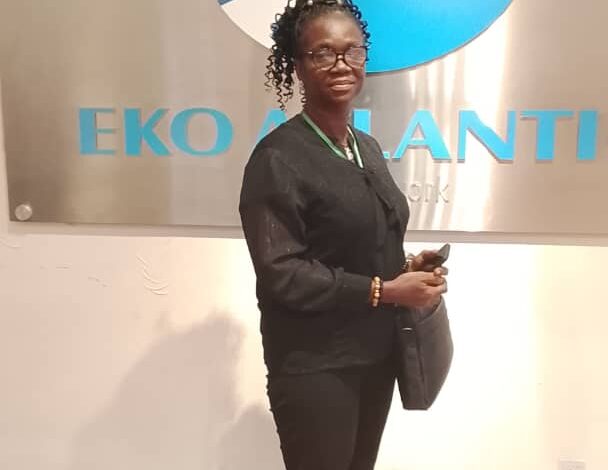
An Environmentalist, Prof. Ijeoma Vincent-Akpu, immediate Past President of the Association for Environmental Impact Assessment of Nigeria (AEIAN), says effective Environmental Impact Assessment (EIA) remains fundamental to sustainable development, environmental protection and good governance in Nigeria.
Vincent-Akpu disclosed in an interview with newsmen on Tuesday in Lagos.
She spoke against the backdrop of the distinguished Service Award from AEIAN in recognition of her contributions to the growth and strengthening of the association
Expressing gratitude for the honour, she described the award as both humbling and encouraging.
“I am grateful and deeply humbled by this recognition. Sometimes, when people finish their time in office, they are forgotten. I thank God that the association remembered the work we did and deemed it fit to honour me,” she said.
She added that the association was now in capable hands and would continue to grow stronger.
“I believe AEIAN is in a better place and will continue to go from strength to strength,” she said.
Speaking on the future of EIA practice in Nigeria, Vincent-Akpu stressed the need for stronger collaboration between government and professional bodies.
She noted that sustainability and environmental protection depend largely on proper and effective impact assessments.
“Governments must collaborate with professionals because sustainability, good governance and environmental protection are anchored on proper EIA,” she said.
She noted recent efforts by government to strengthen institutional frameworks, including collaboration with the World Bank on training programmes in procurement and EIA.
She expressed optimism that these initiatives would improve standards in the long run.
However, Vincent-Akpu expressed concern over recurring controversies surrounding major infrastructure projects, where citizens often question whether proper needs assessments and EIAs were conducted before project approvals.
She lamented that EIA is sometimes treated merely as a bureaucratic requirement rather than a development tool.
“Many people see EIA only as a means to obtain permits or access funding.
“In reality, EIA is meant to help everyone — the proponent, government and the environment — by guiding proper project design and implementation,” she said.
According to her, failure to conduct proper EIAs often stems from reluctance by both public and private project proponents to commit resources to the process.
“Unfortunately, even governments, who should champion environmental protection, sometimes find it difficult to invest in proper EIAs.
“This impunity is quite obvious in our environment,” she said.
She explained that while public advocacy sometimes compels authorities to adjust or scale down projects, EIAs are often conducted late or inadequately.
Advising engineers and contractors partnering with government on large-scale projects, Vincent-Akpu urged them to prioritise environmental protection and sustainability.
“Development and EIA work hand in hand. EIA does not stop development; it ensures that development benefits the people, protects the environment and safeguards the future,” she said.
She added that properly conducted EIAs help developers reduce costs, avoid penalties and improve project design.
“EIA protects the environment, protects the developer and protects the government.
Everyone benefits when environmental, social and economic considerations work together,” she said.
READ ALSO: NSCDC launches Lagos grassroots drive to protect national assets
Lagos govt holds fitness walk, safety drive ahead of Eyo festival Safety
Vincent-Akpu emphasised that sustainability could only be achieved when environmental, social and economic goals are pursued simultaneously.
“If one is pursued at the expense of the others, everyone loses. But when all three work together, society benefits,” she said.
About The Author