Chairman Senate Labour Seeks Urgent Funds to Fence Labour Institute, Boost Inspections in 2026 Budget Defence

By Fatima Saka
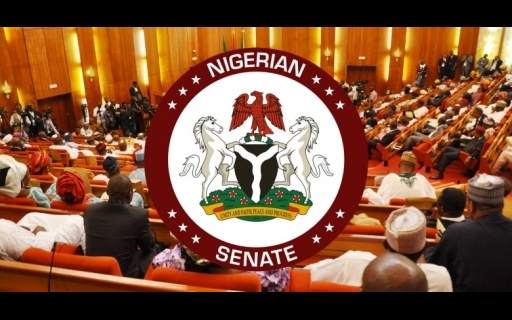
Chairman of the Senate Committee on Labour, Employment and Productivity, Diket Plang, on Monday raised serious concerns over inadequate capital allocation to the Ministry of Labour and its agencies, warning that poor funding could undermine worker safety, productivity and industrial harmony nationwide.
Appearing before the Senate Committee on Appropriation to defend the 2026 budget proposals of agencies under his committee’s oversight, Senator Plang lamented that key institutions lack basic infrastructure, citing the unfenced Michael Imoudu National Institute for Labour Studies (MINILS) in Ilorin as a pressing example.
“The main ministry and the agencies do not have sufficient capital projects. Particularly, the Michael Imoudu School in Ilorin is unfenced. People come in and out freely. We are requesting additional funds to fence the institute to protect the land and secure the students, especially in this period of insecurity,” Plang told lawmakers.
Beyond infrastructure, the senator decried inadequate overhead allocations to the ministry, noting that the shortage has hampered factory inspections across the country. According to him, the ministry lacks the operational funds required to monitor compliance with labour standards in both public and private sector workplaces.
“The ministry is responsible for factory inspections to determine how suitable workplaces are for employees, but due to insufficient overheads, they are unable to carry out this critical mandate. This is detrimental to Nigerians employed in various industries,” he said, urging the committee to approve modest additional funding.
Lawmakers during the session echoed concerns over the state of the Ilorin-based institute, describing its buildings as old and dilapidated. Some members advised that the ministry submit a separate, detailed request specifically targeting the rehabilitation and revitalisation of the institute, rather than embedding it within general capital provisions.
There were also questions regarding budget lines for capital projects, constituency interventions, and allocations to the Geneva office. Responding, Plang clarified that the Geneva office has no permanent staff, explaining that ministry officials only attend scheduled international programmes, hence the absence of personnel costs.
In a broader appeal, the committee chairman stressed that adequate funding of the labour sector is central to national stability.
“If we want the nation to move forward, the Ministry of Labour, Employment and Productivity must be properly funded for training, employment regulation and productivity enhancement. Labour determines employment capacity. Without it, projections about job creation lack foundation,” he said.
Some senators proposed that ministries, departments and agencies be mandated—possibly through legislation—to patronise the labour institute for local training programmes, arguing that doing so could transform it into a revenue-generating centre while strengthening workforce capacity.
Plang acknowledged that certain statutory functions of the ministry, including oversight of employment processes and issuance of trade certifications, have been fragmented across agencies. He disclosed that the committee has written to Senate leadership seeking restoration of its oversight role in employment matters to ensure proper documentation of Nigeria’s labour statistics.
He further noted that proposed legislation aimed at strengthening trade certification and documentation of domestic workers could boost the ministry’s internally generated revenue once enacted.
READ ALSO: Senate Raises Alarm Over Funding, Infrastructure Decay of NIPSS
While the 2026 proposal is largely a rollover of the 2025 budget in line with fiscal directives, Plang assured the committee that detailed supplementary requests addressing critical gaps would be formally submitted.
He thanked the Appropriation Committee for its observations, stating that the feedback had strengthened the ministry’s case for improved funding to enhance productivity, protect workers and promote industrial harmony across the country.
About The Author