Budget Defence: Senate Flags Zero Capital Release, Press for First-Line Charge Status for NPC Over Stalled Census Plans in Nigeria

By Fatima Saka
The Senate has moved to strengthen the financial independence of the National Population Commission (NPC), advocating its placement on first-line charge and expressing concern over the complete non-release of capital funds in the 2025 budget.
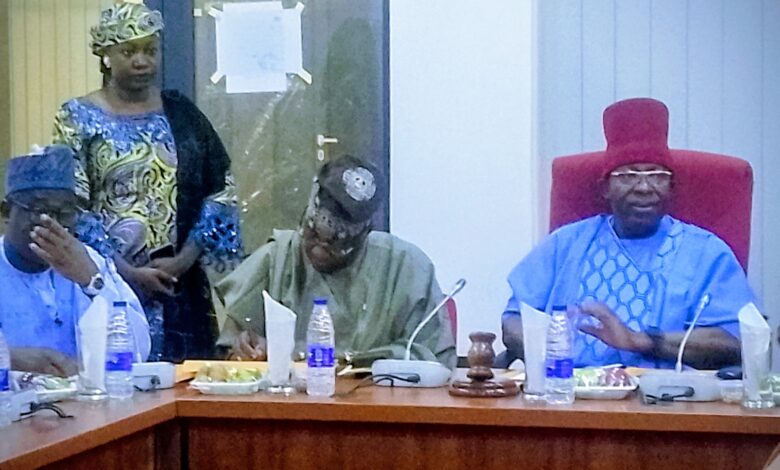
The resolution followed a budget performance and 2026 proposal presentation by the Chairman of the Commission, Dr. Aminu Maida Yusuf, before the Senate Committee on National Population and National Identity Management Commission (NIMC) on Wednesday.
Chairman of the Committee, Senator Victor Umeh, described the Commission as the backbone of national planning, insisting that its responsibilities surpass even those of the Independent National Electoral Commission (INEC) in scope and long-term impact.
According to Umeh, while INEC conducts periodic elections, the population commission provides the comprehensive demographic data that determines how government plans for healthcare, education, security, housing and economic development.
He disclosed that a constitutional amendment bill has been sponsored to place the Commission on first-line charge, a funding structure that would guarantee automatic and protected allocations similar to other key national institutions.
“You cannot plan a nation without knowing your population. The Commission knows the number of women, children, elderly and dependents. That is the real foundation of governance,” Umeh said, likening national planning to a father who must know the number of his children before making provisions for their welfare.
The advocacy for financial autonomy comes amid troubling revelations about the Commission’s 2025 budget performance, Dr. Yusuf informed the Committee that the NPC appropriated ₦36,211,622,208.00 for the 2025 fiscal year, comprising ₦18.2 billion for capital expenditure, ₦1.17 billion for overhead costs and ₦16.76 billion for personnel.
However, while personnel releases stood at ₦17.33 billion, representing 103 per cent performance due to centrally processed salary adjustments under IPPIS, capital expenditure recorded zero release.
Lawmakers expressed dissatisfaction that none of the ₦18.2 billion allocated for capital projects, including critical census preparations, had been disbursed.
“You were appropriated ₦18 billion for capital projects and received nothing,” a committee member stated during the session.
Overhead releases amounted to ₦682.44 million, representing 41.8 per cent performance.
The Committee also queried the excess in personnel releases above the appropriated amount. In response, Dr. Yusuf explained that salary payments are handled by the Office of the Accountant General of the Federation and that promotions and statutory increments likely accounted for the variance.
The Senate maintained that nearly two decades after Nigeria’s last census in 2006, the country cannot continue to operate on speculative population estimates.
Lawmakers stressed that without updated and credible demographic data, national development planning would remain compromised.
They urged the Federal Government to prioritise the funding of census activities and accelerate reforms that would guarantee stable financing for the Commission.
The Committee concluded that granting first-line charge status to the National Population Commission would insulate it from funding uncertainties and ensure that preparations for a technology-driven, credible national census move forward without further delay.
About The Author