Akwa Ibom Emerges Nigeria’s Cleanest State in 2025 With 79% Score, Wins STONE “Unbroken” Award for Eighth Consecutive Time

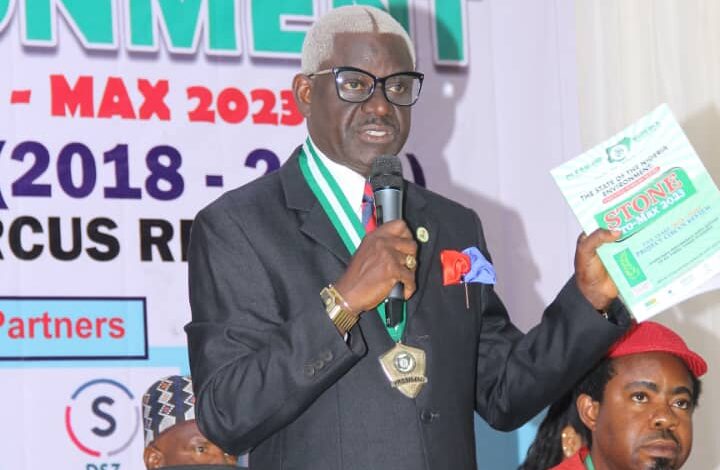
Akwa Ibom State has been ranked the cleanest state in Nigeria for 2025, recording an impressive cumulative cleanliness score of 79% in the newly released State of the Nigerian Environment Report (STONE 2025 – UNBROKEN).
The announcement was made in Abuja by the National Coordinator of Clean-Up Nigeria and Secretary of the National Technical Study Group (NTSG), Prince Ene Baba Owoh Jr., PhD, during the public presentation of the report and the Cleanliness Performance Index Ratings of all states in the federation.
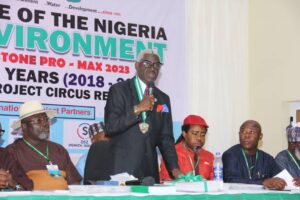
According to the report, Enugu State placed second with 65%, while Ebonyi State came third with 56%. Other states that made the list of Nigeria’s nine cleanest include Bauchi, Plateau, Cross River, Anambra, Lagos, and the Federal Capital Territory (FCT).
Prince Owoh explained that the assessment was conducted by a 15-member NTSG team, led by Professor Solomon Balogun, between November 2024 and November 2025. The methodology combined physical verification across all states and towns, which accounted for 20% of the total score, with satellite imagery analysis contributing the remaining 80% through monthly spectral data collection.
The evaluation was based on five key variables: street and road cleanliness, vegetation and drainage control, waste management services, public opinion polls (POP), and the knowledge, attitude and practice (KAP) of hygiene and sanitation among the people.
Despite the progress recorded in some areas, the report highlighted worrying trends. It revealed that government procurement of waste management equipment stood at just 8% in 2025, while the health condition of sanitation workers dropped from 31% in 2024 to 28% in 2025. Even more concerning was the rise in sanitation-related diseases, which increased to 43% in 2025 from 29% in the previous year.
The STONE report also noted a decline in public hygiene and sanitation practices, falling from 36% in 2024 to 32% in 2025. Although open defecation reduced from 24% to 19%, Nigeria still ranks as the second-highest country in the world for open defecation.
Furthermore, satellite data revealed that out of Nigeria’s estimated 240 million population, about 187.2 million people currently live in unclean environments. This, the report said, has contributed to a drop in the life expectancy of ordinary Nigerians from 50 years in 2024 to 47 years in 5.
Prince Owoh called on governments at all levels to significantly increase funding for waste management services and the procurement of modern sanitation equipment.
He also recommended the aggressive construction of public toilets nationwide to combat open defecation and urged citizens to take greater responsibility for personal and environmental hygiene.
In addition, he advocated for the establishment of health and environmental clubs in schools, aimed at grooming a new generation of environmentally conscious Nigerians. Clean-Up Nigeria, he said, remains ready to collaborate with the government and private sector partners to improve sanitation standards across the country.
The six geopolitical zones produced their own cleanliness champions, with Akwa Ibom leading in the South-South (79%), Enugu in the South-East (65%), Lagos in the South-West (48%), Bauchi in the North-East (50%), Plateau in the North-Central (52%), and Kaduna in the North-West (35%).
Akwa Ibom’s overall victory also earned the state the prestigious STONE 2025 Unbroken Green Crystal Award Trophy and a Medal of Service, marking its eighth consecutive win as Nigeria’s cleanest state from 2018 to 5.
READ ALSO: Nigeria’s Satellite Dream Nears Reality Despite Funding Hurdles – Senator Iya Abbas
FG to Integrate Oral Health into Primary Care, Rally Stakeholders to Eliminate Noma in Nigeria
Prince Owoh commended the First Lady, Senator Oluremi Tinubu, for her green initiative projects and urged the Tinubu administration to fully adopt a national green environmental agenda centred on sustainable cities, nature-based living, renewable energy research, green economy and effective resource management.
He further said that with stronger political will, public awareness and community participation, Nigeria can reverse the current decline in sanitation standards and build a cleaner, healthier environment for its citizens.
About The Author