By Fatima Saka
The Federal Government says it has achieved all 41 presidential health-sector commitments under the Nigeria Health Sector Renewal Investment Initiative (NHSRII), with 3,526 primary healthcare centres revitalised and 12 of the 13 tracked health indicators recording improvements.
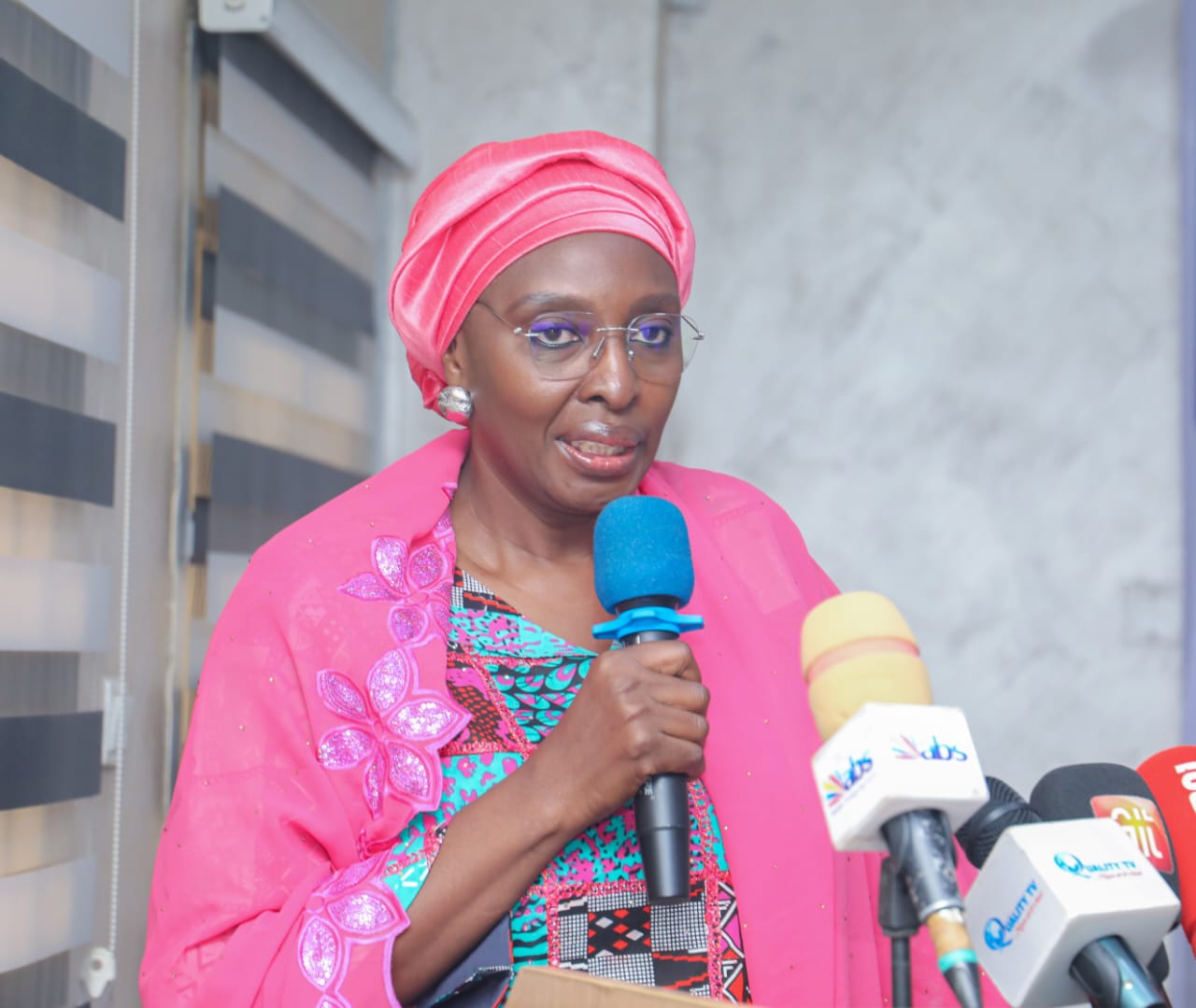
The Permanent Secretary, Federal Ministry of Health and Social Welfare, Daju Kachollom S., mni, disclosed this on Thursday in Abuja while delivering the keynote address at the 10th Annual Conference of the Association of Nigeria Health Journalists (ANHEJ).
The conference, themed, *“NHSRII: From Policy to Tangible Impact,”* brought together health journalists and stakeholders to examine the implementation of the Federal Government’s health sector reforms and their impact on Nigerians.
Kachollom said the achievements were recorded three years after President Bola Tinubu launched the NHSRII in December 2023 and presided over the signing of the Health Sector Renewal Compact by the Federal Government, all 36 state governors and development partners.
She explained that the initiative was designed to align stakeholders behind one health plan, one budget and one reporting system through the Sector-Wide Approach.
Providing details of the progress, she said 900 additional primary healthcare centres were undergoing revitalisation, while the proportion of participating facilities in the 172 MAMII local government areas with at least two midwives or community health extension workers increased from 12 per cent to 91 per cent.
According to her, skilled deliveries in the facilities also increased from 4.8 million in 2023 to 7.9 million by mid-2026.
She added that maternal deaths declined by 17 per cent and newborn deaths by 12 per cent between 2023 and 2025 in the 172 local government areas responsible for more than half of maternal deaths in the country.
On immunisation, Kachollom disclosed that 100 million children had received measles and rubella vaccines, while more than 17 million girls had been vaccinated against the Human Papillomavirus (HPV).
She said health insurance enrolment had grown from approximately 16 million to nearly 24 million Nigerians, while 10 factories and manufacturing lines had been commissioned to expand local production of medicines, diagnostics, mosquito nets and medical oxygen.
The Permanent Secretary further revealed that state governments had increased their combined health budgets from N1.97 trillion in 2023 to more than N3.3 trillion in 2026.
On efforts to sustain the gains, she said the National Council on Health had adopted recommendations for a unified national framework for health campaigns, pooled and aligned financing, standardised health workers’ incentives through digital payments and gradual integration of campaign financing into federal and state budgets.
She also announced the adoption of Perennial Malaria Chemoprevention as a national policy for children under two, with plans to integrate it into routine immunisation schedules.
Despite the reported progress, Kachollom acknowledged persistent challenges in the health sector, including high childhood stunting, the rising cost of healthcare, uneven service quality and inadequate distribution of health workers.
She said about four in 10 Nigerian children under five remained affected by stunting, while health insurance coverage stood at approximately one in 10 Nigerians, despite the increase in enrolment.
She also raised concerns over poor implementation of health-sector resolutions, revealing that only 412 of the 740 expected reports on the implementation of the previous National Council on Health resolutions were received.
According to her, 10 states recorded implementation scores below 40 per cent.
“A resolution that is never implemented is just another announcement,” she said.
The Permanent Secretary challenged health journalists to move beyond reporting government announcements and independently investigate the actual impact of policies, projects and interventions on citizens.
She urged them to visit revitalised health facilities, track government commitments and demand explanations where promised improvements had not materialised.
“When we announce a revitalised facility, go and see it. When your State makes a commitment at Council, ask a year later what became of it. Ask what changed, for whom, and by how much. If the answer is nothing, tell Nigerians, and tell us,” she said.
Kachollom also urged journalists to uphold accuracy and responsible reporting, warning that misinformation could discourage immunisation, prevent patients from seeking medical attention and trigger unnecessary panic during disease outbreaks.
She called on the media to use their platforms to promote antenatal care, skilled birth attendance, childhood immunisation, health insurance enrolment and awareness of hypertension and diabetes.
On antimicrobial resistance (AMR), she announced that Nigeria would host the 5th Global High-Level Ministerial Conference on Antimicrobial Resistance from December 6 to 8, 2026, in Abuja.
She said ministers of health from more than 100 countries were expected to attend the conference, which would be the first of its kind to take place on African soil, with participants expected to adopt the Abuja Compact.
Describing antimicrobial resistance as a silent pandemic, she warned that the failure of antibiotics could make routine infections, surgery and childbirth increasingly dangerous.
She stressed the need to discourage self-medication and ensure that prescriptions were issued only by duly licensed and authorised professionals, in line with the government’s new e-pharmacy policy.
Kachollom urged journalists to give the conference extensive coverage and sustain public awareness of antimicrobial resistance beyond the event.
On transparency and access to information, she said the ministry had made the Primary Health Care Functionality Dashboard and Joint Annual Review scorecard publicly accessible.
She added that the DHIS2 platform was being strengthened as Nigeria’s single national health data platform, while the 2023–2024 National Health Accounts would be published to provide details of the country’s health expenditure and funding sources.
She assured journalists that the ministry would continue to provide verified information promptly, particularly during breaking health developments, to prevent misinformation from taking hold.
As the country approaches the final year of its Health Sector Strategic Blueprint in 2027, Kachollom urged stakeholders to focus on measurable outcomes rather than policy announcements, financial commitments and commissioning ceremonies.
“Let us move the conversation from ‘What did government announce?’ to ‘What changed?’; from ‘How much was invested?’ to ‘What did it achieve?’; and from ‘What facility was commissioned?’ to ‘How many lives are better served?’” she said.
Earlier in his welcome remarks, the President of ANHEJ, Joseph Kadiri, pledged the Association’s commitment to strengthening accountability in Nigeria’s health sector through tracking public investments, monitoring policy implementation and reporting the impact of government interventions on citizens.
Kadiri said health journalism must go beyond reporting policy announcements and government commitments to examining actual delivery, identifying implementation gaps and amplifying the experiences of vulnerable populations.
He offered the Association’s partnership to the Basic Health Care Provision Fund (BHCPF) gateways and the Ministerial Oversight Committee (MOC), proposing field visits to states to document progress, challenges and the impact of health investments.
According to him, the success of health-sector reforms should be measured by improved access to quality healthcare, reduced maternal and child mortality, functional primary healthcare facilities, affordable medicines and better health outcomes.
He also called for sustained efforts to reduce high out-of-pocket healthcare expenditure, expand health insurance coverage, strengthen primary healthcare, improve immunisation and enhance access to cancer screening, diagnosis and treatment.
Kadiri reaffirmed ANHEJ’s commitment to evidence-based reporting, professional capacity development and constructive engagement with government and development partners to advance health-sector reforms.
He appreciated Kachollom for supporting the conference and acknowledged the contributions of the National Agency for Food and Drug Administration and Control (NAFDAC), National Health Insurance Authority (NHIA), Medical Laboratory Science Council of Nigeria (MLSCN), FCT health authorities, Corporate Accountability and Public Participation Africa (CAPPA), Africa Health Budget Network (AHBN) and other partners.
He said the ultimate goal of health policies and investments must be to save lives, reduce suffering and improve the wellbeing of Nigerians.
Meanwhile, representatives of CAPPA, the Nigerian Cancer Society (NCS), AHBN and the Institute of Human Virology Nigeria (IHVN) commended ANHEJ for its sustained contributions to health advocacy, public awareness and accountability in Nigeria.
Speaking on behalf of CAPPA’s Executive Director, Dr. Akinbode Oluwafemi, the organisation’s Policy and Legal Officer, Shade Oyelade-Osi, described health journalists as indispensable partners in public health advocacy.
She said balanced and evidence-based reporting had helped amplify health interventions, promote public understanding and hold institutions accountable.
Oyelade-Osi urged stakeholders to sustain their partnership with the media, stressing that an informed press was essential to ensuring that health investments translated into tangible results.
Also speaking, the President and Chief Executive Officer of the Nigerian Cancer Society, Professor Emmanuel Omorisi, represented by Ambassador Chukuma Mathew Ogbonnaya, called for greater prioritisation of cancer prevention, early detection, diagnosis, treatment, palliative care and survivorship support within Nigeria’s health-sector reform agenda.
He stressed the need for sustainable financing, accessible screening and treatment services, stronger referral systems and equitable access to quality cancer care.
The Society noted that health journalists had a strategic role in promoting cancer screening, encouraging early presentation, addressing stigma and ensuring that cancer remained a national health priority.
Similarly, the Africa Health Budget Network, represented by its Systems Strengthening Lead, Khadija Hamid Bobboyi, who spoke on behalf of its Chief Executive Officer, Dr. Aminu Magaji, congratulated ANHEJ on sustaining the annual conference for 10 years.
She described the milestone as evidence of the Association’s commitment to strengthening Nigeria’s health system.
The Network reaffirmed its advocacy for increased domestic investment in healthcare, stronger accountability for health projects and meaningful participation of women, young people and persons with disabilities in health policy and programme implementation.
It also urged journalists to sustain evidence-based advocacy and bring critical health-sector issues to the attention of policymakers and communities.
In a goodwill message delivered by Dr. Victoria Igbinomwanbia, the Institute of Human Virology Nigeria (IHVN) also recognised health journalism as a critical instrument for saving lives, strengthening public trust and promoting accountability.
READ ALSO: INEC Warns Staff Against Partisan Conduct, Threatens Sanctions Ahead of 2027 Elections
MURIC Urges Tinubu to Release El-Rufai, Warns Detention Could Hurt 2027 Re-election Bid
Igbinomwanbia urged journalists to uphold professionalism, independence, accuracy and ethical responsibility while deepening their understanding of health research, scientific developments and public health policies.
She encouraged health reporters to move beyond documenting challenges to highlighting solutions, innovations and interventions that had improved the lives of individuals and communities.
About The Author