The Federal Government has reaffirmed its commitment to ensuring universal access to clean, safe and sustainable water and sanitation services for Nigerians.
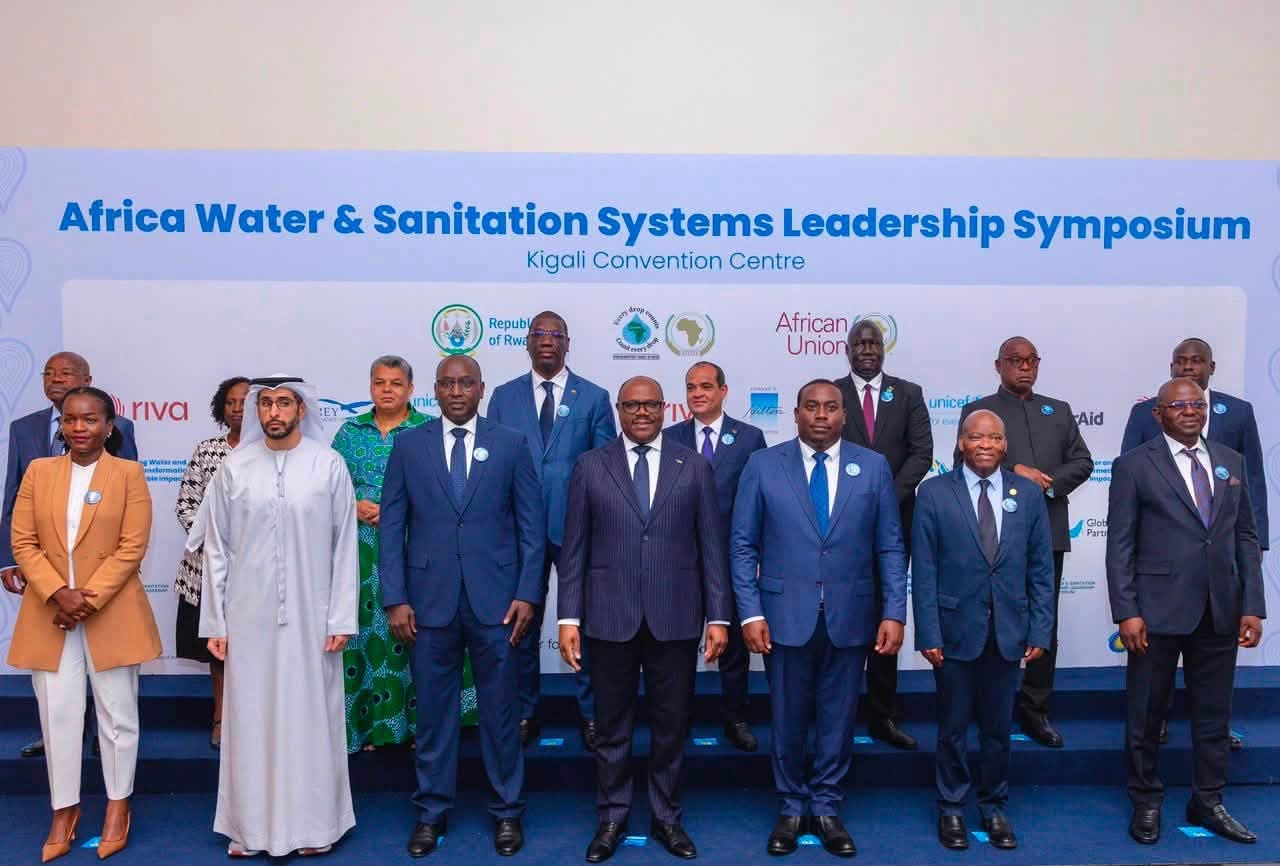
The Minister of Water Resources and Sanitation, Engr. Prof. Joseph Terlumun Utsev, stated this on Tuesday while addressing the global community at the ongoing Africa Water Sanitation Systems Leadership Symposium in Kigali, Rwanda.
Utsev said the administration of President Bola Ahmed Tinubu had repositioned Nigeria’s water and sanitation sector from fragmented institutions towards a more coordinated national system by bringing stakeholders together through various programmes, projects and reforms.
He listed some of the government’s interventions to include the Sustainable Urban and Rural Water Supply, Sanitation and Hygiene (SURWASH), Clean Nigeria: Use the Toilet Campaign, Sustainable Power and Irrigation for Nigeria (SPIN), Partnership for Expanded Water Supply, Sanitation and Hygiene (PEWASH), and the National Action Plan.
According to him, the initiatives are being implemented in collaboration with development partners, including the World Bank, African Development Bank, UNICEF, WaterAid and the private sector, to complement government resources and strengthen the delivery of water and sanitation services.
The Minister said the Federal Government was also intensifying efforts towards achieving Sustainable Development Goal 6 by 2030 through the development of the National Water Compact.
He explained that the compact was designed to address three critical priorities — water for people, water for food and water for the planet — through collaboration with state and local governments.
Utsev disclosed that the final draft of the National Water Compact would be validated by stakeholders this month, describing the initiative as a major step towards accelerating sustainable water management and access in Nigeria.
He further stated that Nigeria, through the African Ministers’ Council on Water (AMCOW), was collaborating with other African countries towards the attainment of the Africa Implementation Programme (AIP).
The Minister emphasised the need for stronger collaboration among African leaders, development partners and other critical stakeholders to accelerate action towards achieving universal access to clean, safe and sustainable water and sanitation services across the continent.
He said sustainable solutions would require collective commitment, effective leadership, adequate financing and stronger institutions capable of delivering water and sanitation services to citizens.
Earlier, while declaring the symposium open, the Prime Minister of Rwanda, Dr Justin Nsengiyumva, urged leaders and development partners across Africa to make sincere commitments backed by practical actions towards achieving the continent’s vision of access to sustainable water and sanitation services by 2063.
Nsengiyumva stressed that African countries must move beyond commitments to concrete actions that would improve water and sanitation systems and deliver tangible benefits to communities.
The symposium, themed “Accelerating Water and Sanitation Transformation for Sustainable Impact,” is hosted by the Government of Rwanda, co-convened by the African Ministers’ Council on Water (AMCOW) and facilitated by IRC Africa.
The meeting focuses on strengthening leadership, governance, regulation, professional capacity and strategic public finance to create reliable and investment-ready water and sanitation systems across Africa.
READ ALSO: New Batch of 83 Nigerians to Arrive From South Africa Wednesday
More than 700 delegates from African countries and other parts of the world are participating in the symposium, which provides a platform for leaders, development partners and sector experts to discuss practical strategies for transforming Africa’s water and sanitation systems.
The gathering is expected to strengthen continental cooperation and generate commitments towards achieving sustainable and inclusive water and sanitation services in line with Africa’s long-term development aspirations.
About The Author