,
By Abujah Racheal, Public Health Editor,
News Agency of Nigeria(NAN)
At the Miya Primary Health Centre in Ganjuwa Local Government Area of Bauchi State, 23-year-old Mrs Safia Aliyu clutched her newborn, alive, thanks to an emergency caesarean section that, just a year ago, would have been far beyond her reach. For her family, what could have ended in tragedy became a story of survival.
Across Nigeria, stories like Safia’s are quietly reshaping the narrative, lives saved against the odds, neglected health facilities coming back to life, and a fragile system slowly, but steadily, finding its footing.
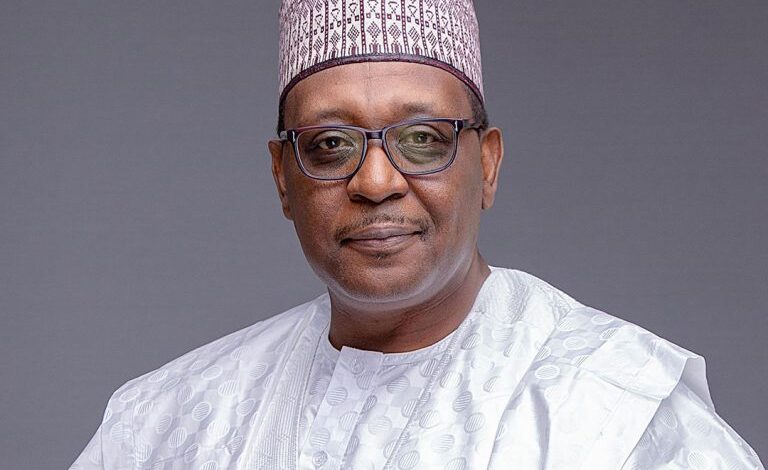
At the centre of this transformation is Prof. Muhammed Ali Pate, Coordinating Minister of Health and Social Welfare, a man whose work in the health sector is now fuelling a different kind of conversation: whether these gains are laying the foundation for a political future in Bauchi State come 2027.
What began as a technocratic mission to fix a struggling health system is increasingly being interpreted as a case study in leadership, one that could transcend policy rooms and enter the ballot arena.
The sweeping reforms in Nigeria’s health sector under Pate, are increasingly being viewed through a political lens, with stakeholders linking his performance to a possible governorship bid in Bauchi State in 2027.
While the minister has consistently maintained a focus on national service, analysts say his growing influence, both locally and globally, has positioned him at a critical intersection between technocratic delivery and political ambition.
Pate’s career, shaped by global institutions and policy leadership, is now being tested in the arena of public service delivery.
Observers noted that his reforms reflect a shift from technical advisory roles to what they describe as “political delivery”, the ability to translate policy into visible outcomes for citizens.
Central to this transformation is the Sector-Wide Approach (SWAp), introduced in late 2023, which aligns federal, state and local governments with development partners under a unified financing and accountability framework.
The approach, anchored on a “one budget, one plan, one report” system, has been widely described as a governance innovation in Nigeria’s health sector.
At its core is the Health Sector Renewal Compact, a landmark agreement signed by all 36 state governors, the Federal Government and key partners, including UNICEF and World Bank.
Policy analysts said this demonstrates Pate’s ability to manage complex bureaucratic systems, an attribute considered critical for subnational leadership.
Beyond domestic reforms, Pate’s international standing has further strengthened perceptions of his leadership capacity.
In 2025, he was named among global health leaders on the TIME100 Health list and recognised in the Devex Power 50, elevating his profile as a key voice in global health governance.
This recognition feeds into a growing narrative that frames him as a global figure who has prioritised national service over personal advancement.
His decision in 2023 to step away from consideration for the Chief Executive Officer role at GAVI, the Vaccine Alliance, is often cited as a defining moment that reinforced his “national interest first” posture.
Pate has frequently framed his career decisions as a deliberate prioritisation of national interest over personal ambition or global prestige.
A major turning point came in 2023 when he declined the prestigious role of CEO of Gavi, just weeks before assumption of office, choosing instead to accept the nomination by President Bola Ahmed Tinubu as Coordinating Minister of Health.
He described the decision as a response to a “call to national service,” opting to tackle Nigeria’s complex health challenges rather than pursue a high-profile global career.
As the 2027 political cycle approaches in Nigeria, he has deployed similar rhetoric in addressing speculation about a potential governorship bid in Bauchi State.
Despite mounting pressure from grassroots groups, Pate has maintained that his immediate priority remains delivering on the federal mandate, cautioning against what he describes as parochial political distractions.
He has also emphasised the need to avoid actions that could undermine ongoing reforms, particularly in a sector as sensitive as health.
Speculation about a possible resignation in March 2026 was swiftly dismissed by close associates, who reiterated that any decision would follow due consultation to ensure continuity of reforms.
In Bauchi State, a series of health sector interventions is being interpreted as a proof of concept for governance at the subnational level.
Key among them are ongoing upgrades at the Abubakar Tafawa Balewa University Teaching Hospital, alongside the near completion of a modern diagnostic centre aimed at improving access to specialised care.
Plans for a new Federal Medical Centre in Misau, as well as a nursing school linked to it, are also seen as efforts to strengthen health infrastructure and workforce capacity.
In addition, federal interventions under his watch are reported to have facilitated employment opportunities for more than 2,000 youths from the state across various sectors.
These developments, according to local observers, are gradually shaping public perception of Pate as a potential gubernatorial candidate with a demonstrable track record.
Despite these gains, challenges persist.
Tensions with health sector unions, including the Joint Health Sector Unions (JOHESU) and the National Association of Resident Doctors, have raised concerns over welfare issues, including unpaid arrears and working conditions.
At the same time, the continued migration of health professionals, popularly referred to as the “Japa” phenomenon, remains a significant hurdle, with critics arguing that systemic retention strategies are yet to fully take root.
Supporters argued that Pate’s emphasis on measurable outcomes reinforces his image as a results-driven leader.
They point to tangible gains, including the revitalisation of more than 1,000 Primary Healthcare Centres and thousands of free emergency caesarean sections, as evidence of a leadership style anchored on delivery.
For many, these interventions go beyond health policy, serving as proof that he prioritises impact and national stability over conventional political ambition.
Analysts said structural realities in Bauchi politics could also shape his path.
The state’s zoning arrangement, which has historically rotated power between the North and South, presents a potential hurdle, as Bauchi Central, Pate’s zone, has yet to produce a governor since 1999.
There are also questions about grassroots political structures. Unlike career politicians with entrenched local networks, Pate’s strength lies more in policy and institutional leadership than ward-level mobilisation.
Recent political developments suggest careful positioning. On April 1, 2026, Pate led stakeholders of the All Progressives Congress (APC) in Bauchi in endorsing President Tinubu for a second term. Analysts interpret the move as a strategic alignment with the centre, potentially strengthening his political capital should he decide to enter the governorship race.
READ ALSO: MURIC Advocates Fair Governorship Representation for Muslims in South-West
FG Declares April 3, 6 Public Holidays for Easter Celebration
For now, Pate remains officially silent on any governorship ambition, maintaining that his priority is strengthening Nigeria’s health system.
Yet, the convergence of policy success, global recognition and local political mobilisation continues to fuel speculation about his next move. At the heart of the debate lies a broader question: can technocratic performance translate into electoral success in Nigeria’s evolving political landscape, or will entrenched political structures ultimately define the limits of reform-driven leadership?
About The Author