NEMSAS Scale Up EMS Nationwide, Transports Over 40,000 Pregnant Women, Seeks Stronger 112 Access

By Fatima Saka
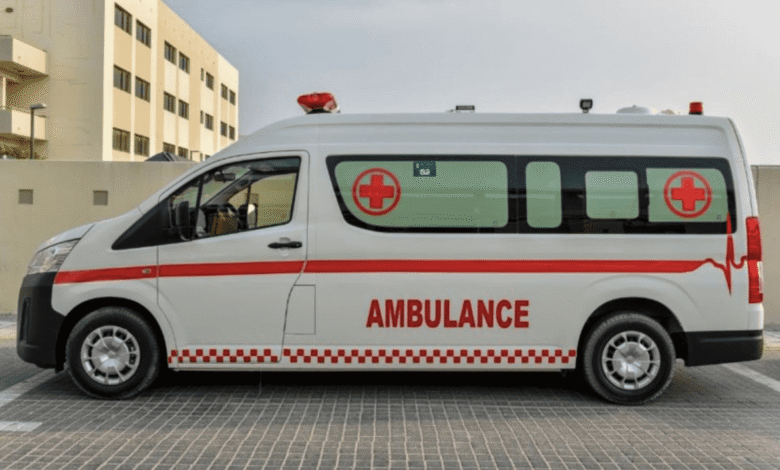
The National Emergency Medical Service and Ambulance System (NEMSAS) has established emergency medical structures across all 36 states and the Federal Capital Territory (FCT), with 21 states currently operating functional ambulance services, as the agency pushes for improved access to the national 112 emergency number and legal protection for Good Samaritans.
National Programme Manager of National Emergency Medical Service and Ambulance System, Dr. Emuren Doubra, said while a recent journal publication gave a broad overview of the agency’s role within Nigeria’s Emergency Medical Service (EMS) ecosystem, it failed to capture critical interventions undertaken by NEMSAS to support states in building and operationalising EMS structures.
Doubra explained that NEMSAS has supported states in setting up emergency medical service frameworks to manage ambulance services and provide free emergency care for poor and vulnerable citizens through public and private state facilities, as well as federal tertiary health institutions.
“Across the 36 states and the FCT, no state is without NEMSAS-supported structures,” he said. “Thirty-three states and the FCT have established state emergency medical services and ambulance systems with varying numbers of ambulances. Twenty-one states are presently operational, while others are on the verge of commencing operations.”
He, however, acknowledged gaps in ambulance distribution, stressing that while ambulances are operational in several states, equitable distribution and adequacy remain challenges.
According to him, three states are yet to establish State Emergency Medical Service and Ambulance Systems. To prevent residents from being left without emergency care access, empanelled federal tertiary health facilities are serving as interim EMS coordinating bodies in those states pending the establishment of state structures.
Doubra also disclosed that no state is excluded from accessing emergency medical treatment gateway funding under the Basic Health Care Provision Fund (BHCPF). Although some states are yet to draw down funds, he said NEMSAS has already put the necessary structures in place, adding that the responsibility to commence operations lies with the respective state governments.
On emergency communication, he said multiple contact numbers were introduced to bring ambulance services closer to the people, noting that the primary national emergency number has faced operational challenges.
A recent survey conducted with National Health Fellows (Cohort 1) across 774 local government areas revealed that about 80 per cent of states have access to the 112 national emergency communication number. However, many users experience difficulty connecting on the first dial, and public awareness of the number remains low.
Doubra called on the Nigerian Communications Commission to scale up awareness campaigns and improve the functionality of the 112 emergency number across all mobile networks, noting variations in accessibility among telecom operators.
He further advocated the enactment of a Good Samaritan Law to protect individuals who assist victims during emergencies. He noted that some citizens have faced harassment from law enforcement officers while attempting to provide emergency assistance.
In addition to its urban EMS framework, NEMSAS operates a rural complementary component aimed at reducing maternal and newborn mortality by addressing the “second delay” — the time taken to reach a health facility during obstetric emergencies.
Through the Rural Emergency Service and Maternal Transport (RESMAT) programme, operational in 123 local government areas, over 40,000 pregnant women from hard-to-reach communities were transported to health facilities for delivery as of December 2025. An additional 11,200 women experiencing obstetric emergencies were conveyed to National Health Insurance Authority-empanelled Comprehensive Emergency Obstetric and Newborn Care (CEmONC) facilities and successfully managed. Furthermore, 1,680 newborns with medical emergencies were transported and treated.
READ ALSO: How Lagos residents are missing out on vegetable oil wealth
Outpouring of Tributes as NAN Editor Buries Father
Doubra emphasised the need for stronger collaboration among emergency response agencies and programmes nationwide, with particular focus on improving access to and functionality of the 112 emergency number.
He urged Nigerians to embrace and support the country’s evolving emergency medical system, calling for optimism and constructive engagement rather than pessimism.
About The Author