Senate Laments Zero Capital Allocation in 2025 Budget, Warns of Escalating Environmental Crisis
Environment Minister Seeks Special Intervention Fund

By Fatima Saka
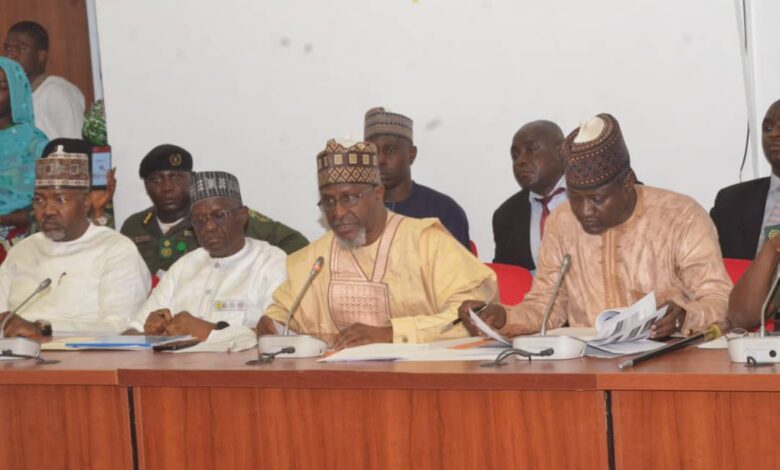
The Senate Committee on Environment on Thursday intensified scrutiny of the 2026 budget proposal of the Federal Ministry of Environment, raising serious concerns over poor capital releases and calling for stronger financial support to address Nigeria’s growing environmental crises.
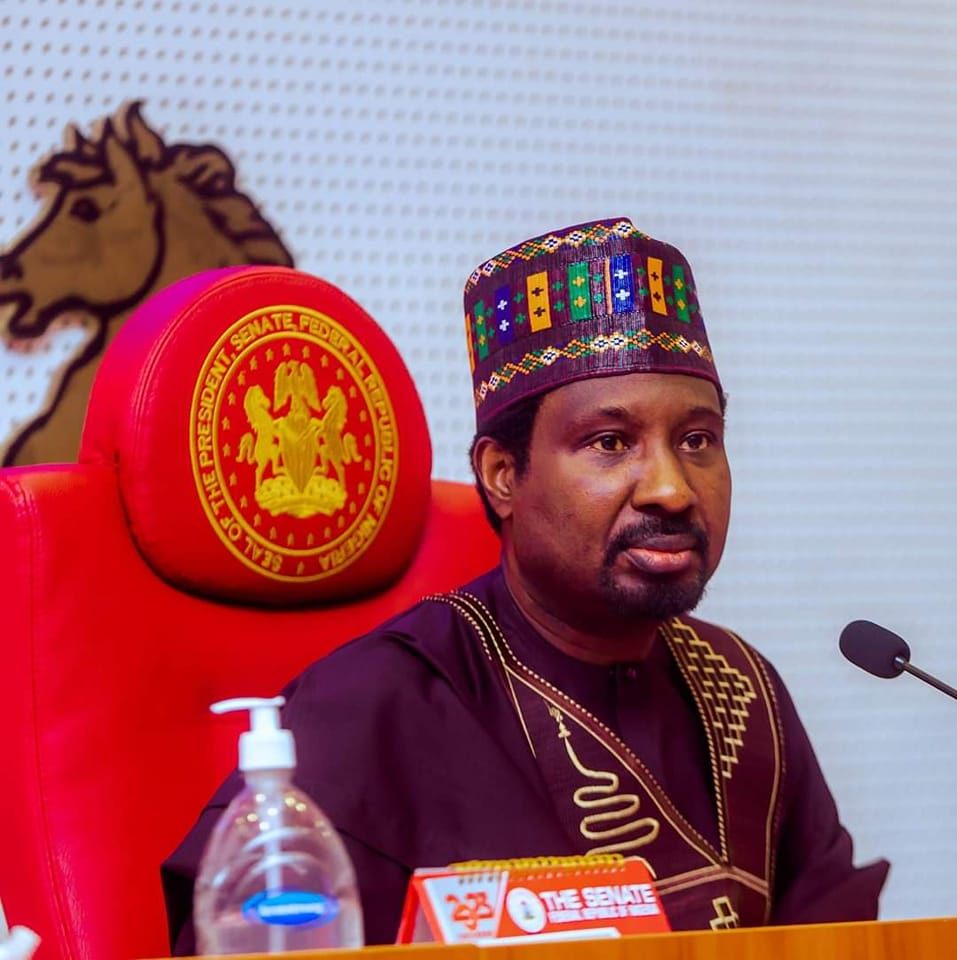
Chairman of the Committee, Olubiyi Fadeyi, while declaring open the budget defence session, described the exercise as a critical legislative step toward the approval of the ministry’s 2026 appropriation.
He stressed that the environment remains “the foundation of our health, economy and national security,” urging a sharper focus on oil pollution control, ecological restoration, erosion control, shoreline protection, deforestation, land reclamation and climate recovery.
The committee observed that annual allocations to the ministry and its agencies were grossly inadequate when weighed against the scale of environmental degradation, biosafety and biosecurity responsibilities, pollution remediation, forest protection and coastal flood mitigation nationwide.
Fadeyi also decried the inconsistent release of funds, noting that even appropriated sums are rarely fully cash-backed, thereby crippling implementation of critical projects.
He commended President Bola Ahmed Tinubu for approving the National Forest Initiative to be coordinated by the Ministry of Environment alongside security agencies, describing it as a proactive measure to combat illegal logging, poaching and criminal activities in Nigeria’s forests.
The committee appealed to the President to approve a Special Intervention Fund to strengthen the ministry’s operational capacity and enable it to perform optimally. It further urged the Federal Government to meet its financial commitments to international climate-related organisations in order to unlock climate finance and deepen global partnerships.
Minister Reveals Zero Capital Spending in 2025
Presenting the ministry’s performance report and 2026 proposal, the Minister of Environment, Balarabe Abbas Lawal, disclosed that while recurrent expenditure in 2025 recorded an 81.1 per cent performance rate, capital funding remained critically constrained.
According to him, out of over ₦41.7 billion appropriated for capital projects in 2025, only ₦702 million was released as warrant, with no cash backing to date, effectively leaving capital expenditure at zero.
He described the development as a major setback, especially as Nigeria continues to grapple with devastating floods, gully erosion across northern and central states, and coastal erosion worsened by rising sea levels.
Lawal highlighted ongoing interventions including solar-powered boreholes, solar streetlights, flood and erosion control projects, clean cooking initiatives aimed at reducing indoor air pollution and deforestation, as well as nationwide tree planting campaigns.
He noted that Nigeria currently has one of the lowest forest cover levels globally due to sustained deforestation and illegal logging, adding that the presidential ban on wood export introduced last year was aimed at reversing the trend.
The 2026 Budget Anchored on Project Completion, the ministry proposed ₦65.9 billion for 2026, comprising ₦61 billion for capital projects and ₦4.9 billion for recurrent expenditure.
However, Lawal explained that about ₦45 billion, roughly 64 per cent of the total capital allocation, would go to a World Bank-supported environmental programme domiciled in the Ministry of Finance, leaving the core ministry with just about ₦20 billion to execute its direct mandates.
He said the 2026 focus would largely be on completing 549 ongoing projects valued at over ₦16 billion, with minimal provision for new projects.
Key priorities for 2026 include strengthening nationwide flood mitigation efforts, expanding access to clean cooking energy, promoting renewable energy, advancing agroforestry in collaboration with the Ministry of Agriculture, and enhancing environmental education and capacity building.
READ ALSO: Diaspora Launch Nationwide Specialist Outreach Under DHII 2026 to Strengthen Nigeria’s Health System
Nigeria, Kenya Move to Reactivate Joint Commission on Trade, Migration, Other
The minister emphasised that many public health challenges, including malaria and cholera, are environmentally linked, stressing that improved environmental management is essential for national well-being.
He assured the committee of the ministry’s commitment to transparency, accountability and sustainable development, expressing confidence that with sustained legislative support, Nigeria can achieve a cleaner, safer and more resilient future.
About The Author