By Fatima Saka
Abuja – The Federal Government has secured a broad-based commitment from traditional rulers and religious leaders nationwide to take ownership of health reform at the grassroots, in what officials described as a decisive step toward achieving Universal Health Coverage (UHC) by 2030.
The National Traditional and Religious Leaders Summit on Health 2026, held at the State House Banquet Hall, Aso Rock Villa, was formally opened by First Lady Oluremi Tinubu, who underscored the moral urgency of tackling malnutrition and food insecurity as foundations for national development.
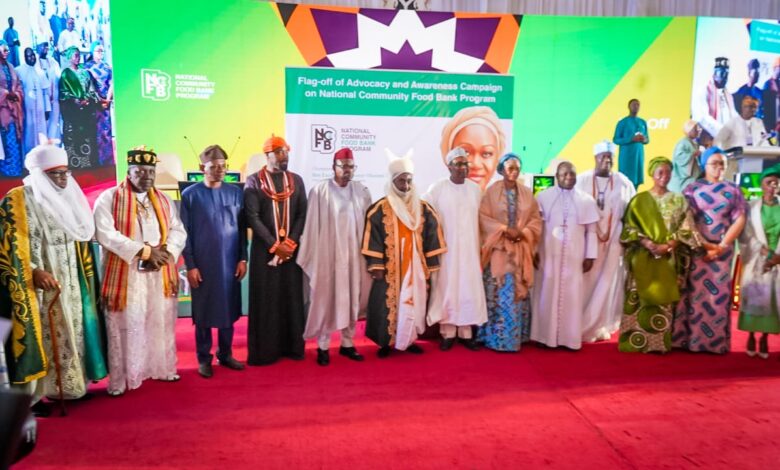
She highlighted the National Community Food Bank Programme, designed to operate across all 774 local government areas, targeting children under six, pregnant and lactating women, and vulnerable households.
The First Lady stressed that beyond distribution, transparency and community oversight would be critical to ensuring that support reaches those most in need, urging traditional and faith leaders to safeguard integrity at the local level.
Delivering the keynote remarks, the Coordinating Minister of Health and Social Welfare, Muhammad Ali Pate, framed health reform as a moral and collective obligation rather than a purely technical undertaking.
He said Nigeria’s enduring health challenges, including maternal mortality, malnutrition, routine immunization gaps and preventable disease outbreaks, are influenced not only by infrastructure and workforce limitations but by trust, culture, and belief systems.
Pate emphasized that traditional rulers and faith leaders occupy a “sacred space of trust,” shaping decisions at household and community levels. According to him, the success of national policies depends on whether families choose antenatal care, consent to immunization, report outbreaks early, and adopt preventive health behaviours.
He said achieving UHC by 2030 under the Nigeria Health Sector Renewal Investment Initiative (NHSRII) and the Health Sector Compact would require prevention and early care-seeking to become shared community norms.
The minister recalled Nigeria’s certification as wild polio-free in 2020 as evidence of what coordinated leadership can accomplish. He noted that collaboration with traditional and religious leaders helped counter misinformation and vaccine resistance, and argued that the same partnership must now extend to maternal health, nutrition, disease prevention, outbreak preparedness and primary healthcare utilization.
He later presented the proposed 2026 Aso Rock Declaration on Health, outlining commitments by summit participants to promote essential health services, expand insurance enrollment, strengthen disease surveillance, support frontline health workers, integrate faith-based facilities into referral systems, and convene the summit annually to track progress.
Pate further reaffirmed that Universal Health Coverage by 2030 is not merely a policy target but a national covenant requiring unity across government, traditional institutions, faith communities and citizens. With the adoption of the proposed declaration and renewed commitments from social and cultural leaders, the summit signaled a strategic effort to embed health reform within Nigeria’s community structures and belief systems, making access to quality healthcare a shared national responsibility.
Earlier, in his welcome remarks, the Minister of State for Health and Social Welfare, Dr. Iziaq Adekunle Salako, described the summit as a historic milestone and a flagship “social leadership” pillar of President Bola Ahmed Tinubu’s Renewed Hope Health Agenda. He said the goal was to transition from government-led reform to a community-owned healthcare system by deepening awareness and ownership of the NHSRII among apex community gatekeepers.
Salako outlined the objectives of the summit, which included strengthening two-way dialogue between government and communities, amplifying the role of traditional and religious leaders in promoting immunization, safe motherhood, family planning, nutrition and screening services, and formalizing strategic partnerships through a summit communiqué.
He stressed that evidence shows that when traditional and religious leaders are meaningfully engaged in the design and monitoring of health interventions, service uptake increases and trust in the health system improves.
READ ALSO: FG, First Lady Rally Traditional, Religious Leaders to Anchor Health Reform in Communities
Sultan Declares Wednesday First Day of Ramadan 1447AH After Moon Sighting Across Nigeria
Citing the 2024 polio outbreak response, Salako noted that traditional leaders helped resolve a significant proportion of vaccine refusal cases across northern states, contributing to high immunization coverage in high-risk wards. He described this as proof that social leadership can overcome barriers where formal systems have limited reach.
The summit also reviewed progress under the Nigeria Health Sector Renewal Investment Initiative using findings from the 2025 State of the Health of the Nation Report, building on reforms initiated after the signing of the Health Sector Compact in December 2023. Deliberations covered expansion of primary healthcare, frontline worker training, hospital capacity strengthening, immunization performance, multiple micronutrient supplementation, cancer infrastructure development and nutrition interventions.
About The Author