Nigeria’s automated visa regime has significantly boosted foreign exchange earnings and reduced manual processing to less than 20 per cent, the Federal Government revealed on Tuesday, as lawmakers at the National Assembly commended Interior Minister Olubunmi Tunji-Ojo for sweeping reforms across the immigration and correctional systems.
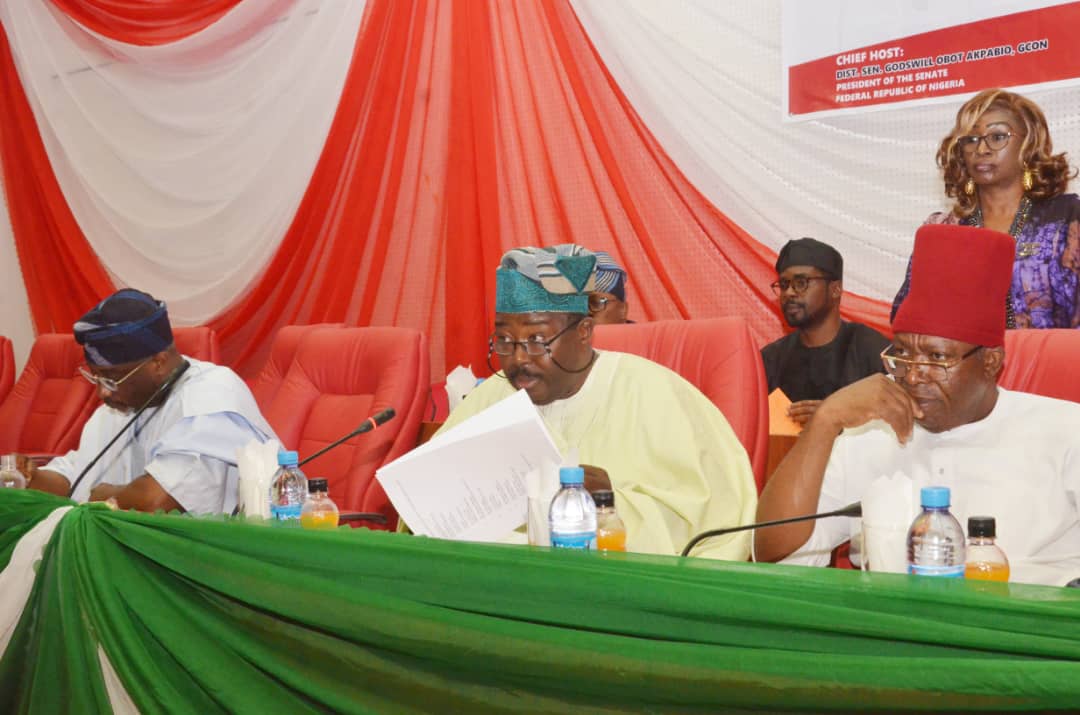
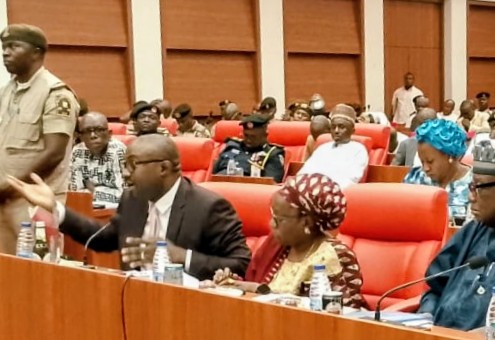
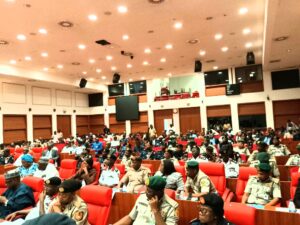
The disclosure was made during the 2026 budget defence session before the joint committees of the Senate and House of Representatives on Interior.
Officials told lawmakers that the transition to a fully automated visa platform has eliminated middlemen, improved transparency and enhanced efficiency in processing applications.
“Visa is an economic enhancer, not just a migration management document,” a ministry official said, noting that revenue from the new system has grown substantially in dollar terms and is remitted directly into the Federal Government’s account.
The ministry explained that reforms were introduced to ensure that fees previously paid through foreign channels are now retained within Nigeria’s system. While the policy initially faced resistance from some stakeholders, including the Manufacturers Association of Nigeria (MAN), officials maintained that the changes were necessary to strengthen accountability and revenue generation.
Chairman of the Senate Committee on Interior, Adams Oshiomhole, praised the visible transformation within the Nigeria Immigration Service, saying improvements at international airports reflect positively on the country’s global image.
“Each time I pass through our airports now, I feel honoured and elated that our immigration service is wearing a new face. The reforms currently being undertaken by the Minister are yielding appreciable results,” Oshiomhole said.
Lawmakers also acknowledged progress within the Nigeria Security and Civil Defence Corps, the Federal Fire Service and the Nigerian Correctional Service, describing the reforms as far-reaching.
On correctional reforms, the Minister referenced the Nigerian Correctional Service Act, explaining that constitutional amendments have already empowered states to establish correctional facilities, having moved the service from the exclusive to the concurrent legislative list.
“There is nothing more to amend. What remains is for states to take up that responsibility,” he said, adding that state participation would reduce overcrowding and financial pressure on federal custodial centres.
However, funding concerns surfaced during the session. The Minister confirmed that a promised 20 per cent capital release for the previous fiscal year had not yet been received, prompting lawmakers to warn that failure to disburse the funds could disrupt implementation timelines.
Earlier, an agency under the ministry disclosed that although ₦3.5 billion in capital projects was uploaded under the 2024 budget out of a ₦4.3 billion allocation, no actual capital releases were made.
READ ALSO: Opposition Reps Walk Out, Reject Electoral Act Amendments Over E-Transmission Clause
2026 Budget Defence: Reps Warns Exam Bodies Against Intimidation, Approves WAEC Budget
Despite the funding shortfall, officials highlighted ongoing infrastructure upgrades, including installation of command and control centres in Kaduna and expansion to other strategic locations.
The joint committees urged the Civil Defence, Correctional, Immigration and Fire Service Board to expedite its ongoing recruitment exercise and release results for applicants who have already sat for examinations.
While acknowledging fiscal challenges, lawmakers expressed confidence that sustained reforms under Tunji-Ojo would further reposition the interior sector for improved service delivery, security coordination and international credibility.
About The Author