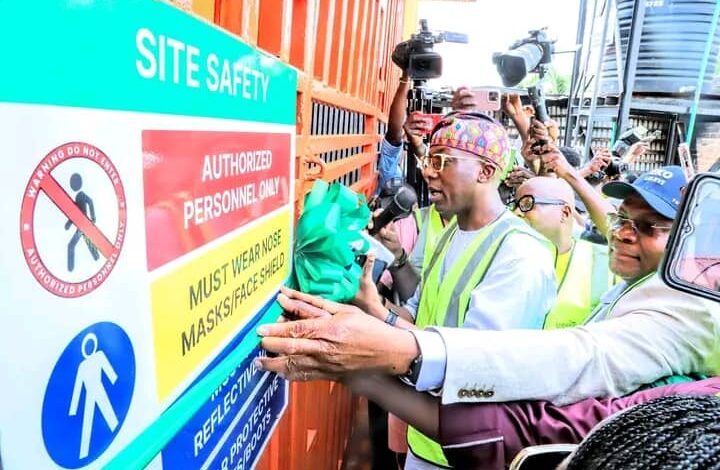
The Lagos State Government (LASG), in partnership with C40 Cities, has launched and handed over the Ikosi Fruit Market Biogas (Biodigester) Plant, a facility designed to convert organic market waste into clean energy and high-quality organic fertiliser.
Speaking at the launch and handover ceremony held at the Ketu/Ikosi Fruit Market on Monday, the Commissioner for the Environment and Water Resources, Mr Tokunbo Wahab, described the project as a major milestone for the Ikosi community, Lagos State and future generations.

According to a press statement signed by the Director of Public Affairs, Ministry of the Environment and Water Resources, Kunle Adeshina, the commissioner said the project goes beyond the commissioning of infrastructure, describing it as the unveiling of a vision that turns everyday urban challenges into opportunities for sustainable development.
Wahab explained that the biogas plant represents a bold shift in how Lagos views waste, not as a burden, but as a valuable resource capable of driving sustainability, resilience and inclusive growth. He said the biogas generated would be used for electricity and cooking gas, while the nutrient-rich organic fertiliser produced would be packaged and sold to local farmers to strengthen the food system and promote sustainable agriculture.
He noted that the facility would systematically collect organic waste from the market and process it in an anaerobic digester, where natural bacteria break down the waste in the absence of oxygen to produce biogas and biofertiliser.
According to him, the initiative, implemented in partnership with C40 Cities and UK International Development under the Climate Action Implementation Programme, reflects Lagos State’s commitment to translating international climate pledges into practical, community-level action.
“The biogas plant is more than machinery and pipes. It is a symbol of transformation. It affirms that the future of sustainable cities is built not only in policy documents, but right in our markets, communities and daily activities,” Wahab said.
He explained that Ikosi Fruit Market, like many markets across the state, generates tonnes of organic waste daily, including fruit peels, vegetable trimmings and unsold produce, which traditionally ended up in landfills or open dumps. These, he said, clogged drainage systems, created foul odours, posed health risks and released methane, a potent greenhouse gas that worsens climate change.
The commissioner said the project has now transformed a long-standing environmental problem into a practical solution, as organic waste from the market will be converted into clean energy and fertiliser, demonstrating the circular economy in action.
He added that the initiative would improve sanitation conditions for traders, workers and residents, reduce disease transmission and create a healthier and more dignified environment, while also lowering energy costs and improving productivity.
Earlier, in his welcome address, the Permanent Secretary, Office of Environmental Services, said the project showcased the power of innovation, collaboration and technology in addressing waste management challenges faced by traders over the years.
Also speaking, the C40 Cities Regional Director for Africa, Mr Anthony Okoth, expressed appreciation for the successful completion of the project, noting that the biodigester would treat and convert waste directly from the market while contributing to improved sanitation and climate action across African cities.
READ ALSO: 2026 Budget Defence: Industry Ministry Seeks ₦2.72bn Capital Vote, Flags Non-Release of 2025 Funds
Valentine’s Day: AGC, HOT promotes chastity among teens, youths
In her remarks, the Mayoress of Ikosi-Isheri Local Council Development Area (LCDA), Princess Abolanle Bada, represented by the Vice Chairman, Hon. Olayinka Ogunleye, thanked the Lagos State Government and C40 Cities for selecting Ikosi as a beneficiary of the initiative.
She said the project would improve sanitation, empower market traders, provide reliable electricity for daily activities and strengthen the local economy, while promoting a cleaner and more sustainable environment.
About The Author