The rehabilitation and reconstruction of Tudun Biri community in Kaduna State has emerged as a defining milestone in Nigeria’s humanitarian governance, marking a shift from emergency relief to long-term, dignity-focused recovery and positioning the country as a reference point for post-disaster reconstruction in Africa.
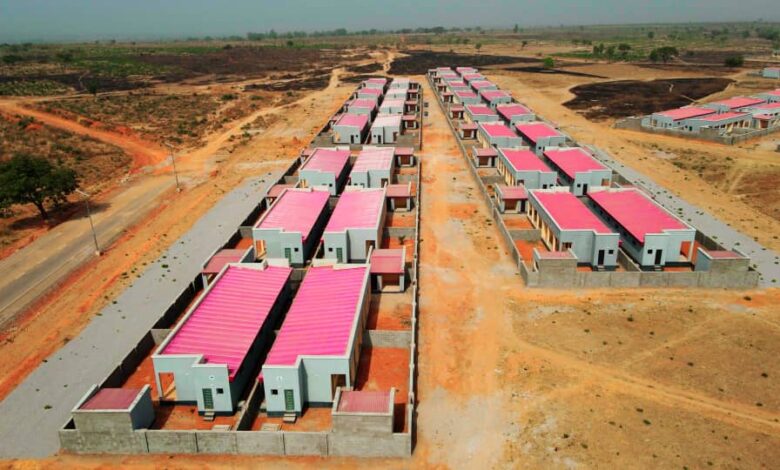
Following the tragic drone incident that devastated the community, the Federal Government, through the National Emergency Management Agency (NEMA), implemented a comprehensive reconstruction programme that went beyond immediate relief to permanent resettlement, infrastructure rebuilding and livelihood restoration.
The intervention, executed under the leadership of NEMA’s Director-General, Mrs. Zubaida Umar, and with strategic oversight from the Office of the Vice President, Senator Kashim Shettima, redefined the scope of post-disaster recovery in Nigeria.
According to a press release issued on Thursday by Abdulkadir Ibrahim of the NEMA Press Unit, Abuja Operations Office, the Tudun Biri project departed from Nigeria’s traditional disaster response model, which has largely focused on short-term assistance such as food distribution, temporary shelter and medical aid.
Instead, the Tudun Biri reconstruction delivered permanent housing, rehabilitated roads, rebuilt community facilities and restored essential social amenities within a coordinated, government-led framework. The approach aligns with global best practices in post-disaster and post-conflict recovery, but remains rare within Africa’s humanitarian landscape.
Central to the project’s success was strong political backing. Vice President Shettima’s direct supervision of the Resettlement Scheme for Persons Impacted by Conflicts (RSPIC) ensured effective coordination among federal ministries, state authorities and development partners, while fast-tracking funding, procurement and inter-agency collaboration.
NEMA’s leadership also played a critical role. Under Mrs. Umar, the agency has pursued institutional reforms aimed at transparency, accountability and proactive disaster risk management, gradually repositioning NEMA from a reactive relief body to a strategic institution focused on resilience and recovery.
Observers note that across Africa, post-disaster communities often face prolonged displacement due to bureaucratic delays, funding constraints and weak coordination. Tudun Biri presents a contrasting narrative: a structured, state-driven reconstruction effort implemented within a clear political and institutional mandate.
Beyond physical infrastructure, the project carries strong symbolic significance. For a community traumatised by tragedy, the reconstruction signals state responsibility, recognition and a commitment to restoring trust between government and citizens.
READ ALSO: 210 Killed in Kwara, Katsina Attacks: MURIC Urges FG Equal Protection of Nigerian Lives
Nigeria Mourns DRC Mine Tragedy, Offers Solidarity After Rubaya Coltan Collapse
The Tudun Biri rehabilitation is widely seen as more than a standalone intervention. Analysts describe it as a policy statement on humanitarian governance—demonstrating that African states can design and deliver comprehensive reconstruction programmes that integrate relief with national development planning.
If sustained and replicated, the Tudun Biri model could reshape post-disaster recovery across the continent, placing dignity, resilience and accountable state leadership at the centre of humanitarian response.
About The Author