Politicisation of Foreign Service Threatens Nigeria’s Global Standing, Africa’s Democracy – Sanusi Warns

By Fatima Saka
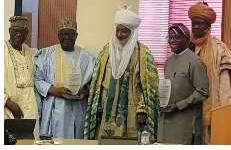
His Royal Highness, Sarkin Kano, Khalifa Muhammad Sanusi II, has warned that the growing replacement of career diplomats with political appointees in Nigeria’s foreign missions is eroding professionalism, institutional memory and strategic coherence, with grave implications for the country’s global standing and Africa’s democratic future.
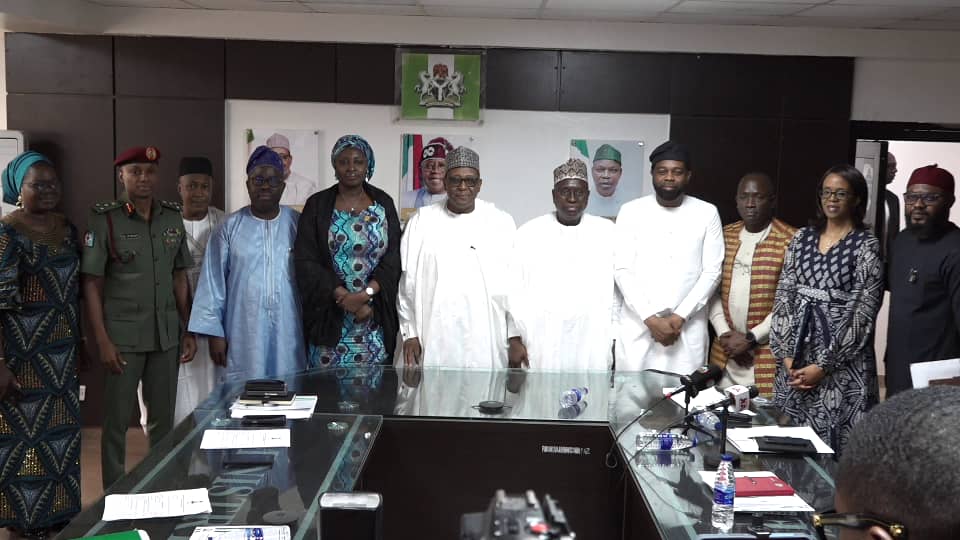
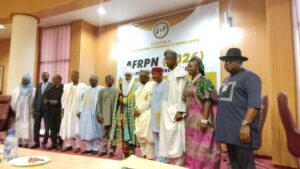
Sanusi sounded the warning on Thursday in Abuja at the 8th Annual Conference and Lecture of the Association of Foreign Relations Professionals of Nigeria (AFRPN), held at the Ministry of Foreign Affairs in Abuja, where diplomats, policy experts and African Union officials gathered to examine the continent’s democratic trajectory.
He cautioned that Africa’s democratic promise, and Nigeria’s influence in a fast-changing global order, would remain at risk unless professional diplomacy is restored and democratic governance delivers tangible benefits to citizens.
Speaking with candour, the Sarkin Kano criticised what he described as the steady erosion of career diplomacy, warning that countries which neglect training and intellectual rigour in foreign policy risk policy incoherence and diminished international relevance.
“You don’t send someone to represent Nigeria abroad who lacks training,” Sanusi said. “Foreign policy is too important to trivialize.”
Describing the Ministry of Foreign Affairs as his “second home,” Sanusi recalled growing up as the son of a career diplomat, noting that he had “graduated from being a son of the Ministry to a father.” He stressed that foreign policy decisions shape national destiny, citing defining moments in Nigeria’s diplomatic history, including the country’s break with the United Kingdom.
Rejecting claims that current global instability is unprecedented, Sanusi said societies have always lived in “interesting times,” but warned that the real challenge lies in navigating change with intelligence, professionalism and strong institutions.
The conference, themed “The Challenge of Democratic Governance in Africa: Mega Trends and Leveraging Opportunities for Consolidation,” drew heads of government institutions, members of the diplomatic corps, foreign policy experts and the African Union Commissioner for Political Affairs, Peace and Security, Ambassador Bankole Adeyeye.
Earlier, Chairman of the Savannah Centre for Diplomacy, Democracy and Development, Professor Ibrahim Agboola Gambari, CFR, highlighted mounting democratic stress worldwide, driven by social frustration and unmet expectations. While Africa is rich in youthful energy and natural resources, he warned that “potential alone cannot feed people.”
Gambari cautioned that failure by African leaders to translate opportunities into improved security, welfare and inclusion would deepen democratic discontent. He outlined key pillars for democratic consolidation, including leadership with integrity, strong state capacity, elite consensus on economic transformation and reforms within political parties.
In his remarks, AFRPN President, Ambassador Gani Lawal, PhD, FFRP, urged Nigeria to convert its international visibility into concrete domestic gains, noting that after 27 years of uninterrupted democracy, citizens now demand measurable outcomes.
Lawal unveiled AFRPN’s Chinumbu 4D Agenda, Demography, Democracy, Diaspora and Development, as a strategic framework for national growth, while also highlighting mentorship initiatives for young diplomats and senior officers. He commended Gambari’s hands-on role in capacity building through the Savannah Centre.
Identifying structural weaknesses in Nigeria’s foreign policy architecture, Lawal called for the establishment of a separate Foreign Service Commission, clearer codification of Nigeria’s foreign policy agenda and stricter accreditation of representatives at foreign missions.
“These are not bureaucratic niceties,” he said. “They are essential if Nigeria is to punch its weight in the UN, AU, ECOWAS and other multilateral platforms.”
Delivering the guest lecture, AU Commissioner Ambassador Bankole Adeyeye spoke on the African Union’s normative frameworks on democracy, the current state of democratic governance on the continent and what he described as Africa’s democratic paradox.
READ ALSO: Senate Opposition Demands Retention of Electronic Transmission in Electoral Act Amendment
NAN Remains Strategic Partner in Disaster Management – LASEMA PS
Participants lauded AFRPN as a critical platform for mentorship and strategic dialogue, describing Adeyeye’s lecture as a rare opportunity for continental-level insight.
As the conference ended with interactive session, a shared message emerged: Africa’s era of unfulfilled potential is no longer acceptable, and performance, anchored on professional diplomacy, strong institutions and accountable leadership, is now imperative both at home and abroad.
About The Author