
By Fatima Saka
Abuja — The Federal Government of Nigeria, working with global and local partners, has intensified efforts to strengthen translational research in Africa, warning that the continent must move beyond serving as a source of extracted data to becoming a driver of scientific innovation, health solutions and economic growth.
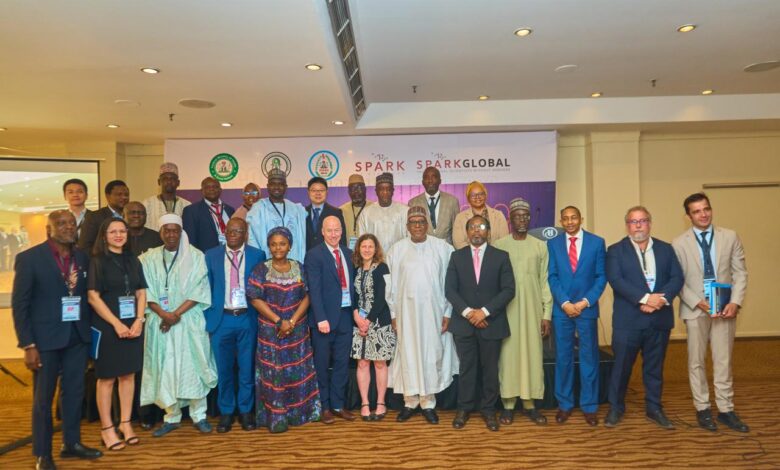
This was highlighted on Monday in Abuja at the SPARK Translational Research Boot Camp and Conference 2026, jointly organised by Stanford University’s SPARK programme, Nigerian research institutions and international partners.
Speaking at the event, the Coordinating Minister of Health and Social Welfare, Professor Muhammad Ali Pate, said Africa’s continued marginal role in global research threatens its ability to respond effectively to pressing health and development challenges.

Delivering the keynote address, Pate commended the organisers and participants for months of sustained coordination that brought the programme to Africa despite resource constraints, describing the effort as a reflection of the urgency to improve the continent’s research output and real-world impact.
He said the initiative comes at a critical moment, as the world grapples with overlapping crises — from pandemics and economic shocks to technological disruption and demographic transitions — making scientific inquiry and evidence-based policymaking indispensable.
Pate traced major gains in life expectancy, disease control and medical innovation to the scientific method, but cautioned that such progress remains fragile. Drawing lessons from the COVID-19 pandemic, he noted that the crisis exposed vulnerabilities in global supply chains and reshaped economies and politics in ways that continue to influence development trajectories.
Within Africa, he identified rapid population growth, a shift from infectious to non-communicable diseases, and fast-paced technological change as transitions demanding urgent, research-driven responses. However, he expressed concern that Africa still accounts for a negligible share of global research funding and output, with most studies externally funded and often designed outside the continent.
According to him, this model risks reducing Africa to a perpetual extraction hub for data and knowledge unless deliberate investments are made in local research ecosystems, including clinical trials, regulatory capacity and science governance.
Pate said Nigeria’s ongoing health sector reforms under President Bola Ahmed Tinubu are anchored on scientific evidence, citing research governance, regulatory strengthening, healthcare delivery expansion, value-chain development and a robust health security agenda as key pillars requiring sustained scientific inquiry.
In his special remarks, Professor Kevin Grimes, Co-Director of SPARK at Stanford University and Vice-President of SPARK Global, said the programme aims to improve Africa’s health and economic wellbeing by helping researchers translate high-quality science into products and services that benefit patients and society.
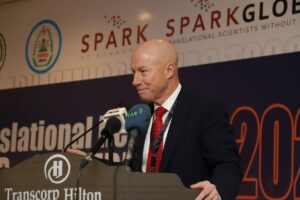
Grimes noted that African scientists are as capable as their peers globally but are often constrained by limited resources, making structured support for translational research essential.
He said the SPARK model — which pairs academic researchers with industry expertise — has successfully built innovation ecosystems elsewhere and holds similar promise for Africa.
Participants at the conference, including policymakers, researchers, industry leaders and development partners, agreed that strengthening translational research and improving science communication are critical to counter anti-science narratives and ensure research findings translate into tangible health and economic gains.
The boot camp was formally declared open with renewed commitments from the Federal Government and its partners to support research, innovation and clinical trials as part of a broader strategy to position Nigeria and Africa as active contributors to global scientific advancement.
In calling for stronger investment in research and development (R&D), Dr. Abdul Mukhtar, National Coordinator of the Presidential Initiative for Unlocking Healthcare Value Chains (PVAC), said research is the foundation of Nigeria’s healthcare reform agenda.

Dr. Mukhtar explained that the Presidential Initiative, established in 2023 by President Bola Ahmed Tinubu, is a key pillar of the reform strategy outlined by the Coordinating Minister of Health and Social Welfare.
According to him, the initiative aims to unlock Nigeria’s healthcare value chain, boost local production of healthcare products, create high-quality jobs and mobilise sustainable financing for the sector.
“When we talk about the healthcare value chain, the very foundation is research and development,” he said. “You cannot move into manufacturing, discovery, marketing or bedside care without strong R&D. Yet Africa accounts for only about two per cent of global R&D spending, and that must change.”
He stressed that beyond increasing research output, Africa must link science to finance and commercialisation, noting that many groundbreaking studies never move beyond academic journals.
Drawing from his experience as a scientist, Dr. Mukhtar said researchers can become absorbed in laboratory work and publications, sometimes losing sight of the ultimate purpose of science.
“I say this with respect, because I was there myself,” he said. “I spent years doing bench-side research, amplifying DNA and publishing papers. But science and medicine exist to save lives. That is the essence of what we do.”
To bridge this gap, he said the Presidential Initiative has adopted an ecosystem approach, ensuring that clinical trials, human capital development, supply chains and market access are developed simultaneously.
He announced a major milestone, revealing that Nigeria will, within days, launch Africa’s first Manufacturing Academy, aimed at strengthening local pharmaceutical and healthcare manufacturing capacity.
Dr. Mukhtar said translational research — the process of converting scientific discoveries into real-world solutions — remains central to the initiative’s work, stressing that research must reflect Africa’s disease burden and unmet health needs.
“Relevance is critical,” he said. “If our research does not address our realities, then we have missed the point.”
He identified innovation, impact, collaboration and ecosystem thinking as key drivers of success, stressing that no single actor can deliver results alone.
“There must be collaboration between academia, the private sector, scientists, hospitals, regulators, policymakers and government,” he said.
He reaffirmed Nigeria’s ambition to emerge as Africa’s hub for the local manufacturing of essential medicines and healthcare products, noting that this goal depends on strong leadership in basic science and R&D.
Speaking on Science and Political Will, Dr. Obi Adigwe, Director-General of the National Institute for Pharmaceutical Research and Development (NIPRD), said the conference was designed to bridge the gap between science, policy and impact-driven innovation.
He stressed that scientific brilliance alone is insufficient without a policy environment that recognises and prioritises research.
“No matter how brilliant you are, if policy does not understand the priority of what you are doing, you will not make an impact,” he said, adding that political will remains critical to scientific progress.
Dr. Adigwe commended Professor Pate for championing science-driven policymaking and disclosed that the conference, which attracted 60–70 participants from across Africa, was the product of over 18 months of planning with Stanford University partners.
He warned that science is under increasing global pressure from funding cuts, misinformation and declining political commitment, noting that translational research remains essential to ensuring society benefits directly from scientific effort.
READ ALSO: FMC Abuja Refutes Claims of Negligence in Snakebite Death of Late Ms Nwagene
SERAP Drags NNPCL to Court Over Alleged ₦22.3bn, $49.7m Missing Oil Revenues
He also underscored the importance of global collaboration, warning against isolationism and highlighting Nigeria’s growing leadership in science-informed health reforms.
Dr. Adigwe described the current period as unprecedented for science and research in Nigeria and expressed hope that the country’s model would inspire similar reforms across Africa.
About The Author