
Nigeria’s Job-Creation Drive Hinges on Macroeconomic Reforms, Private Sector Expansion – Minister Tuggar

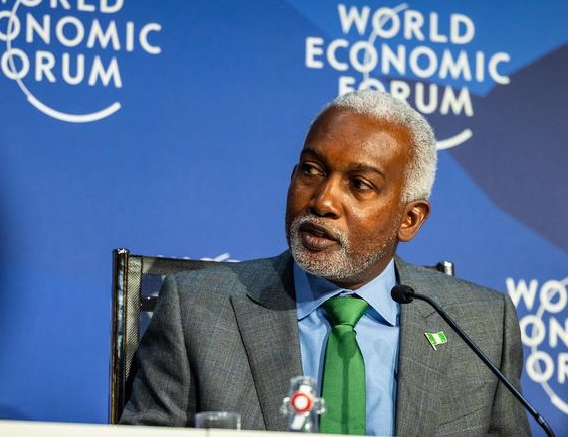
Nigeria’s Minister of Foreign Affairs, Ambassador Yusuf Maitama Tuggar, has reaffirmed that the country’s job-creation strategy is firmly anchored on far-reaching macroeconomic reforms and the expansion of private-sector-led growth under the administration of President Bola Ahmed Tinubu.
Tuggar made this known while speaking at the Africa Jobs Engine Panel on the sidelines of the World Economic Forum, according to a press release signed by his Special Assistant on Media, Alkasim Abdulkadir.
The minister said the federal government’s employment strategy is focused on restoring macroeconomic stability and creating clear, investable pathways that enable sustained private-sector participation.
According to him, long-term and sustainable job creation can only be achieved by rebuilding investor confidence and encouraging durable private investment.
He outlined key reforms already implemented by the Tinubu administration, including the stabilisation of the foreign exchange regime, removal of fuel subsidies, and ongoing power-sector restructuring aimed at separating electricity generation, transmission, and distribution. Tuggar said the reforms are designed to improve transparency, eliminate structural distortions, and attract investment into energy-intensive and labour-absorbing sectors of the economy.
The minister also disclosed that the government is implementing comprehensive tax reforms to improve efficiency, enhance policy predictability, and strengthen Nigeria’s competitiveness as a preferred destination for business and investment.
On regional economic integration, Tuggar referenced Nigeria’s hosting of the West Africa Economic Summit (WAES), explaining that the initiative was designed to bridge information gaps by providing private-sector players across the sub-region with practical insights into regional economic frameworks and investment opportunities. He identified the West African Power Pool and other regulatory instruments as critical tools for driving cross-border investment and industrial development.
While stressing that government’s core responsibility is to provide a stable and enabling environment, Tuggar maintained that the private sector remains the primary engine of job creation.
He noted that emerging local production ecosystems are increasingly transforming raw materials into finished goods, supported by stronger linkages between labour, finance, and markets—developments that are expanding opportunities for women and young people.
READ ALSO: COAS to Troops: Plateau Operations Critical to Nigeria’s National Stability
Tuggar further cautioned that the African Continental Free Trade Area (AfCFTA) must remain focused on its central goal of economic integration. He emphasised that deepening intra-African trade, strengthening industrial linkages, and developing regional value chains are critical to achieving sustained economic growth and employment across the continent.
He further reiterated Nigeria’s commitment to reforms that build confidence, unlock private capital, and position the country as a platform for inclusive growth and job creation in Africa.
About The Author