
The Federal Government has inaugurated the Inter-Ministerial Steering Committee (IMSC) of the Nigeria Power for Health Initiative (NPHI), a major intervention aimed at guaranteeing uninterrupted and sustainable electricity supply to health facilities nationwide.
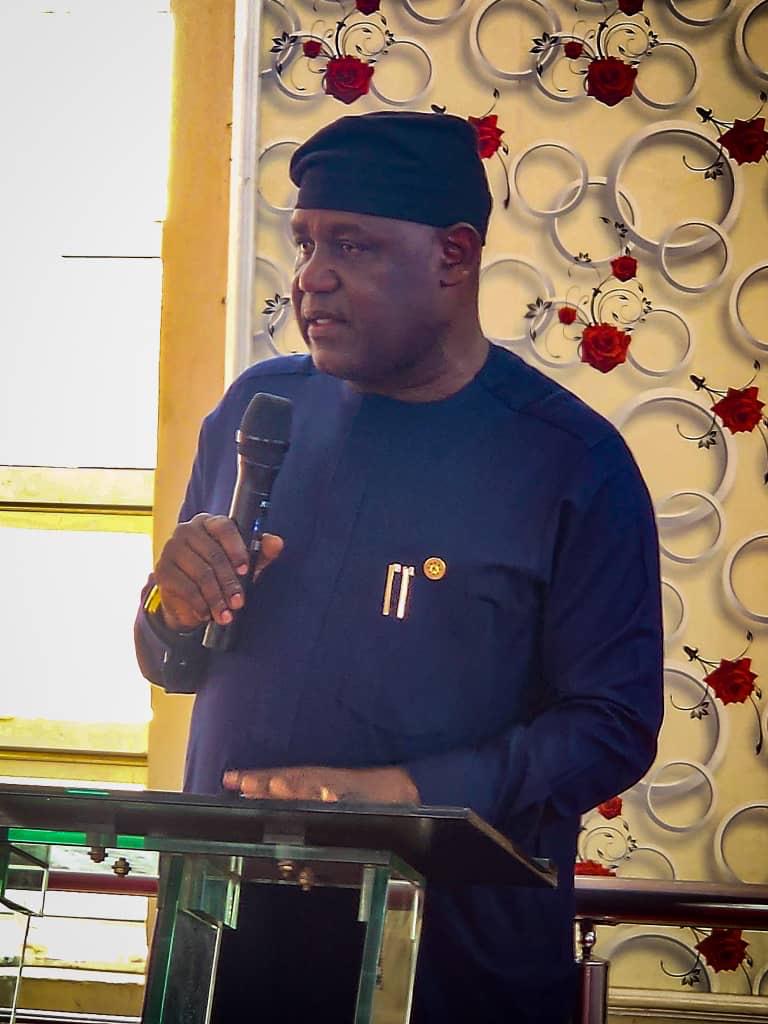
Speaking at the inauguration ceremony on Monday at the Federal Ministry of Health and Social Welfare headquarters in Abuja, the Honourable Minister of State for Health and Social Welfare, Dr Iziaq Adekunle Salako, described the initiative as an urgent response to the long-standing challenge of energy insufficiency in the healthcare system.
According to a press statement issued and signed by Alaba Balogun, Deputy Director and Head of Information and Public Relations, Dr Salako stressed that electricity is not just an infrastructure requirement but a critical determinant of health outcomes and a cornerstone of Universal Health Coverage (UHC).
“Energy insufficiency in hospitals has become an emergency and a major disrupter of health services in our country. No Nigerian should be left in the dark while seeking healthcare,” he said, adding that the initiative aligns with President Bola Ahmed Tinubu’s Renewed Hope Agenda.
The Minister explained that the steering committee is a direct outcome of the First National Stakeholders’ Dialogue on Power in the Health Sector, held in September 2025. The communiqué from the dialogue was submitted to the President, who subsequently approved the establishment of a dedicated coordination framework — the Nigeria Power for Health Initiative.
“As a signal of commitment at the highest level, Mr President declared the National Dialogue open and approved the establishment of the Nigeria Power for Health Initiative. Today’s inauguration marks the beginning of its full implementation,” he added.
Dr Salako disclosed that the NPHI will operate through four key structures:
An Inter-Ministerial Steering Committee (IMSC), chaired by the Minister of State for Health with the Minister of Power as Co-Chair;
An Inter-Agency Technical Committee (IATC), led by a nominated subject-matter expert;
A Project Delivery Unit (PDU) to coordinate implementation; and
Facility Energy Management Committees (FEMC) at the facility level to ensure effective execution.
He further explained that the initiative is designed as a coordinated inter-ministerial and public-private partnership between the Federal Ministries of Health and Power, to harmonise all electrification efforts in the health sector. Its objectives include strengthening policy and governance frameworks, deploying standardised and sustainable energy solutions, building capacity, mobilising financing and Public-Private Partnerships (PPPs), ensuring accountability and fostering strategic collaboration.
Describing the assignment as a life-saving mission, Dr Salako said the committee’s work would help prevent avoidable deaths caused by power failure during critical medical procedures, especially during labour and medical emergencies.
“This is a call to duty to save women and children from dying due to power cuts in the midst of life-saving procedures. It is also a response to the hopes of every health worker who deserves a conducive environment with functional, powered equipment,” he emphasised.
He expressed gratitude to President Tinubu for prioritising the health sector and acknowledged the support of the Secretary to the Government of the Federation, Senator George Akume, and the Head of the Civil Service of the Federation, Mrs Didi Esther Walson-Jack. He also commended the Coordinating Minister of Health and Social Welfare, Prof Muhammad Ali Pate, and the Minister of Power, Chief Adebayo Adelabu, for advancing the President’s priorities under the Nigeria Health Sector Renewal Investment Initiative (NHSRII).
The Minister also appreciated development partners, particularly the World Bank, and private sector stakeholders for their continued support to the health and energy sectors.
Formally inaugurating the committee on behalf of President Tinubu, Dr Salako declared: “On behalf of Mr President and Commander-in-Chief, I hereby inaugurate the Inter-Ministerial Steering Committee of the Nigeria Power for Health Initiative.”
In his remarks, the Minister of Power, Chief Adebayo Adelabu, underscored that no critical sector — including health — can function effectively without reliable power.
“After prioritising food security, the next priority is our health. A robust health sector cannot exist without power,” he said.
Adelabu highlighted the Electricity Act of 2023 as a turning point that decentralised and liberalised the power sector, enabling states, local governments and MDAs to participate actively and attract private investment.
“For decades, power in Nigeria was centrally controlled by agencies such as ECN, NEPA and PHCN. With over 200 million people and a vast landmass, that model could not deliver. The new law has empowered other tiers of government and the private sector to step in,” he explained.
He referred to the National Integrated Policy on Electricity, approved in March 2025, as a guiding framework for stakeholders and investors. He also noted that Nigeria’s generation capacity has increased from 13 gigawatts to 14 gigawatts in the past two years, while ongoing transmission upgrades under the Presidential Power Initiative (Siemens Project) have helped reduce grid disturbances in 2025.
According to him, Nigeria’s energy transition plan and the shift toward renewable energy will be key to powering rural and hard-to-reach communities, given the country’s abundance of solar, wind, hydro and gas resources, alongside critical minerals for energy equipment production.
Responding to questions from journalists, both ministers reaffirmed that the collaboration under the NPHI reflects President Tinubu’s determination to transform key sectors through synergy and partnerships.
A two-year target has been set for the first phase of the initiative, with the aim of achieving sustainable and reliable power supply in at least 50 per cent of Nigeria’s health facilities.
“This is about more than lighting up buildings; it is about empowering our health system to save lives. With adequate power, equipment will function, professionals can work effectively, and citizens will receive quality care,” Adelabu stated.
Earlier, the Permanent Secretary of the Federal Ministry of Health and Social Welfare, Daju Kachollom, mni, described the initiative as a bold and innovative step towards strengthening Nigeria’s health system.
She noted that the inauguration proves that the National Stakeholders’ Dialogue was not a mere “talk show” but a platform for concrete action.
READ ALSO: Shepreneur Africa Award hosts seminar to empower young female entrepreneurs
“As members of this committee, you were carefully selected with the approval of Mr President to provide strategic direction, foster inter-sectoral collaboration and mobilise resources for successful implementation. Your role is pivotal in ensuring that health facilities are powered to save lives, support medical innovation and strengthen resilience to public health emergencies,” she said.
The Nigeria Power for Health Initiative is expected to cover primary, secondary and tertiary health facilities, including private clinics, with strong involvement of development partners and private investors to ensure long-term sustainability.
About The Author