The World Health Organization (WHO) has issued a stark warning to African governments, health professionals, and communities as the continent marks the 2025 World Antimicrobial Resistance Awareness Week (WAAW).
In his message for the commemoration, the WHO Regional Director for Africa, Dr. Mohamed Janabi, called for urgent, collective action to confront what he described as a “silent pandemic” that is eroding decades of public health progress.
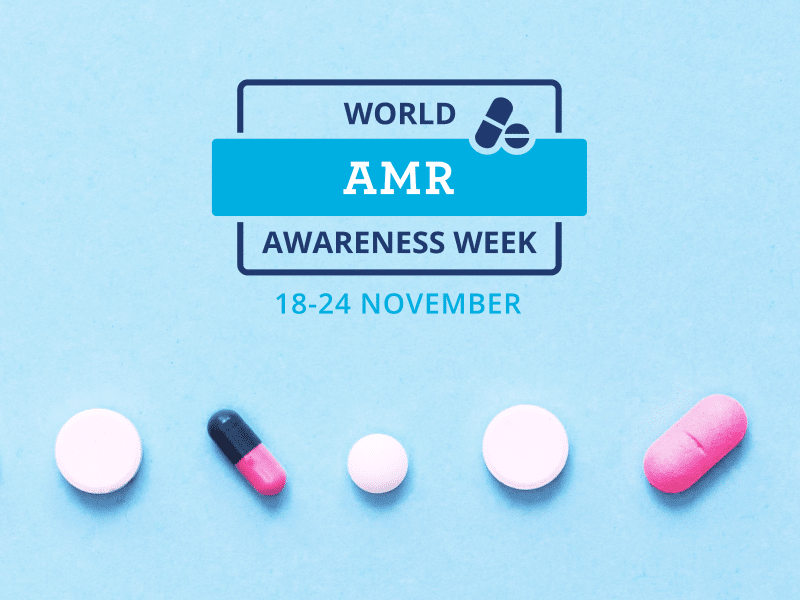
Observed annually from 18–24 November, this year’s WAAW theme—“Act Now: Protect Our Present, Secure Our Future”—underscores the need for immediate and coordinated efforts across sectors to combat antimicrobial resistance (AMR), a global threat that continues to claim millions of lives.
Dr. Janabi stressed that AMR is no longer a looming crisis but a present and worsening reality, particularly in sub-Saharan Africa. “Each year, millions of lives are put at risk because medicines that once cured infections no longer work,” he said, noting that AMR undermines health systems, sustainable food security, economic development, and overall wellbeing.
Globally, antimicrobial-resistant infections caused 1.27 million deaths in 2019, surpassing deaths from HIV/AIDS and malaria combined, with sub-Saharan Africa recording the highest mortality. By 2021, the number of deaths directly linked to AMR reached 1.14 million, reinforcing the urgency of the threat. Four bacterial pathogens—Streptococcus pneumoniae, Klebsiella pneumoniae, Escherichia coli, and Staphylococcus aureus—were each responsible for more than 100,000 AMR-associated deaths.
According to the WHO, inappropriate use of antimicrobials in humans and animals, coupled with persistent challenges in water, sanitation, hygiene (WASH), and limited diagnostic capacity, is accelerating resistance across African countries. “AMR is everyone’s business,” Dr. Janabi emphasized, calling for stronger education and awareness as a foundation for behavioural change.
WHO highlighted progress made across the region, noting that all 47 Member States now have multisectoral National Action Plans (NAPs) on AMR. Twenty-five countries (53%) are enrolled in the Global Antimicrobial Resistance and Use Surveillance System (GLASS), while 32 countries (68%) are implementing key interventions to optimize antimicrobial use in health facilities and communities. Over 220 personnel from 20 countries have also undergone governance and leadership training under the quadripartite collaboration involving WHO, FAO, UNEP, and WOAH.
However, the organization insists that sustained country ownership, domestic financing, and strengthened coordination remain critical to unlocking the full potential of these efforts.
Dr. Janabi issued sector-specific calls to action:
Governments: Prioritize domestic financing to sustain AMR responses and fully implement National Action Plans.
Health Professionals: Prescribe responsibly, practice good hand hygiene, and uphold infection prevention standards.
Environmental/Regulatory Authorities: Strengthen enforcement to reduce antimicrobial waste contamination in water bodies, soil, and food systems.
Civil Society: Act as behaviour-change champions, accountability watchdogs, and advocates for equity and community awareness.
Communities: Avoid self-medication, complete prescribed courses, and uphold good hygiene.
Youth: Use their platforms to raise awareness and promote responsible antimicrobial use.
The WHO Regional Office emphasized that addressing AMR is central to progress in climate change adaptation, food security, primary healthcare, emergency response, and non-communicable disease management.
Building Climate Resilience: Why Nigeria Must Strengthen and Enforce Its Building Code Now
“Our partnership with FAO, UNEP, WOAH, Africa CDC, and AU-IBAR continues to strengthen Africa’s united front against AMR,” Dr. Janabi stated. “Through One Health action, innovation, and accountability, we can mitigate this silent pandemic and secure a healthier, safer future for Africa and the world.”
As WAAW 2025 continues, WHO urges all stakeholders to take concrete, sustained steps. “Doing nothing is not an option,” Dr. Janabi cautioned. “AMR is here—and we must act now.”
About The Author