48th AU Executive Council: Nigeria Govt Call for Fiscal Discipline, Audit Compliance In Addis Ababas

By Fatima Saka
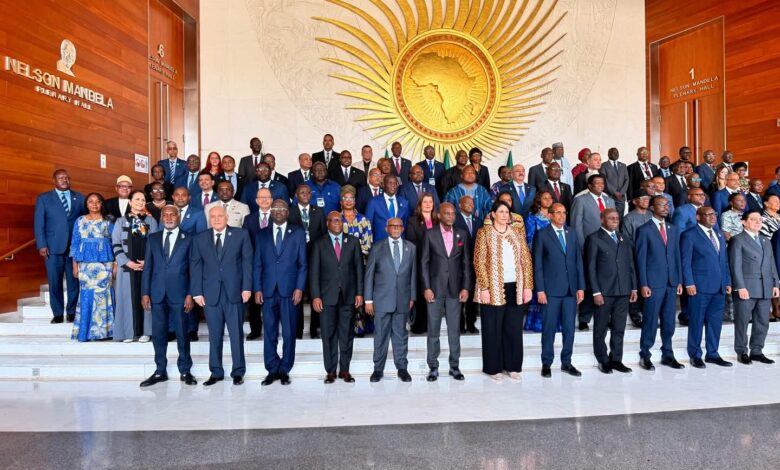
The Government of Nigeria has called for stronger fiscal discipline, institutional accountability, and full implementation of audit recommendations across organs of the African Union (AU), warning that inefficiency and weak oversight could undermine the credibility of the continental body.
Delivering Nigeria’s statement on the Report of the Permanent Representatives’ Committee (PRC) at the 48th Ordinary Session of the AU Executive Council, the Minister of Foreign Affairs, Ambassador Yusuf Maitama Tuggar, stressed that expanding personnel strength without corresponding improvements in measurable output risks weakening institutional effectiveness.
The Minister expressed concern over discrepancies in financial records, breaches of procurement and contracting procedures, and the low recovery rate of loans and advance payments within AU institutions. He urged the Council to adopt a clear and binding timeline for the full implementation of all outstanding audit recommendations without exception.
“Nigeria remains committed to ensuring that our continental institutions reflect the highest standards of transparency and accountability,” Tuggar stated, underscoring the need for reforms that deliver measurable impact.
On multilateral engagement, Nigeria endorsed the application of the Banjul Formula in upcoming Africa–India and Africa–Türkiye partnership engagements, emphasizing the importance of presenting coordinated and unified continental positions in external relations.
Addressing humanitarian challenges, the Minister drew attention to the plight of internally displaced persons (IDPs), refugees, and other vulnerable groups, particularly in the Sahel and Lake Chad regions. He called for sustained continental and international support to address the root causes of displacement and insecurity.
On migration governance, Nigeria cautioned against third-country arrangements that externalize migrant processing, warning that such frameworks could undermine the African Charter on Human and Peoples’ Rights as well as the AU’s commitment to ending statelessness.
The Minister also welcomed progress recorded under the African Continental Free Trade Area (AfCFTA) but stressed the urgency of appointing a Head of Division for Digital Trade within the Secretariat to advance Africa’s competitiveness in the global digital economy.
Nigeria reaffirmed its commitment to institutional reform, principled multilateral cooperation, and building a more transparent, efficient, and accountable African Union capable of meeting the aspirations of its citizens.
About The Author